The demand for social development
Since the Wright brothers' first flight, modern aviation technology has experienced an astonishing exponential development. In 1903, the Wright brothers achieved the flight of the world's first controllable powered aircraft, at which time there were only a few experimental airplanes worldwide. Today, 120 years later, millions of people fly in the sky every day. According to statistics, the number of passengers flying daily in the modern civil aviation system is close to 2 million, while the number of aircraft flying in the air during peak times can also reach thousands. If these aircraft are stacked vertically, their altitude could even approach the upper atmosphere, making the distance to space no longer a distant concept.
This illustrates a profound rule: technological iteration is often driven by human demand and tends to grow exponentially with the scale and complexity of society. The airplanes of yesteryear were rare and astonishing inventions, whereas air travel today has become the norm, with thousands of people using this technology almost every day. This phenomenon is also present in other fields, such as smartphones, electronic payments, and internet services. Once, mobile payments and cashless transactions were almost unimaginable for ordinary people; today, they have become basic tools of daily life.
From the development of rocket technology, this iterative pattern is even more apparent. Humanity has evolved from the initial rocket experiments to landing spacecraft on the moon, and then to the design of reusable rockets. Each iteration is not an isolated technological breakthrough but a natural response to human needs, social resources, and scientific understanding. The forms and purposes of technology may differ, but its core logic remains consistent: meet human needs, improve efficiency, and continuously optimize performance and safety through iteration.
A similar logic applies to financial technology and blockchain systems. Decentralized trading (DeFi), cryptocurrencies, and other new trading methods are essentially iterative attempts to improve traditional trading and financial systems. Even in many countries facing regulatory and compliance challenges, real trading demand still exists and drives the natural evolution of technology. This means that technological development is not just an expansion of functionality but also an interactive iteration with social systems, legal frameworks, and human behavior patterns.
Whether in aviation, aerospace, fintech, or in the fields of artificial intelligence and robotics, the same pattern is reflected: technological progress is a product of the intertwining of history, demand, and science. Each technological revolution seems astonishing, but behind it lies humanity's continuous exploration of limits, fulfillment of needs, and optimization of efficiency. Understanding this pattern helps us to see both the short-term applications of emerging technologies and to anticipate their long-term development paths and social impacts.
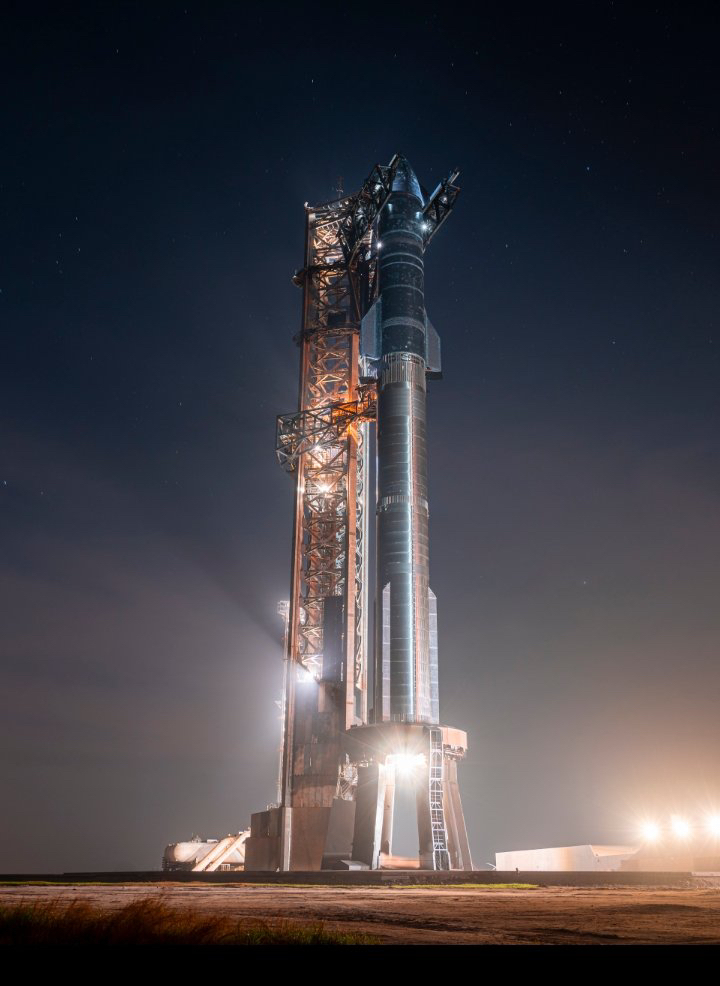
I believe that the future of rocket technology will inevitably be as ubiquitous as aviation today. Millions of people travel in the air every day, and rockets will also enter a similar scale, becoming indispensable tools for daily transportation, logistics, and even industrial and scientific research. To achieve this goal, three key things are essential:
Cost breakthroughs—rockets must become as commonplace as flights, and the cost per launch must decrease to a level that allows for large-scale reuse. This means advancing reusable rocket technology, optimizing fuel efficiency, and developing modular launch systems. Companies and research institutions must focus on these technological pathways to make rocket launches no longer expensive and unpredictable.
Safety and standardization—the premise for the widespread use of aviation is safety and controllability, with unified standards. If rockets are to be widely used, predictable and reliable safety regulations and operational standards covering the entire process of launch, flight, and recovery must be established. This requires collaboration among policymakers, research institutions, and companies to push laboratory technology towards industrial standards.
Demand and infrastructure implementation—technology cannot exist in isolation. For rockets to become the norm, supporting launch sites, airspace management, supply chains, and business models are needed. Society must cultivate market demand, business ecosystems, and operational systems.
The same logic applies to blockchain and AI. Decentralized trading, smart contracts, and artificial intelligence all hold immense technological potential but still require key breakthroughs for widespread adoption.
For blockchain, the core breakthroughs lie in compliance, scalability, and user experience. Decentralized systems must achieve transaction capabilities on the scale of millions and extremely low operational costs without sacrificing regulation and security.
For artificial intelligence, the core breakthroughs lie in algorithm efficiency, generality, and safety and reliability. For AI to truly permeate daily life, it must be able to learn autonomously, be explainable, controllable, and possess the ability to adapt to complex scenarios.
As long as humanity grasps these key breakthroughs, emerging technologies like rockets, AI, and blockchain will become ubiquitous, much like aviation and mobile payments, serving as the infrastructure that drives social operations, economic development, and the leap of civilization.