Introduction
Decentralized finance once promised freedom, but the reality is that traders are still constrained by the blockchain networks that were supposed to liberate them. Liquidity is dispersed across different ecosystems like Ethereum and Solana, with each chain having its own toolset, fee structure, and confirmation mechanisms. Transferring assets across chains is often not just complicated in operation, but also means an accumulation of time costs and risk costs.
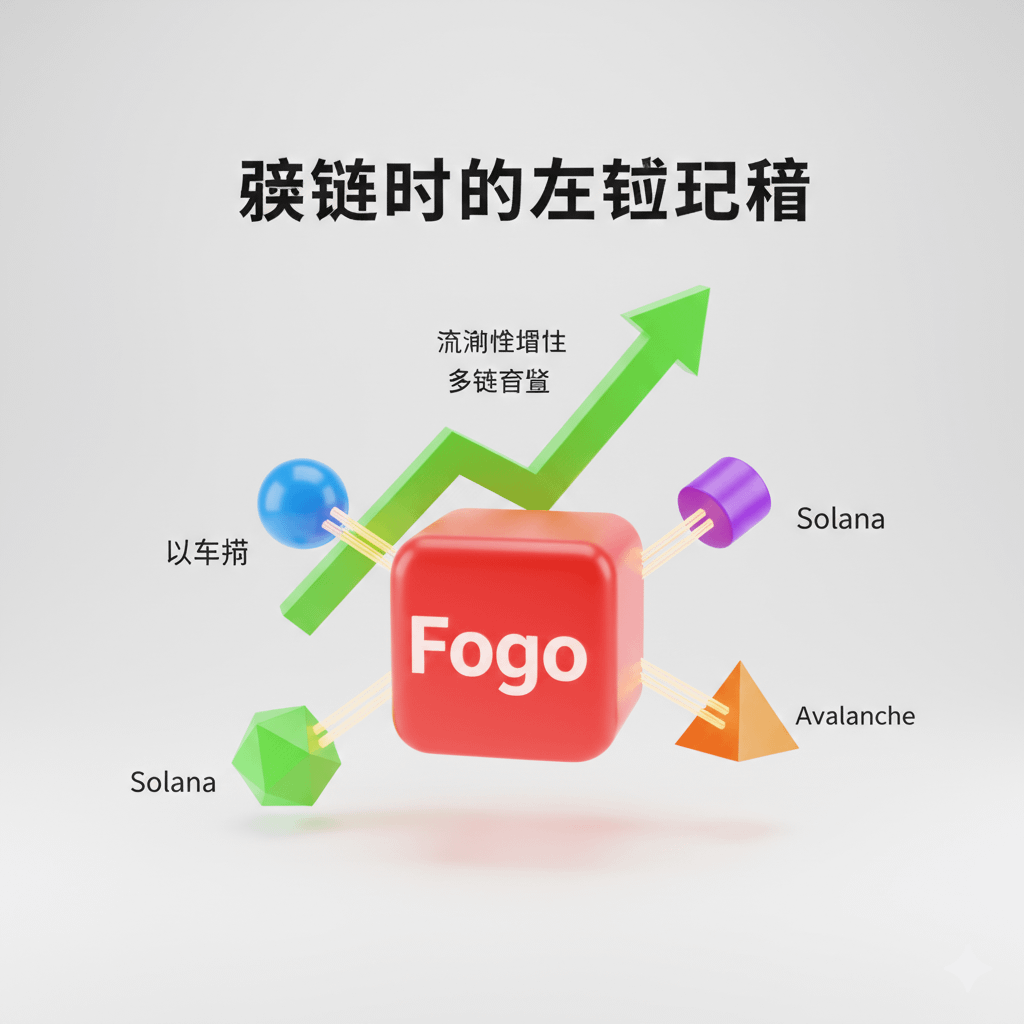
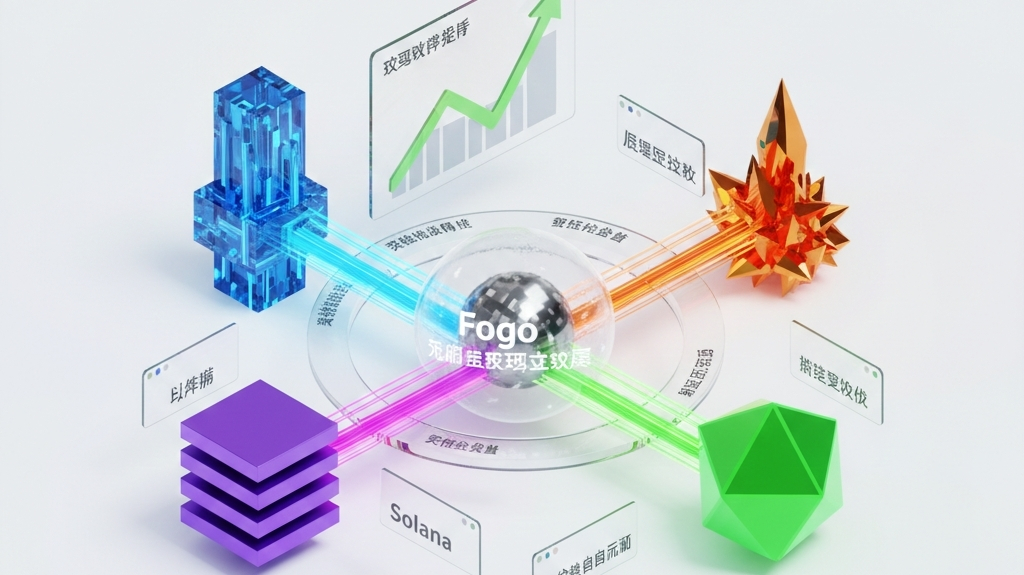
When I first learned about Fogo, it emphasized 'speed.' But mere speed does not address the deeper issues of DeFi—fragmentation. After some time observing, I gradually realized that Fogo's core goal is not simply to increase TPS, but to build a cross-chain infrastructure that allows traders to switch seamlessly between different ecosystems without being troubled by bridging delays and operational complexities.
Fogo is not trying to create a closed system, but to break down boundaries.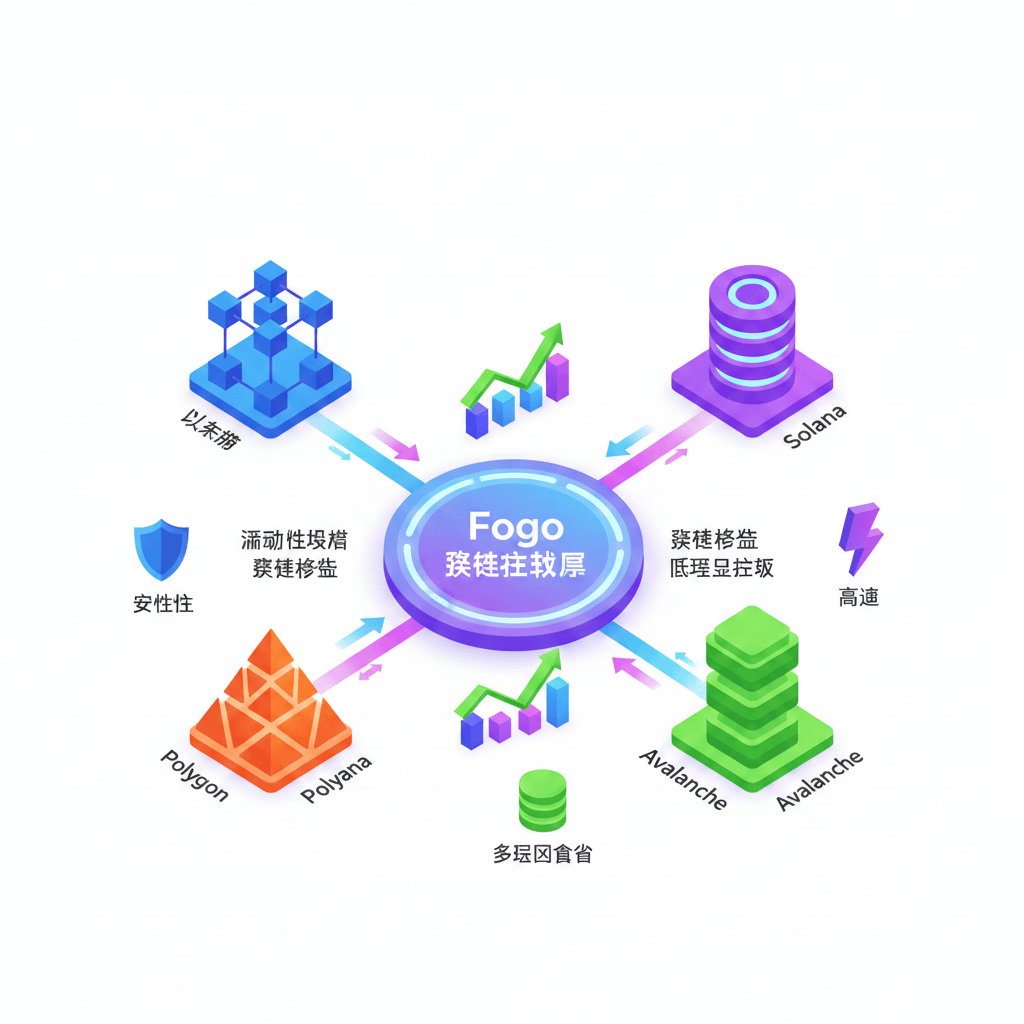
Why cross-chain is critical
In DeFi, liquidity is everything, but liquidity is fragmented.
Currently, executing cross-chain strategies usually requires:
Wrapped Tokens
Using third-party cross-chain bridges
Waiting for confirmation time
Bearing the risks of smart contracts and bridging
If you have ever tried to hedge cross-chain during volatile market conditions, you will understand that feeling of helplessness. By the time funds reach the target chain, the opportunity may have already disappeared. Minutes, or even seconds, can determine profit or loss.
A truly trader-centric chain must solve this pain point. If Fogo wants to serve professional traders, it must reduce the time cost and operational complexity of cross-chain transactions.
Therefore, Fogo chooses to deeply integrate with mature cross-chain protocols instead of building a brand new bridge from scratch.
Wormhole: The core pillar of Fogo's cross-chain capabilities
Fogo has not reinvented cross-chain mechanisms, but rather integrated with a market-tested infrastructure. This pragmatic choice itself deserves attention.
Native token cross-chain transfer (NTT)
Through the NTT mechanism, FOGO tokens can be locked on the source chain and corresponding wrapped assets minted on the target chain. When assets flow back, they are unlocked for redemption.
The entire process is controlled by a custodial contract, which is transparent and decentralized, rather than relying on centralized custodians.
Connect aggregator
Wormhole's Connect service integrates bridging, exchanging, and unpacking into one operation.
For example:
Traders can sell FOGO for USDC on Fogo and directly transfer it across chains to Ethereum—with just one click.
For users accustomed to complex cross-chain processes, this experience is closer to the convenience of centralized exchanges, but assets remain under their control.
Cross-chain querying and messaging mechanism
More critically, the ability for cross-chain messaging.
Smart contracts on different chains can query each other's data and trigger remote operations. This means:
Liquidation can be executed across chains
Collateral status can be verified across chains
Orders can be triggered based on conditions from another chain
For example, lending protocols on Ethereum can verify position status on Fogo before lending. This synergy is no longer a concept, but a technically achievable structure.
Settlement layer and development tools
For developers, Wormhole's settlement layer supports more complex multi-chain processes, such as cross-chain auctions, liquidation systems, or cross-chain matching engines.
The accompanying TypeScript SDK reduces integration difficulty, making it easier for frontend teams and arbitrage teams to connect.
If you want to attract liquidity, you must attract developers; if you want to attract developers, the tools must be user-friendly.
With these capabilities, Fogo is no longer just a 'fast chain', but has become a routing layer for liquidity and data.
Not just bridging: true cross-chain composability
Asset transfer is just the first step. True composability means: a contract on one chain can trigger actions on another chain and respond based on real-time data.
Wormhole's messaging mechanism opens up space for this, for example:
Cross-chain insurance
Insurance protocols on Avalanche can monitor and automatically manage position risks on Fogo in real-time.
Global order book
Decentralized exchanges can aggregate buy and sell orders between Fogo and Ethereum, matching transactions on the chain with better prices and completing backend settlements through cross-chain messaging.
Multi-chain credit market
Users can collateralize assets on Polygon and borrow on Fogo; oracles retrieve price data across chains to trigger cross-chain margin liquidations.
These are not fantasies. At Fogo Fest 2025, multiple projects showcased this direction:
Explored parallel networks based on open protocols, allowing applications to no longer be limited to a single chain.
Launched Lazer, a high-speed price oracle that can directly provide real-time data to Fogo.
Showcased solutions that simplify KYC and fiat deposit processes.
These pieces point in one direction: capital, data, and execution can flow freely.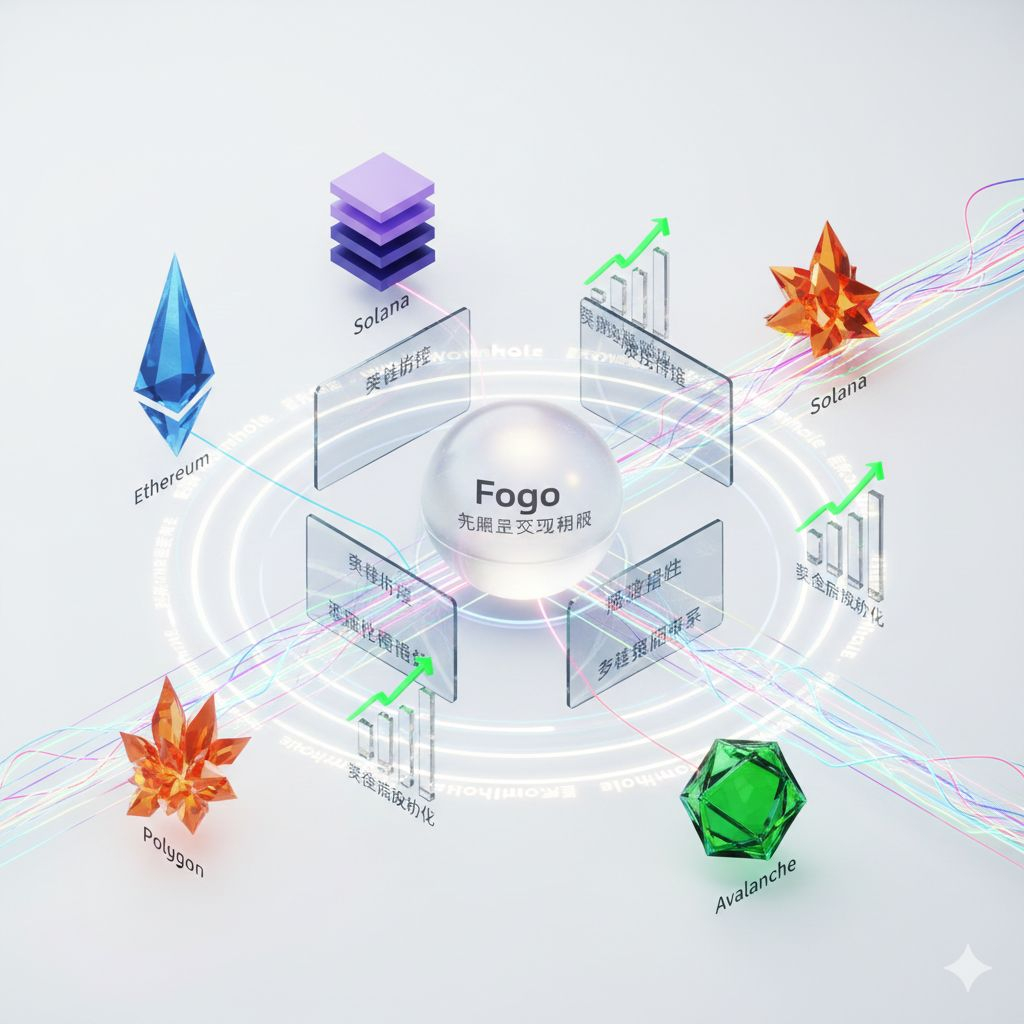
Stability assurance: a balance between performance and reliability
Cross-chain capabilities will be meaningless if they lack stability.
Fogo draws on the ideas of Proof of History and Tower BFT while introducing a 'multi-region consensus' mechanism.
Validators are divided into different geographical regions (Asia-Pacific, Europe, North America) and regularly rotate leadership to achieve:
Reduce network latency
Reduce the impact of single-region failures
Maintain execution continuity
Of course, this design also brings complexity. Early testnet phases experienced interruptions during regional switching. The team publicly acknowledged the need to optimize edge caching and RPC routing.
Complexity means challenges, but it also means the team is addressing real issues rather than covering them up.
FluxRPC: Protecting the validation layer
Fogo's FluxRPC separates public request traffic from the validator network.
Through edge caching and load balancing:
Traders can access on-chain status in real time
Validators are protected from traffic attacks
The network remains stable under high load
For high-frequency traders, the reliability of infrastructure is more important than marketing.
Cross-chain incentive mechanism
Technology attracts users, and incentive mechanisms retain users.
Fogo's Blaze program allows users to stake ETH, stETH, or FOGO across chains and earn points, which may be exchanged for rewards in the future. This program is promoted through Wormhole's ecosystem tools, attracting a large number of participants.
In terms of token economic structure:
Core contributor tokens are locked until September 2025, with a 12-month cliff
Institutional investor token unlock times are even later
The initial circulation ratio is relatively low
This structurally reduces early selling pressure.
Cross-chain liquidity requires technical support and incentive coordination.
Summary: An economy with multiple chains
What attracts me to Fogo is not just performance data, but its perspective.
Does not view the blockchain world as an isolated competitive battlefield, but as a unified economy divided by technological boundaries.
By integrating Wormhole's messaging and settlement layers, strengthening its own validation structure, and encouraging cross-chain capital flow, Fogo is attempting to become the execution layer of the multi-chain era.
Challenges remain: the security of bridges, stability during regional switching, and system complexity. But instead of creating isolated islands, Fogo chooses to be a bridge.
In a noisy market, this cross-chain vision appears more pragmatic and grand:
Not a faster island,
but a network that connects everything.