
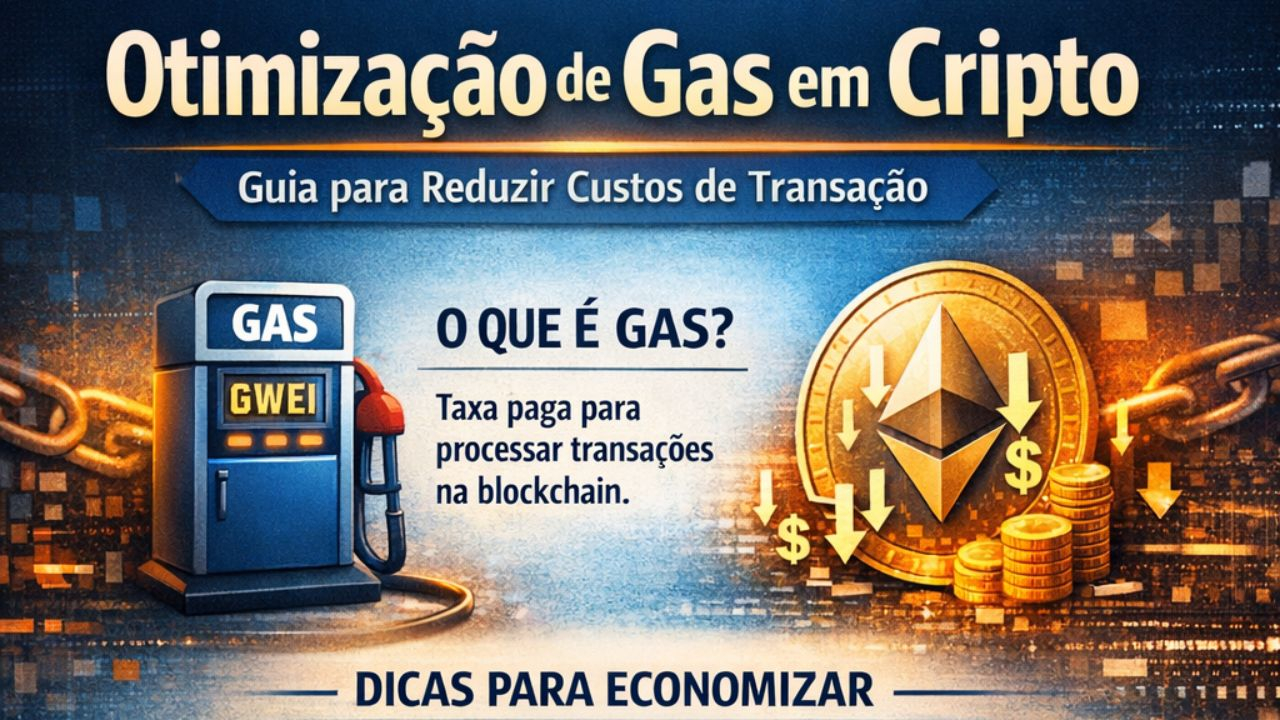
📚🚀 Gas Optimization in Crypto: Complete Guide to Reduce Costs
Gas is the fee paid to register transactions on the blockchain. It rewards validators and ensures the security of the network — but if mismanaged, it can consume a good portion of your profits. 💸
🔎 How Gas Works
The cost of a transaction depends on three main factors:
Network congestion – the more users, the higher the gas
Operation complexity – swaps and contracts cost more than simple transfers
Gas price (Gwei) – varies in real time
💡 Strategies to Save on Gas
1️⃣ Avoid peak hours ⏰
Fees tend to rise when there is a lot of activity. Weekends or off-peak hours are usually cheaper.
2️⃣ Use more efficient networks 🌐
Some blockchains have much lower fees than more congested networks.
3️⃣ Prefer Layer 2 solutions ⚡
Second-layer networks allow faster and cheaper transactions while maintaining the security of the main network.
4️⃣ Adjust the Gas Manually ⚙️
Many wallets allow you to choose the fee level. It is not always necessary to pay the highest fee.
5️⃣ Avoid many small transactions 🔄
Grouping operations can reduce total costs.
📊 Why is this important?
Whoever ignores the gas may lose a significant part of the profit. Experienced traders and investors know that reducing costs is as important as choosing good projects.
💡 In the long run, those who optimize fees accumulate more crypto. 📈