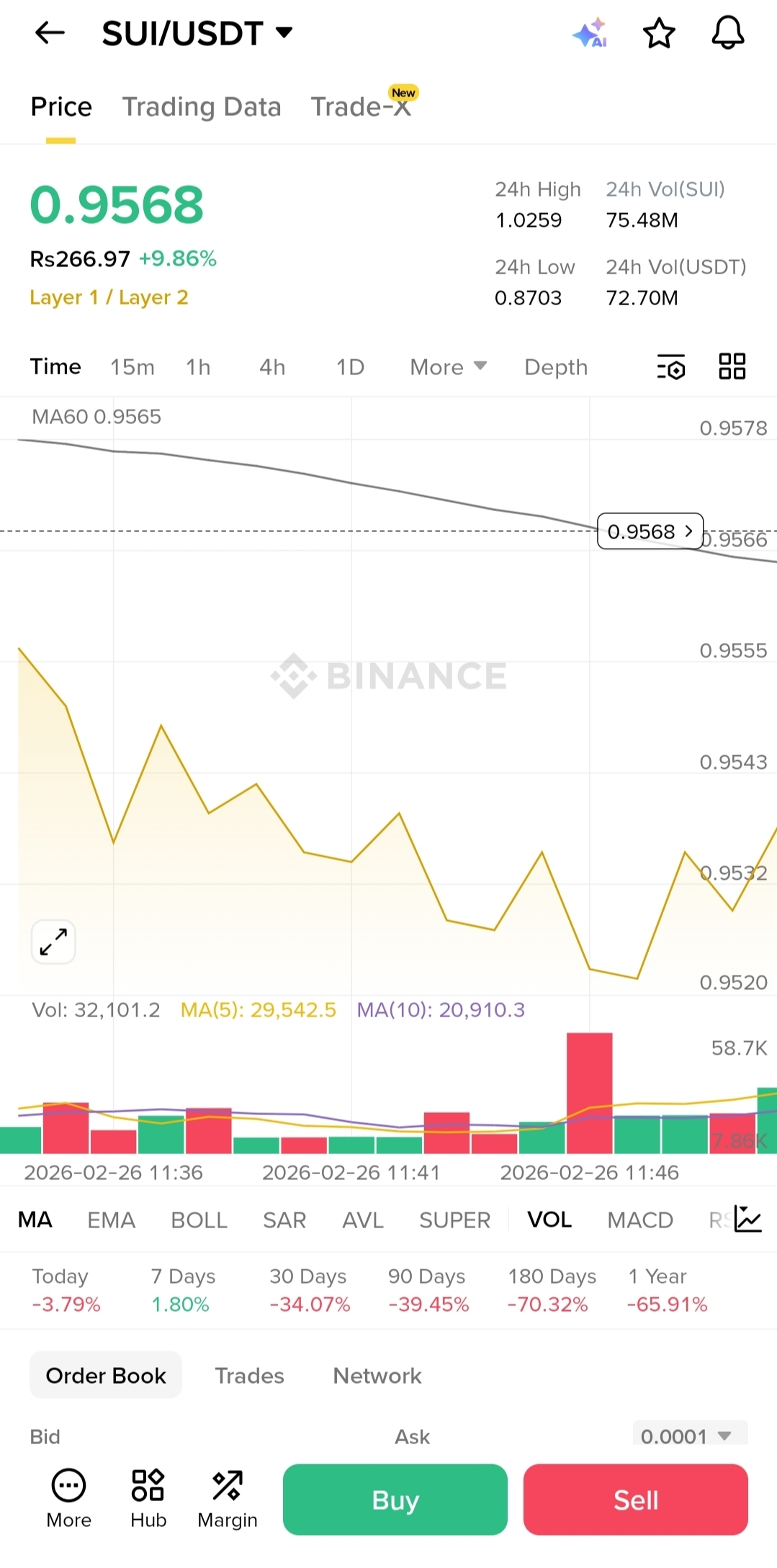
In a world where most blockchains are racing to process more transactions per second, $SUI is playing an entirely different game.
It’s not just about speed anymore. It’s about who truly owns what in the digital universe.
While traditional Layer 1 networks focus on account-based models, Sui introduces a revolutionary object-centric architecture — a framework where digital assets are treated as independent objects rather than entries in a wallet ledger. This seemingly small shift unlocks something massive:
➡️ Composable ownership
➡️ Programmable assets
➡️ Parallel transaction execution
➡️ Real-time asset interaction without bottlenecks
Instead of asking, “How fast can we move tokens?”
Sui asks, “What if digital assets could move and evolve like real-world objects?”
This opens the door to:
🔹 NFTs that can upgrade themselves based on user interaction
🔹 In-game assets that respond dynamically to gameplay
🔹 Smart contracts that don’t wait in network queues
🔹 Digital identities that users actually control — permanently
At the core of this transformation lies Move, Sui’s secure smart contract language, built to eliminate common vulnerabilities that have historically plagued DeFi protocols.
And here’s the real alpha:
Sui’s parallel execution model means network congestion doesn't choke performance — making it one of the few infrastructures capable of supporting real-time decentralized applications at scale.
We're not just witnessing another chain competing for TPS metrics.
We’re watching the early blueprint of an internet where ownership is native, programmable, and censorship-resistant.
The question is no longer:
Can blockchain scale?
The question now is:
Can ownership itself evolve?