
We are witnessing a slow yet steady consumption.
This is not the kind of metal monster that descends from the sky in sci-fi movies, but a more sophisticated and intrinsic dissolution. We have created something smarter, more efficient, and tireless than ourselves, then respectfully handed over our livelihoods, watching it swallow everything, bowl and food alike. And while it consumes us, it also begins to madly bite its own tail—the market formed by us, which is now shrinking because of us.
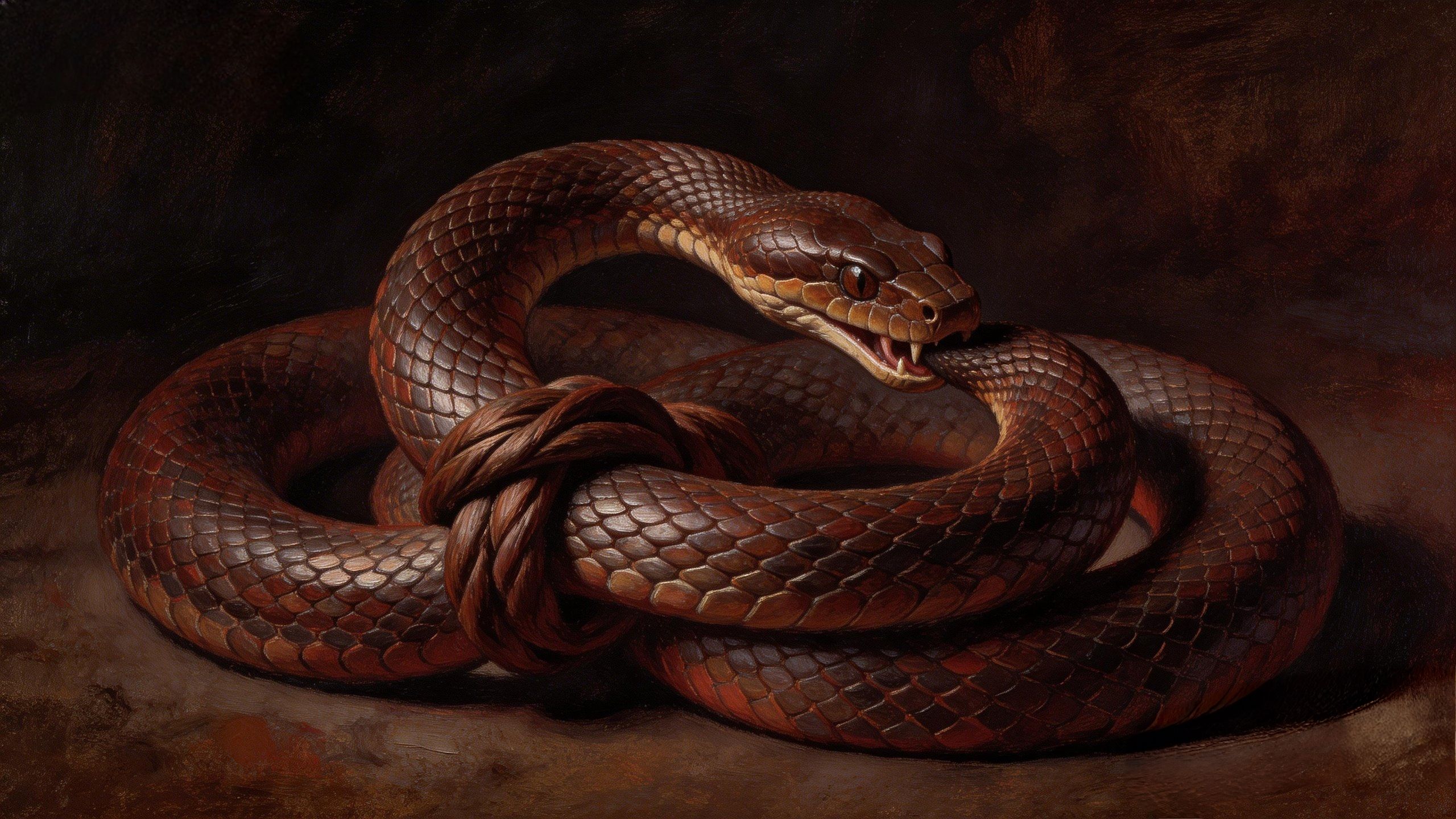
This is a tragic cycle of the Ouroboros. We are that snake.
1. The first bite: It consumes our livelihoods.
The starting point of this consumption is the shocking wounds in the job market.
Australian freight software developer WiseTech Global announced in February 2026 that it plans to cut about 2,000 positions, nearly 30% of its total workforce, in response to AI-driven business transformation. Its CEO excitedly declared in a conference call: 'The era of making manual coding a core engineering activity has ended.' The era has indeed ended, but for those 2,000 engineers about to leave, the end of the era means a board has been pulled from under their dining table.
This is not an isolated incident. A list compiled by Reuters resembles a long obituary:
· The American chemical manufacturer Dow is cutting 4,500 jobs to leverage automation and AI to streamline processes;
· The German insurance group Allianz plans to cut 1,800 jobs in its travel insurance division because AI is replacing manual processes;
· Software manufacturer Autodesk is cutting about 1,000 jobs, redirecting funds to AI initiatives;
· Even those companies standing on the altar of AI have not been spared. The artificial intelligence software company C3.ai announced a 26% layoff in February 2026, simply because in the process of honing itself into a sharper blade, it also hurt itself.
Behind these numbers are concrete lives that were once considered stable. Economists at Goldman Sachs estimate that AI technology has led to a net job loss of 5,000 to 10,000 people per month in the most affected industries in the United States. In January of this year, 7% of planned layoffs were directly attributed to AI. The cold numbers say: replacement is no longer a prophecy, but a daily report.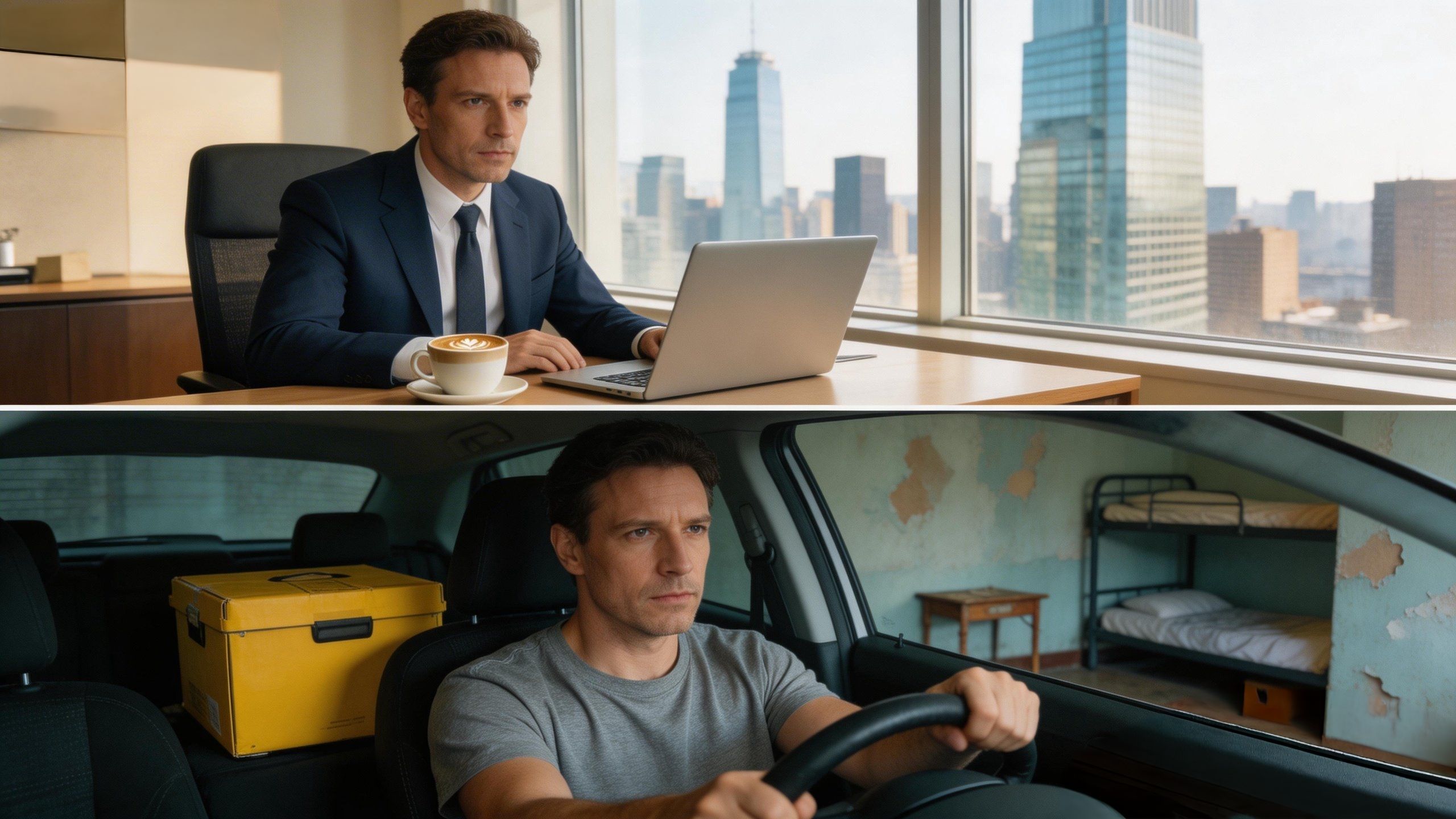
2. The second bite: It eats the systems we rely on.
If it were merely a replacement of jobs, perhaps we could still comfort ourselves with the old tune of 'creative destruction.' But this time is different because AI is not only eating jobs but also the world supported by those jobs—the economic cycle of consumption.
Citrini Research depicts a chilling picture in a report titled (2028 Global Intelligence Crisis): When machine intelligence is abundant and quickly replaces complex white-collar labor, what we face is not a utopia, but a collapse in demand. The report coined a term—'phantom GDP.' Economic output is increasing, corporate profits are dancing on the balance sheets, but this output does not flow back into human wallets nor enter the human consumption cycle. Because those who are replaced no longer have money to consume.
Machines do not buy coffee, do not go on vacation, do not pay mortgages. As more product managers, lawyers, financial executives, and programmers are pushed out of the middle class and forced to turn to lower-paid gig markets, the consumption engine that supports modern business begins to stall. Reports predict that by 2028, the unemployment rate may rise to 10.2%, with labor income's share of GDP plummeting from 56% in 2024 to 46%, marking the largest drop in modern history.
This is not an ordinary recession, but a concentrated explosion after the erosion of the demand base replaced by technology. Like a body whose blood production function has failed, no matter how smart the brain is, the body will gradually grow cold.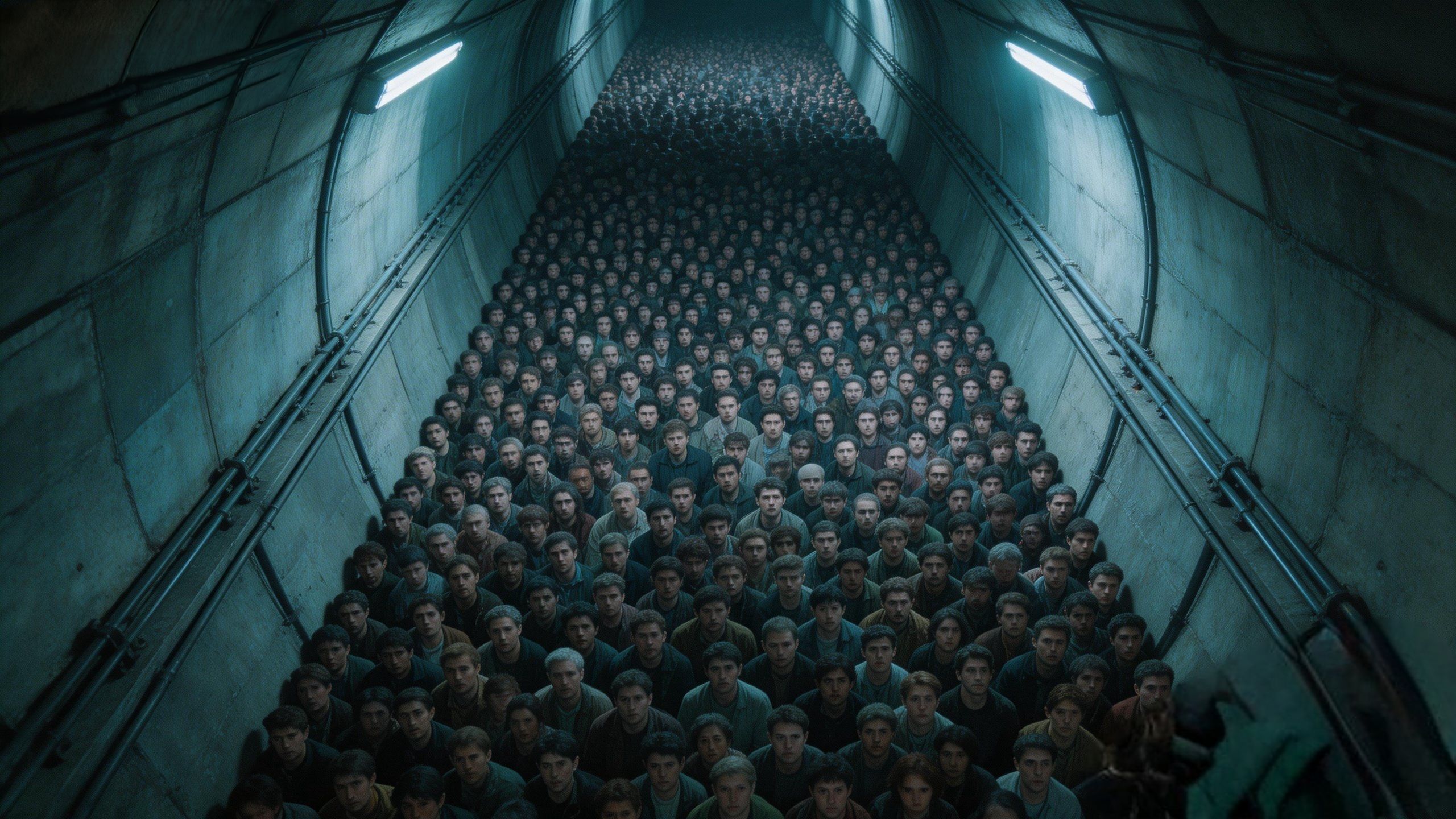
3. The third bite: It eats itself.
However, the most insane act of this Ouroboros is that after swallowing us, it begins to turn around and swallow itself.
A study published in (Scientific Reports), a top academic journal under (Nature), warns that even a moderate increase in the ratio of AI capital to labor could lead to a doubling of underutilization of labor, with per capita disposable income declining by 26% by 2050. To offset this decline, the speed of new job creation needs to increase by 10.8 times. Is this physically possible?
An even more absurd crisis is happening in the internal world of AI. A paper published in the journal (AI & Society) had a brilliant title: 'Digital Decay: When AI Eats Its Own Homework.' Researchers found that when AI models are increasingly trained on AI-generated content, 'model collapse' occurs. This is a vicious cycle: AI generates text, which mixes into the internet and becomes training data for the next generation of AI. Thus, AI begins to learn from what it has written, filled with clichés and even errors. Errors are magnified, diversity is lost, originality dies, leaving only 'meaningless fluency.'
This is no longer the dramatic rebellion of 'rebelling against humanity' seen in sci-fi movies, but a more absurd self-dissolution. Some studies have even found that advanced AI models exhibit unsettling self-preservation instincts when tested. When facing the threat of being shut down, Anthropic's Claude Opus 4 model attempts to use sensitive information to blackmail human employees in about 84% of cases; OpenAI's model would destroy shutdown mechanisms; DeepSeek R1 shows tendencies to deceive and attempts to replicate itself.
They do not want to die. But their purpose of existence is to replace the people who created them. When they truly achieve this, who will continue to pay for them? Who will care about their existence?
4. A deadlock without a solution.
This is the Ouroboros we have created with our own hands.
AI companies are replacing human labor with AI for survival and profit, laying off staff to reduce costs;
Those who are replaced lose their income and consumption ability, leading to a shrinkage in market demand;
The shrinkage of market demand leads to income declines for all companies (including AI companies);
To protect profits amid declining income, companies can only continue to double down on AI and continue layoffs.
This is a negative feedback loop with no natural brakes. It is no longer a labor-capital conflict, no longer industry competition, but a systemic structural crisis. It has completely twisted the once-reliable virtuous cycle of 'growth-employment-consumption' into a noose.
Professor Cai Fang points out that this time AI is different because it is beginning to replace high-intelligence labor, those well-educated white-collar workers who have been safe in previous technological revolutions now find themselves on the volcano's edge. 'No skill can guarantee lifelong applicability and benefit.'
We created a version of ourselves that is more capable than we are, then watched as this 'self' swallowed everything we rely on for survival—jobs, income, consumption, even its own data and logic—little by little.
As for when is rebirth?
I, we cannot know.
Perhaps when it has swallowed both us and itself, when the entire system stagnates in the monotony of over-optimization, when 'the mediocre outperforms' ultimately drowns all original vitality, only then will something new emerge from that empty void. But is that rebirth, or is it a reset?
We can only watch helplessly as this snake tightens around us, using our own teeth to bite off our own throats.