
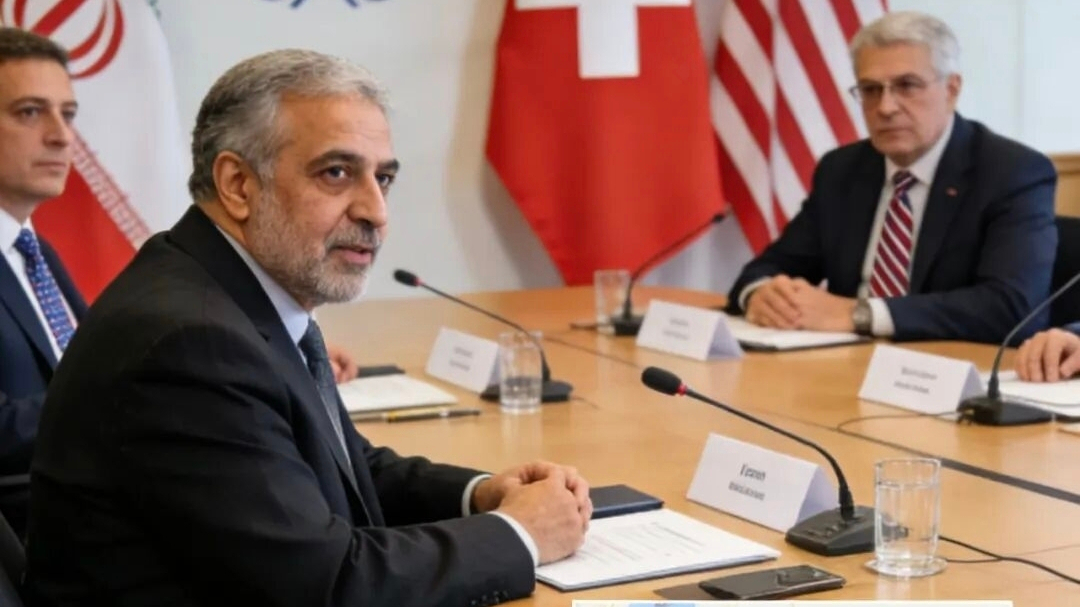
The third round of indirect negotiations between the U.S. and Iran is taking place in Geneva, Switzerland. This round of talks is widely seen as the 'last chance' for a diplomatic solution to the nuclear issue and to avoid military conflict. Currently, the negotiations are ongoing, and the situation is at a critical crossroads of 'war and peace'.
· Negotiation process and core issues:
The third round of indirect negotiations is held in Geneva. Mediated by Oman, the Iranian Foreign Minister Zarif leads the delegation, while the U.S. representatives are Special Envoy Lute and Kushner.
After about 3 hours of negotiations, the meeting adjourned. The mediators stated that both sides exchanged 'creative and positive ideas' and will continue after a short break. This round of talks mainly focuses on Iran's uranium enrichment capabilities and the handling of the existing enriched uranium stockpile.
· Positions of both sides: Iran shows a proactive stance. Foreign Minister Zarif stated that the agreement is "within reach" and plans to make substantial concessions (such as sending half of its highly enriched uranium abroad), but emphasized that the right to peacefully use nuclear energy is "inalienable."
The U.S. remains tough. Vice President Vance expressed "hope" for negotiations but reiterated that Iran must never possess nuclear weapons, which is a "non-negotiable red line," and that military action cannot be ruled out. The U.S. demands that the agreement be "valid indefinitely" without a "sunset clause."
· Military standoff escalates:
The U.S. military is heavily deployed. Recently, the U.S. has deployed the largest military force in the Middle East since the 2003 Iraq War, including the USS Lincoln and USS Ford carrier strike groups, and has sent 11 F-22 fighter jets to Israel.
Iran conducts military exercises simultaneously. The Iranian Islamic Revolutionary Guard Corps held military drills in the southern coastal area on the eve of negotiations, practicing precision strikes and threatening to block the Strait of Hormuz and attack U.S. military bases if attacked.
· Expert opinions and trend analysis:
Two possibilities for negotiations:
Achieve substantial progress and reach a temporary agreement to ease tensions; or negotiations break down, leading to a cessation of diplomatic channels, with the risk of accidental military confrontation sharply increasing.
Experts point out that there are still concerns within the U.S. about the risks of military action, while Iran has shown a determination to "stop war with war" this time. If conflict breaks out, it is likely to escalate rapidly, impacting the entire region.
The outcome of the Geneva negotiations will directly determine whether the U.S. and Iran return to a diplomatic track or slide into a new regional conflict.