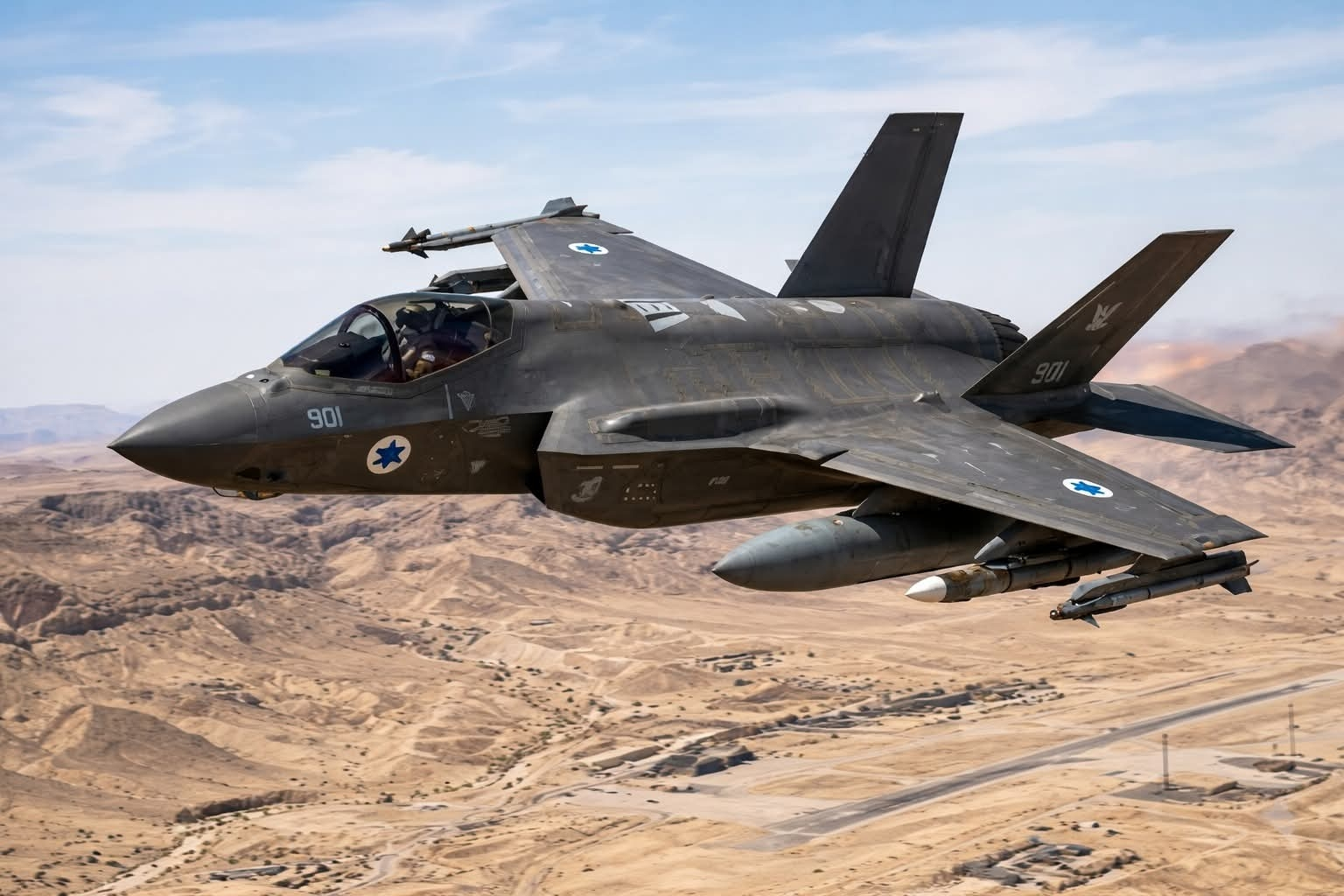
It is already becoming clear that the joint military campaign of the USA and Israel against Iran is a mathematically calculated destruction of the military-industrial potential of an entire state.
Trump's statement about Iran's withdrawal from the agreement became just a political trigger for the implementation of an operational plan that was shaped by Israeli and American intelligence for thousands of hours.
What is happening right now.
From a tactical point of view, we are witnessing a benchmark execution of the doctrine of achieving air supremacy. The first phase of the operation predictably began with SEAD/DEAD missions — total suppression and physical destruction of the Iranian network of radar stations and air defense systems. The geography of the strikes covers a strategic perimeter of a thousand kilometers: from Western Azerbaijan in the northwest to the port of Chabahar on the coast of the Gulf of Oman and the critically important oil-producing province of Khuzestan. The official report of the appearance of American heavy strike-reconnaissance drones MQ-9 Reaper over the city of Shiraz, which lies deep behind the Zagros mountain range, is a key indicator. Shiraz is a hub for the seventh tactical air base and the location of underground missile arsenals. The free operation of drones in this area means that Iran's air defense shield has been breached. The coalition now moves to the most effective phase: using mass and relatively cheap guided aerial bombs ranging from two hundred and fifty to nine hundred kilograms, such as GBU-39 SDB and the JDAM family, for methodical destruction of infrastructure.
The psychological component and the strategy of achieving surprise deserve separate analysis. In the era of total satellite and information monitoring, it is impossible to hide the preparation of hundreds of aircraft. However, Israel employed the classic method of cognitive overload. For many months, the Israeli Air Force conducted hundreds of combat sorties to bomb Hezbollah targets in Lebanon. Iranian radars recorded mass rises of strike groups every day, which returned to bases after working on Lebanese targets each time. This created a habituation effect: the Iranian command psychologically adapted to these maneuvers as routine. When on the night of the operation's start, the planes again took to the sky supposedly for another strike on Lebanon, they sharply changed vector. This allowed Israel, for the second time in the history of the confrontation, to achieve absolute tactical surprise.
The balance of power and the internal situation in Iran currently appear critical for the Ayatollah regime. The technological gap between the combined forces of the USA and Israel and the Iranian army is enormous. Iran has bet on asymmetric warfare: a mosquito fleet of fast boats in the Persian Gulf, massive production of ballistic missiles, and a vast network of proxy groups. However, precise strikes on underground bases of the fleet and places of gathering of political and military leadership in Tehran will paralyze command chains. The most vivid indicator of weakness is the actions of the Islamic Revolutionary Guard Corps, which, right during missile strikes, throws all resources into deploying Basij checkpoints inside the country. Tehran understands that the destruction of their power apparatus from the air with a probability close to one hundred percent will provoke a large-scale internal uprising. The regime fears losing control over its own population much more than losing military bases.
The finale of this campaign does not foresee the ground occupation of Iran by American troops. The goal of the operation is to push the military and industrial potential of the country back decades. Deprived of infrastructure, air defense systems, and production capacities, Iran will cease to be a regional hegemon. Without Iranian money and weapons, proxy groups such as HAMAS (which has already condemned the operation) and remnants of Hezbollah are doomed to gradual degradation. The power vacuum that will be created will inevitably lead to a reformatting of the entire Middle East and likely the fall of the current government in Tehran under pressure from its own people.