
Everyone is excited about smarter robots — better perception, cleaner navigation, tighter autonomy loops.
But once machines can reliably execute real-world tasks, intelligence stops being the bottleneck.
Coordination does.
The moment robots start doing economically useful work — inspections, warehouse sorting, delivery, manufacturing assistance — they stop being just hardware. They become economic actors. And economic actors require structure.
Because the moment a machine produces measurable value, the real questions appear: who assigns the work, who verifies completion, who resolves disputes, and who absorbs the loss when something breaks.
At small scale, these problems are easy. A centralized platform can coordinate tasks, verify performance, and distribute rewards.
But scale changes the equation.
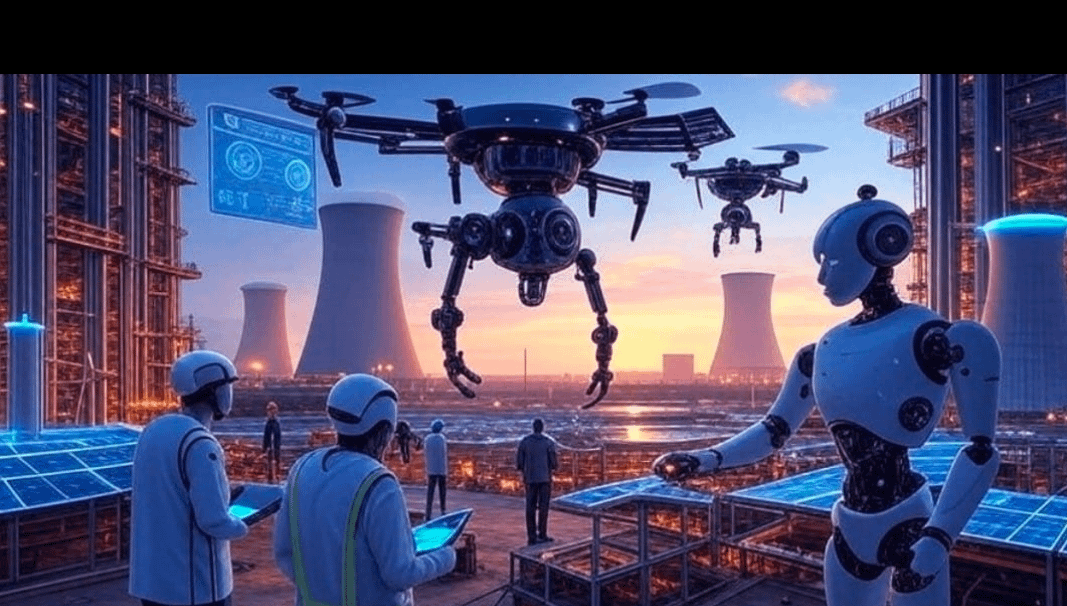
Imagine thousands of autonomous machines operating across regions, owned by different operators, serving different clients, executing thousands of tasks every hour. At that point robotics stops being a hardware problem and becomes a coordination system.
That’s where $ROBO becomes structurally interesting.
Not as a robotics breakthrough, but as a coordination layer for machine labor.
Instead of relying entirely on centralized oversight, the system introduces economic enforcement: access bonds create skin in the game, device-level delegation limits systemic risk, and on-chain verification makes activity visible under load.
This shifts robots from passive tools into accountable participants inside an incentive structure.
And historically, coordination layers tend to capture more durable value than endpoints. Railroads captured more value than individual trains. Marketplaces captured more value than individual sellers. Protocols often outlast the applications built on top of them.
So if robots become a productive economic class, the key question won’t be who builds the smartest robot.
It will be who controls the rails those robots operate on.
But there’s real structural tension here.

If machine activity remains experimental, the token stays narrative-driven. If verification concentrates around a few validators, decentralization becomes cosmetic. If governance participation narrows, enforcement becomes influenceable.
For robo to matter long-term, two things must scale together: real machine activity and distributed economic enforcement.
Activity without enforcement becomes chaos. Enforcement without activity becomes theater.
The real signal won’t come from announcements or hardware demos.
It will show up in behavior.
When operators prefer structured rails over manual coordination. When disputes resolve through defined mechanisms rather than human arbitration. When the cost of misbehavior becomes algorithmic instead of negotiable.
That’s the moment something changes.
Robo stops looking like a token attached to robotics hype and starts behaving like infrastructure beneath machine labor.
And infrastructure compounds differently than narratives.
Narratives spike.
Infrastructure grows quietly — until the system can’t function without it.
Smart robots are impressive.
But in economic systems, accountability is what compounds value.
And accountable machines may end up being far more valuable than intelligent ones.