

For many years, the crypto community has been accustomed to an almost default rule: miners keep as much as they mine. Accumulating Bitcoin is seen as a long-term strategy for mining companies.
However, recent data shows that this trend is beginning to change.
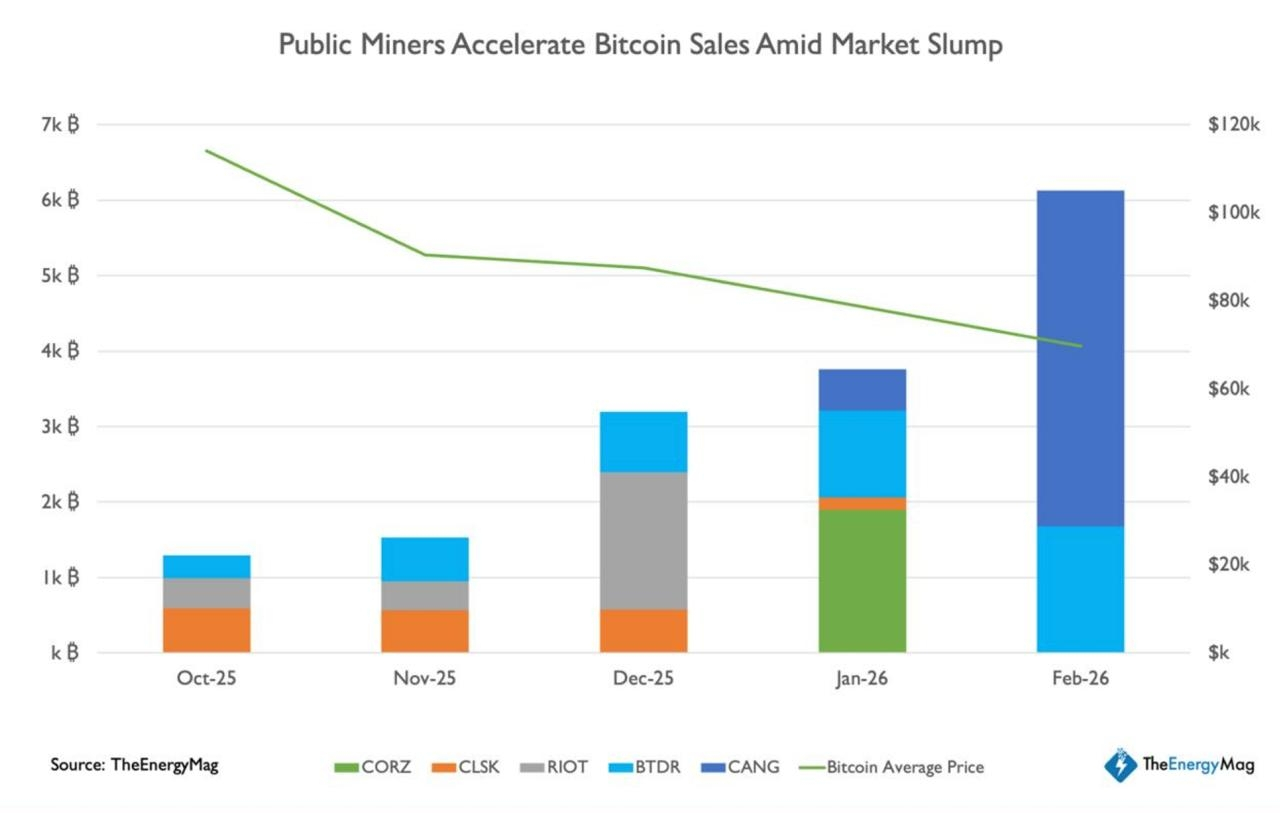
The wave of BTC sales from mining companies
From October 2025 to now, large mining companies have sold over 15,000 BTC from their reserves.
Some notable moves:
Cango sold 4,451 BTC, equivalent to about 60% of its holdings, just in February.
Bitdeer liquidated approximately 1,900 BTC in January.
Core Scientific expects to continue selling about 2,500 BTC in Q1.
Marathon Digital Holdings (MARA) – currently holding over 53,000 BTC – has also begun signaling that they will be more flexible in buying and selling Bitcoin.
This is a notable change compared to the previous period when many miners viewed selling BTC as a last resort.
Why are miners starting to sell BTC?
Mining companies are currently holding billions of USD in Bitcoin value, so selling a portion of reserves in the short term could create certain supply pressure on the market.
However, according to many industry experts, this move is not simply a 'fire sale.' Instead, it reflects a shift in the financial model of the mining industry.
Selling BTC helps miners:
Increase liquidity to operate and expand the system
Reduce complete dependence on Bitcoin price volatility
Diversifying revenue sources in the context of rising operational costs
A shift in the mining industry
In the long term, this change could make the mining industry more sustainable and stable. Instead of solely relying on accumulating BTC, mining companies are starting to operate like true energy or technology infrastructure businesses.
In other words, the miners' 'absolute HODL' strategy may gradually give way to more flexible asset management. And that could become a new trend in the Bitcoin mining industry in the upcoming cycle.