
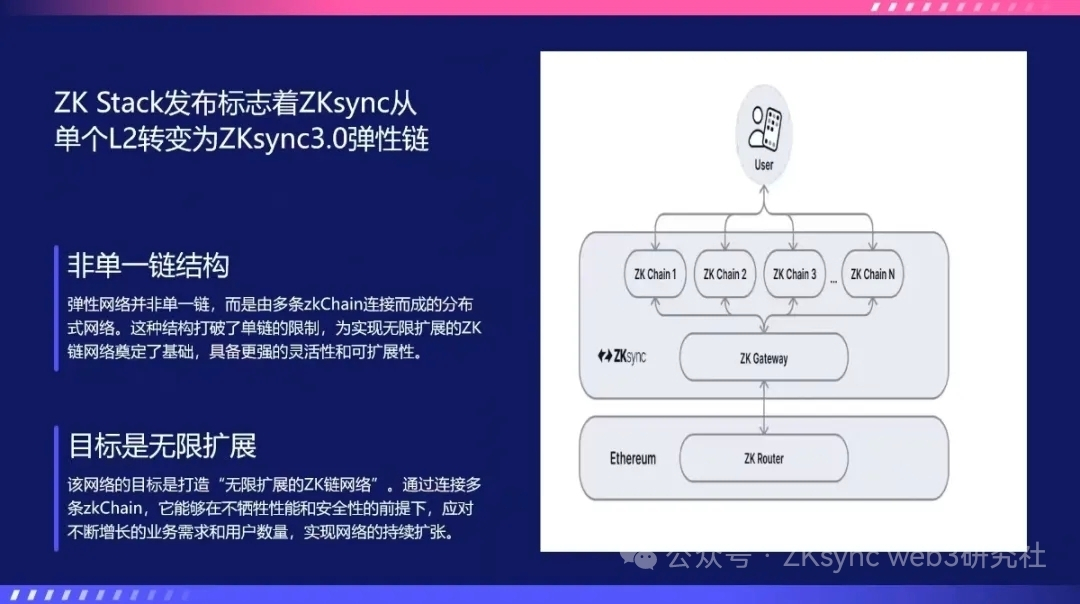
Entering March 2026, the global blockchain and Web3 industry bids farewell to wild growth and enters a new stage of compliance, institutionalization, and practical technological application. The global regulatory framework is being densely implemented, with a simultaneous contraction and upgrade of the Layer2 track, and ZKsync's elastic chain, leveraging modular architecture and ecosystem integration, becomes the core benchmark for Ethereum scalability and Web3 large-scale development.
1. Global industry trends: Compliance regulation, institutional capital entering the market
This month, global regulation and the market show three clear trends:
1. The global compliance framework is coming into effect: Hong Kong issues the first batch of stablecoin licenses, the EU's MiCA regulation will be fully implemented on March 25, the U.S. is advancing cryptocurrency legislation and a White House summit, standardizing stablecoins and exchanges, opening the channel for institutional entry.
2. The market stabilizes and warms up: BTC and ETH experience a phase rebound, after adjustments in the first quarter, funds shift towards quality fundamentals and Layer2, with DeFi, RWA, and ZK technology tracks continuing to receive investment.
3. Breakthroughs in domestic blockchain fundamentals: A national-level blockchain network has been established, with an integrated soft and hard base system and dedicated chips in place, enabling large-scale applications in government, trade, finance, and other scenarios, solidifying the digital economy's infrastructure.
2. ZKsync core dynamics: Strategic focus, formation of the elastic chain ecosystem
As the leading ZK-Rollup solution, ZKsync has made clear moves this month, fully transitioning to Era and the elastic chain, with technology and ecology accelerating in sync:
1. Lite version shutdown scheduled: The official announcement states that support for ZKsync Lite will stop on May 4, resources will be concentrated on Era and ZK Stack, ensuring a smooth migration for users and assets, with a more focused ecological architecture.
2. 3.0 elastic chain continues to iterate: A multi-chain native interoperability network centered on Era matures, supporting one-click chain expansion, seamless cross-chain, and unified experience across single wallets; after the Atlas upgrade, TPS is significantly improved, and Gas costs are optimized, adapting to high-frequency DApps and enterprise-level applications.
3. Progress in ecology and security: Lido suspends new deposits for ZKsync wstETH to fix the bridge endpoint vulnerability, user assets are unaffected, and the repair plan will be restored after governance voting from late March to early April; leading projects like Grvt integrate ZKsync Atlas, connecting DeFi liquidity, promoting RWA and TradFi assets on-chain.
4. Aligning with Ethereum's mainline: Ethereum's ZK-EVM planning is implemented this year, further aligning ZKsync's tech stack with Layer2 positioning, with advantages like account abstraction and modular expansion continuing to amplify.
3. The landscape of Web3 and Layer2 industries: from multi-line conflicts to a focus on the strong
The current industry shows clear differentiation:
- Layer2 generally streamlines product lines, focuses on the main ecosystem, reduces maintenance costs, and enhances user and developer experience;
- ZK technology has become the mainstream direction for Ethereum expansion, with leading projects like ZKsync and Starknet taking the lead, while modular and elastic architectures become standard.
- The application end concentrates on high security, low cost, and interoperable fundamentals; ZKsync Era's DEX, lending, NFT, and cross-chain tool ecosystems are complete, becoming one of the top choices for developers.
4. Trend summary and outlook
1. Compliance is the biggest dividend: Stablecoin licenses, institutional ETFs, and regulatory sandboxes open up increments, with compliant projects benefiting first.
2. Layer2 enters the elimination round: Projects that focus on the mainnet, have mature technology, and complete ecosystems will win, with ZKsync's elastic chain occupying a core position.
3. The elastic chain is the next generation form: multi-chain interoperability, on-demand scalability, and low-threshold development will support the large-scale implementation of Web3 and RWA.
4. Normalization of security and governance: Cautious handling of vulnerabilities, on-chain governance voting, and asset security guarantees have become basic industry requirements.
Overall, March 2026 is a key node for the blockchain industry, shifting from turbulence to stabilization, from concept to implementation. ZKsync's elastic chain, with its strategic focus, technological maturity, and ecological expansion, is becoming a core choice for Layer2 and Web3 infrastructure, and subsequent ecological implementation and compliance adaptation will continue to release long-term value.