
Venezuela today...
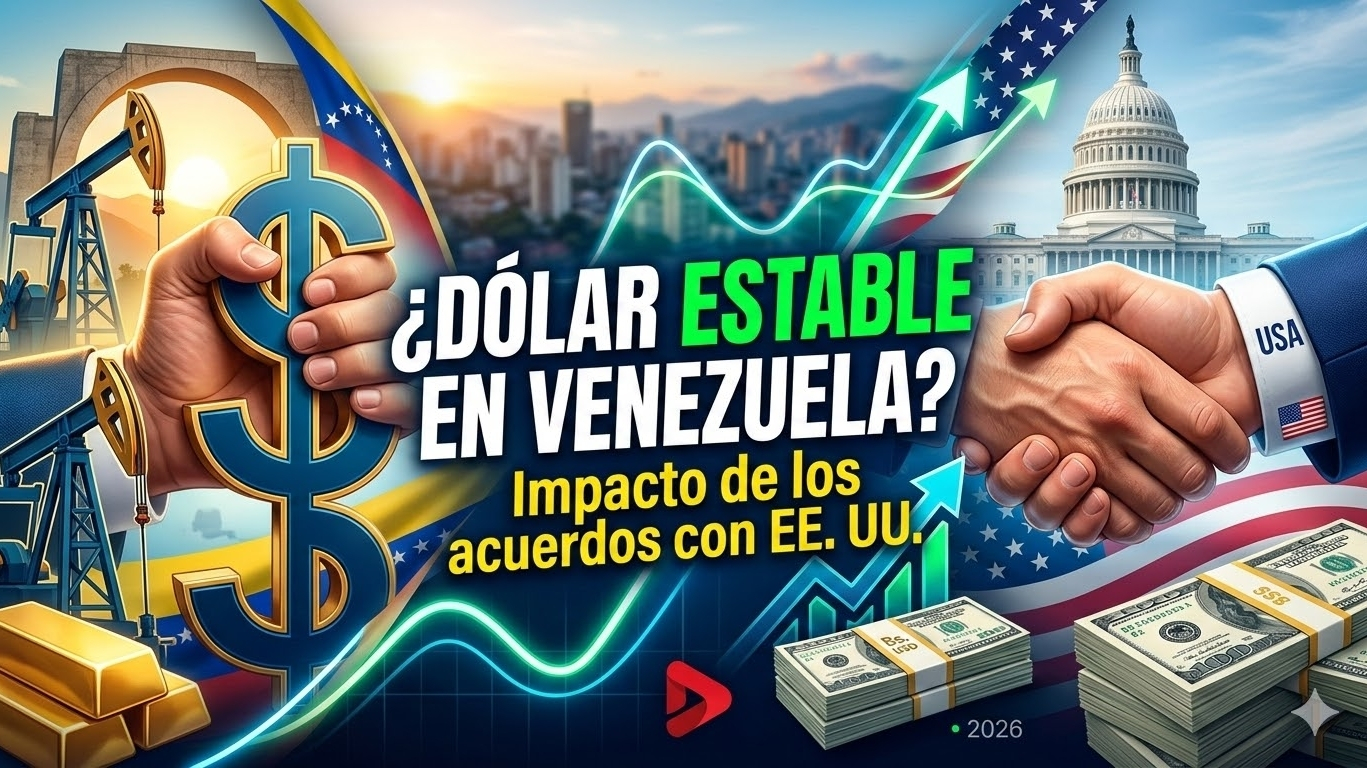
The recent agreements between Venezuela and the United States (March 2026) represent a structural change that directly impacts the currency market. Following the capture of Nicolás Maduro in January and the beginning of the interim management, the economy has transitioned from a state of "shock" to one of stabilization under international supervision.
These agreements influence the dollar and what benefits are expected:
1. Stabilization of the Dollar: What is happening?
The extreme volatility of January (when the parallel dollar surpassed 900 Bs/USD) has begun to ease. At the close of this week (March 6, 2026), the official dollar of the BCV is quoted at 431.01 Bs/USD.
Currency Injection: Agreements with companies like Shell and the sale of up to 1,000 kg of gold through the trading company Trafigura to refineries in the U.S. are generating a cash flow in dollars that the Central Bank did not have before.
Reduction of the Gap: It is expected that the difference between the official dollar and the parallel one will remain in a minimum range (between 5% and 9%), similar to what was seen in calm periods of 2024, which reduces speculation.
Market Auctions: The new economic plan contemplates that the currencies obtained from oil and mining will be auctioned at market prices, prioritizing sectors of food, medicine, and SMEs, which relieves pressure on the demand for "black" dollars.
2. Direct Economic Benefits
The approach with the U.S. administration (under the leadership of Secretary Doug Burgum and the support of the Trump administration) brings with it:
Projected Growth: Analysts from firms like Ecoanalítica estimate that, if these energy agreements are maintained, the Venezuelan economy could grow by up to 30% this year due to the reactivation of exports.
Legal Reform: The recent reform of the Hydrocarbons Law and the Mining Law (January 2026) allows private companies to have operational autonomy. This means that dollars from foreign investment enter directly into the national banking system.
Recovery of Purchasing Power: Although the accumulated devaluation in the last month was strong (more than 400%), the current stabilization seeks to curb dollar inflation, allowing salaries to stop melting away so quickly.
Risks to monitor
Despite the good news, stability is still fragile due to two factors:
External Debt: Venezuela faces a debt of more than 150,000 million dollars. The current agreements are the first step towards a massive renegotiation to avoid new embargoes.
Political Uncertainty: The market reacts to confidence. If the timeline towards free elections is halted, the dollar could shoot up again.
