
“Do you still remember Guo Meimei?”
“What's up”
“Now DJing at the bar”
During lunch, a friend suddenly brought up Guo Meimei, which caught me off guard. Since it's the weekend and I have nothing to do, I'll chat with everyone about the impact of this situation.
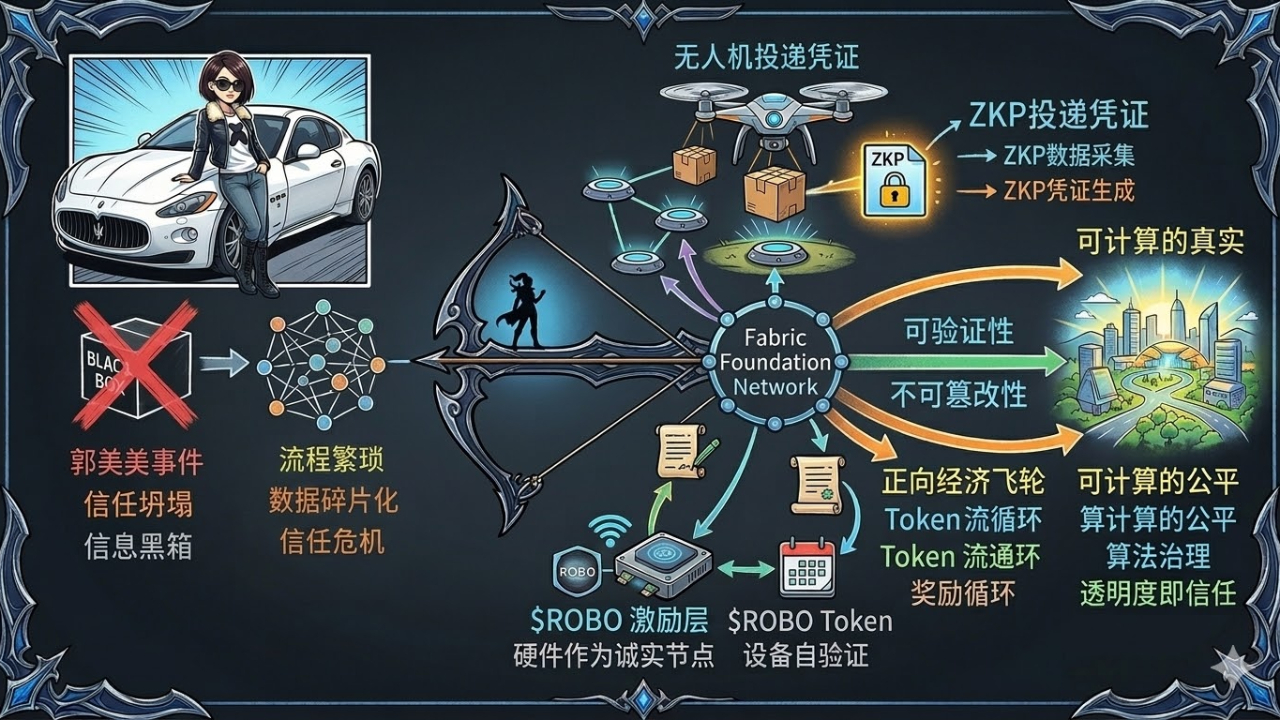
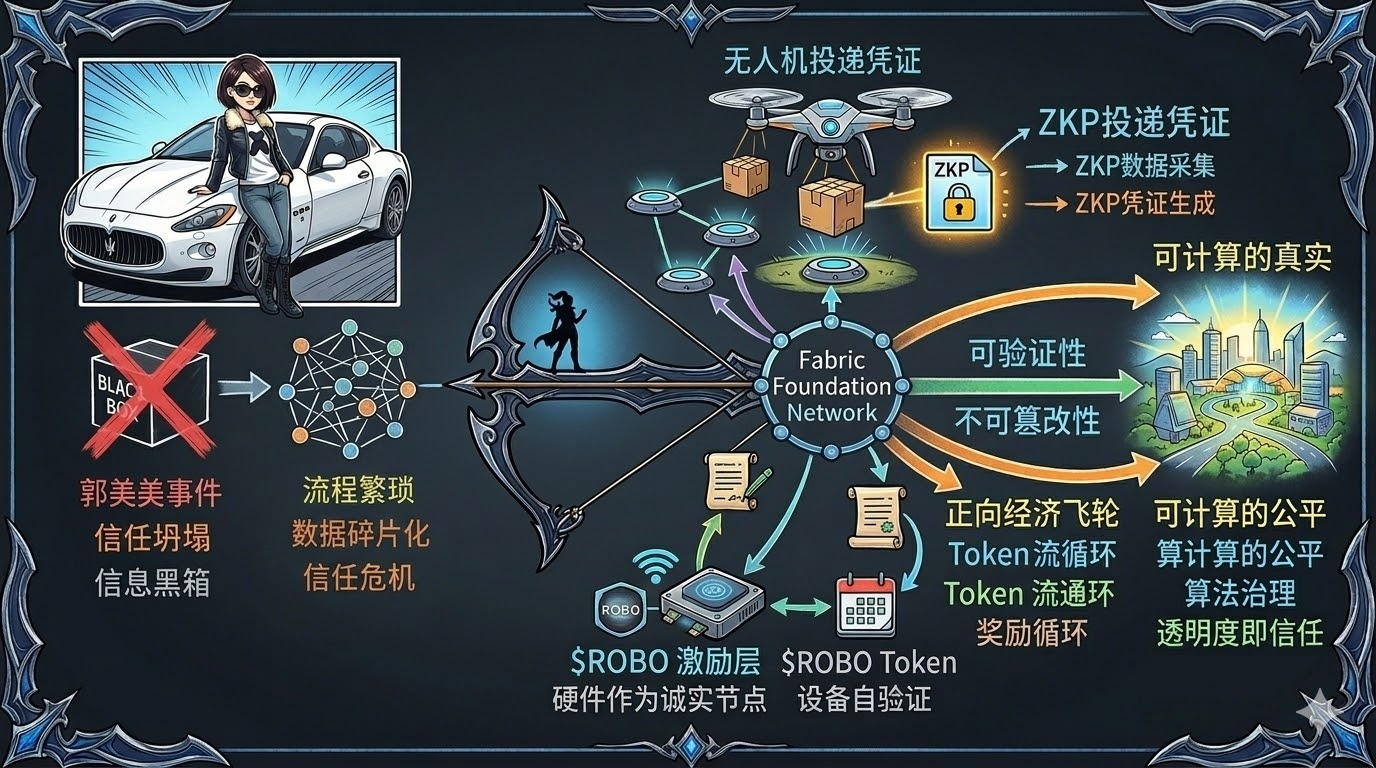
In China, charitable donations are inseparable from this name. At that time, she flaunted her wealth driving a Maserati under the guise of false charity, instantly shattering everyone's trust in charitable organizations. Since then, whenever I see a disaster and even want to donate money, my first thought is: will my donated money and supplies truly reach the disaster victims? What if they disappear along the way, end up in someone else's pocket, and ultimately receive a vague explanation? I believe I'm not the only one who thinks this way.
This isn't really my fault for being suspicious, but that incident brought the 'black box' problem of public welfare to the forefront, leaving a lingering shadow of distrust. Moreover, the traditional disaster relief process is too complicated, with many steps, non-interoperable data, and the constant back-and-forth of money and goods, causing confusion about specific directions and a lack of certainty, naturally leading to reluctance in donating.
This is not a malicious speculation about charitable organizations, but a natural defense of humanity against the 'black box' due to information asymmetry. In the traditional model, the long donation chain, the multitude of participants, and the severe fragmentation of data make the 'destination of donations' a 'Schrödinger's mystery' in the physical sense—until you open the 'box' of audit results, you can never confirm whether that relief material has actually reached its destination or has collapsed into an untraceable digital bubble halfway.
One | From 'Trusting People' to 'Trusting Algorithms'
Human society's trust in charity has long relied on administrative audits and moral self-discipline, but the marginal cost of this model is extremely high and the efficiency is very low. The greatest paradigm shift brought by blockchain technology is that it reconstructs the source of trust from 'fragile humanity' to 'rigorous mathematics.'
Imagine an ideal rescue scenario: when disaster strikes, demand signals are broadcasted in real-time over the @Fabric Foundation network. Rescue drones, as physical nodes connected to the network, automatically take orders through smart contracts. The most crucial step is that at the moment the drone delivers the supplies, the system collects data through distributed sensors and immediately generates a delivery certificate accompanied by ZKP (zero-knowledge proof).
The essence of this process is to convert actions in the physical world into immutable mathematical facts. Donors do not need to consult any lengthy third-party reports; they only need to verify this ZKP certificate on the chain to confirm the physical delivery status of the supplies. In this architecture, transparency is no longer an 'optional service' for charitable organizations, but a fundamental attribute automatically executed by the protocol.
Two | #ROBO : Building 'Computable Reality'
Although large-scale disaster relief with drones is still in the visionary stage of technological evolution, Fabric is laying the crucial 'underlying foundation' for realizing this vision. Its core advantage lies in a deep 'coupling' of digital ledgers with physical infrastructure:
1. Hardware as honest nodes: Fabric is not just focused on the circulation of virtual assets; it incorporates hardware devices from the physical world (such as sensors and logistics terminals) into the network's consensus mechanism through the $ROBO incentive layer. This design allows the devices themselves to become 'endorsers' of information, completely eliminating the possibility of fraud caused by manual data entry.
2. Building the forward economic flywheel: Through the subscription module and high-performance verification mechanisms, Fabric forms a healthy participation loop. Each data upload and each logistics verification become part of the network's value, incentivizing more honest nodes to engage in the ecosystem. This mechanism of 'monetizing trust' is the true engine driving large-scale application implementation.
3. Eliminating intermediate redundancies: The complicated administrative levels in traditional material circulation are streamlined under the Fabric framework by smart contracts. Supplies jump directly from the production end to the application end, transforming the trust costs consumed by intermediaries into the efficient computing power for the entire network's operation.
Three | The endgame thinking of charity and infrastructure
Charity should not be a gamble that tests human nature, but rather the cornerstone of human civilization's collaboration. In the past, we relied on moral appeals to maintain public welfare; in the future, we need a set of digital infrastructure capable of carrying authenticity.
What the Fabric Protocol envisions is such a highly penetrating future. It tells us that the endpoint of technological advancement is not to create more complex information islands, but to allow the simplest goodwill to gain an 'absolute certainty' through the power of mathematics in a world full of uncertainties.
This evolution from 'black box charity' to 'computable fairness' is not only a victory for blockchain but also a comprehensive reshaping of trust costs in human society.