
In 2026, the blockchain industry will officially bid farewell to reckless growth and enter a new stage of compliance, institutionalization, and scaled implementation. The Layer 2 track will transition from a multi-front battle to a focus on strong players, with ZK-Rollup becoming the mainstream direction for Ethereum expansion, while ZKsync, with its elastic chain architecture and 3.0 iteration, firmly establishes itself as the core benchmark of the ZK Layer 2 ecosystem. This article combines the latest industry dynamics and ZKsync's elastic chain progress to analyze the industry situation and development prospects, and provides practical control methods for ZKsync 3.0, offering clear references for developers, investors, and practitioners. 1. Current core situation of the blockchain industry: Regulatory adjustments and Layer 2 enters the elimination round. The global blockchain industry currently shows three clear trends that directly determine the development backdrop of projects like ZKsync: 1. Comprehensive implementation of regulatory frameworks: The EU's MiCA regulations will be fully implemented in March, Hong Kong has issued the first batch of stablecoin licenses, the U.S. crypto bill is progressing, standards for stablecoins and exchanges are unified, institutional entry channels are completely opened, and compliance has become the baseline for project survival.
2. Market funds concentrate on quality underlying assets: BTC and ETH stabilize and warm up, funds shift from speculative targets to Layer 2, ZK technology, and RWA tracks, projects with mature technology and complete ecosystems continue to receive investments.
3. Layer 2 pattern deeply differentiated: Projects generally streamline product lines, focus on the main ecosystem, and eliminate inefficient redundant architectures; ZK series Layer 2, with the dual advantages of security and scalability, crushes Optimistic series, becoming the core choice for Ethereum expansion, and the industry enters the 'survival of the fittest' stage. In this pattern, ZKsync actively shrinks its strategy, focusing on elastic chains and the Era ecosystem, precisely aligning with the industry's rhythm, becoming a core winner in the Layer 2 elimination race.
Two, ZKsync elastic chain latest news: Strategic focus, ecosystem entering the value realization period.
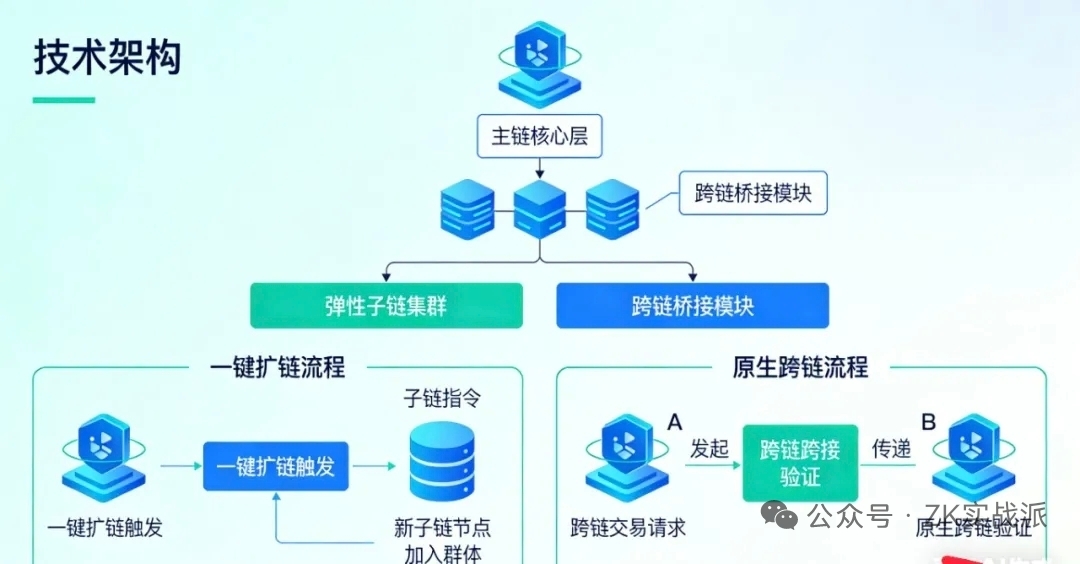
As of March 2026, ZKsync has completed several key actions around elastic chains and the 3.0 iteration, with technology and ecosystem accelerating in sync: 1. Core architecture adjustment: Lite shutdown, full commitment to Era and elastic chains. The official announcement confirms that ZKsync Lite will officially cease on May 4, 2026, stopping block production and freezing the final state, with resources fully concentrated on the Era mainnet and ZK Stack ecosystem. This move is an 'orderly exit,' with the official retaining a one-year read-only API to support historical queries, allowing user assets to migrate smoothly. Currently, Lite still has approximately $33.9 million in assets, and the team has released a complete migration guide to ensure no user losses. 2. 3.0 elastic chain iteration: Multi-chain interoperability, performance breakthroughs again. ZKsync 3.0 elastic chain, centered around Era, creates a native interoperable multi-chain network, achieving three core upgrades: - One-click chain expansion + seamless cross-chain: No external bridges, no network switching, complete all-chain operations with a single wallet, solving the pain point of fragmented multi-chain liquidity;
- Atlas upgrade empowerment: TPS increased to 15,000-43,000, settlement delay compressed to 1-500 milliseconds, Gas cost reduced to $0.0001 per transaction, suitable for high-frequency DApps and enterprise-level applications;
- Airbender zkVM full coverage: Replacing the original Boojum proof system, processing 1 million transactions per day with a single GPU, proof costs reduced by 90%, becoming the industry’s fastest open-source RISC-V ZKVM. 3. Ecosystem and security dynamics: Steadily advancing, risks controllable - Ecosystem implementation: Leading projects like Grvt integrate Atlas, RWA, DeFi, and NFT ecosystems continue to improve, with Era's current TVs exceeding $780 million, accounting for 58% of Ethereum's ZK proof volume;
- Security handling: Lido pauses new deposits of ZKsync wstETH to repair bridge vulnerabilities, user assets are unaffected, and the repair plan will await governance voting between late March and early April to restore; the team handles cautiously, and no systemic risks have arisen.
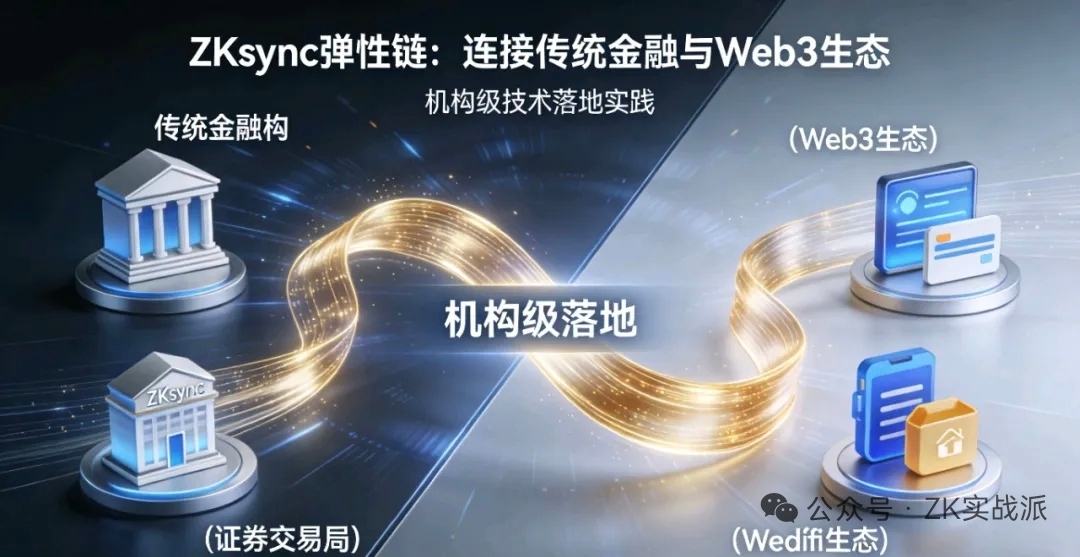
Three, the future prospects of ZKsync elastic chain: Institutional-level implementation, restructuring Web3 infrastructure. The ZKsync elastic chain is not a simple Layer 2 upgrade, but the ultimate form of Ethereum's modular expansion. The future of 2026 and beyond looks clear: 1. Technical prospects: Infinite scalability, adapting to all scenario needs. The elastic chain relies on ZK Stack to support developers in building Hyperchains with one click, selecting Rollup/Validium modes and data availability solutions as needed, balancing the openness of public chains and the privacy of private chains; Recursive ZK proofs achieve infinite parallelism, completely breaking the performance bottleneck of single chains, capable of supporting all scenario needs such as high-frequency trading in DeFi, enterprise-level on-chain settlement, and large-scale tokenization of RWA. 2. Ecosystem prospects: Becoming the 'default choice' for application chains. In 2026, ZKsync will upgrade ZK Stack to a multi-chain collaborative system, enabling native interoperability between public chains and private chains, allowing applications to share liquidity and computing power without custom integration; after the privacy engine Prividium is implemented, default privacy protection becomes the standard configuration for enterprise applications, attracting traditional financial entities like banks and clearing institutions, extending the ecosystem from crypto-native to trillion-level real-world businesses. 3. Industry position: Locking in the leading position of ZK series Layer 2. As the Ethereum ZK-EVM route is implemented, the ZKsync tech stack aligns deeply with Ethereum's main line, continuously amplifying advantages like account abstraction, decentralized ordering, and proof optimization; combined with compliance adaptation and institutional cooperation, it will become the core infrastructure of the Ethereum ecosystem, maintaining a dominant position in the Layer 2 market for the long term.
Four, how to control ZKsync 3.0: Role-based practical guide Different practitioners need to specifically control the rhythm of ZKsync 3.0, seize the elastic chain dividends, and avoid risks: 1. Developers: Focus on ZK Stack, adapt to the characteristics of elastic chains - Prioritize development based on ZK Stack, utilize one-click chain expansion and native cross-chain capabilities, avoid redundant cross-chain bridge creation; - Adapt to Airbender ZKVM, optimize contract Gas consumption, focusing on three main directions: high-frequency DApps, RWA tools, and privacy applications;
- Follow up on the progress of the Lite shutdown, complete the migration of existing projects, and focus on the ecological layout of the Era mainnet. 2. Investors: Keep a close watch on ecosystem implementation and avoid short-term fluctuations - Core focus on three key indicators: Era ecosystem TVs, the number of Hyperchains, and progress in institutional cooperation, long-term holding of quality ecological targets;
- Short-term avoidance of fluctuations caused by events such as the Lido bridge repair and Lite shutdown, with ecosystem implementation as the core judgment standard;
- Layout of elastic chain-related infrastructure projects, such as cross-chain tools, proof services, and privacy applications, sharing the dividends of the track. 3. Ordinary users: Complete asset migration and make good use of the elastic chain experience - Complete Lite asset extraction/migration before May 4 to avoid cumbersome subsequent operations;
- Prioritize using the Era network for transactions and interactions, enjoying low Gas and high TPS experiences;
- Pay attention to official governance voting, participate in decision-making for bridge vulnerability repairs, ecological proposals, etc., and share the benefits of ecological development. 4. Institutions: Connect compliance solutions, layout privacy and interoperability - Relying on the Prividium privacy platform, build compliant private chains to meet data confidentiality and regulatory audit requirements;
- Utilize the native interoperability capabilities of the elastic chain to connect global liquidity and promote the integration of real assets on-chain and off-chain business;
- Adopt permissioned deployment solutions to ensure system control and risk management, adapting to traditional financial compliance requirements. Five, summary: Elastic chains are the endgame of ZKsync and the future of Web3. The year 2026 is a key year for blockchain from concept to implementation, and it is also the year for ZKsync's elastic chain value realization. The industry is adjusting to regulations, and the Layer 2 elimination race is accelerating. ZKsync firmly occupies the leading position in the ZK series Layer 2 through the shutdown of Lite, the iteration of 3.0 elastic chains, and the compliant implementation of the ecosystem. For all practitioners, the core of controlling ZKsync 3.0 is to closely follow the three major directions of multi-chain interoperability, modular expansion, and privacy compliance, abandoning speculative thinking and focusing on technological implementation and ecosystem construction. In the future, ZKsync elastic chains will not only become the core pillar of Ethereum expansion but will also become the key infrastructure connecting the real world to Web3, with long-term value worth continuous investment.