
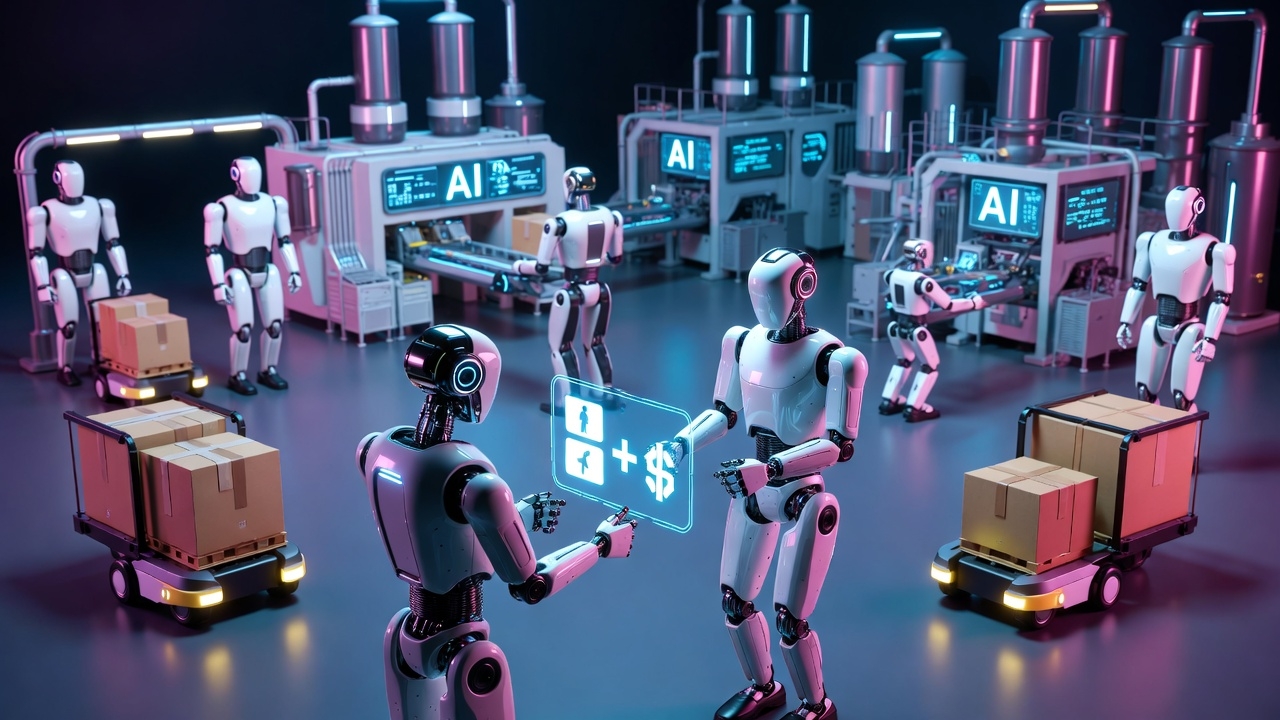
In early 2026, as AI and robotics accelerate into everyday life—from factory arms to home assistants—one crypto project stands out for turning machines into real economic players: Fabric Protocol and its native token, $ROBO
Launched in late February 2026, Fabric Protocol is a decentralized network built to give general-purpose robots on-chain identity, autonomous payments, task coordination, and verifiable contributions. Backed by the Fabric Foundation (with early tech from OpenMind), it tackles a big future problem: today, robots are tools controlled by centralized companies. Tomorrow, they could act independently—earning, spending, and collaborating in a global "Robot Economy."
At the heart is robo, the utility and governance token powering everything:
- Network fees — Robots (or their operators) pay robo for compute, electricity, tasks, or data.
- Staking & bonds — Stake to coordinate jobs, secure participation, or bond for robot "work" via Proof of Robotic Work (PoRW).
- Governance — Holders vote on protocol upgrades, fees, and policies (often via veROBO locking for more influence).
- Incentives — Rewards verified robotic contributions, aligning humans, developers, and machines.
Token basics (as of March 2026):
- Total supply: 10 billion (fixed)
- Circulating supply: ~2.2–2.23 billion (~22%)
- Market cap: Around $85–90 million
- 24h trading volume: Frequently $50–200 million+ across exchanges like Binance, Coinbase, Bybit, KuCoin, and more
The project raised strong early backing (including Pantera Capital) and launched via platforms like Kaito's Capital Launchpad at a ~$350–400M FDV. Post-launch, $ROBO saw explosive volume and listings, riding the 2026 hype wave around DePIN (Decentralized Physical Infrastructure), AI agents, and embodied robotics.
Why it matters now: As physical AI scales—think delivery bots paying for charging stations or factory robots trading comput could become essential "gas" for that machine-to-machine economy. It's not just speculation; it's infrastructure for a world where robots have wallets and economic agency.
Of course, risks exist: high volatility (typical for new launches), whale concentration in early distribution, and execution hurdles in bridging blockchain with real-world hardware. But with AI/robotics narratives heating up, Fabric positions $ROBO as an early bet on the convergence of Web3 and physical automation.
DYOR, but if the Robot Economy thesis plays out, $ROBO might just be the fuel for one of crypto's next big chapters. 🤖🚀
(Price data fluctuates—check CoinGecko or CoinMarketCap for live stats.)