
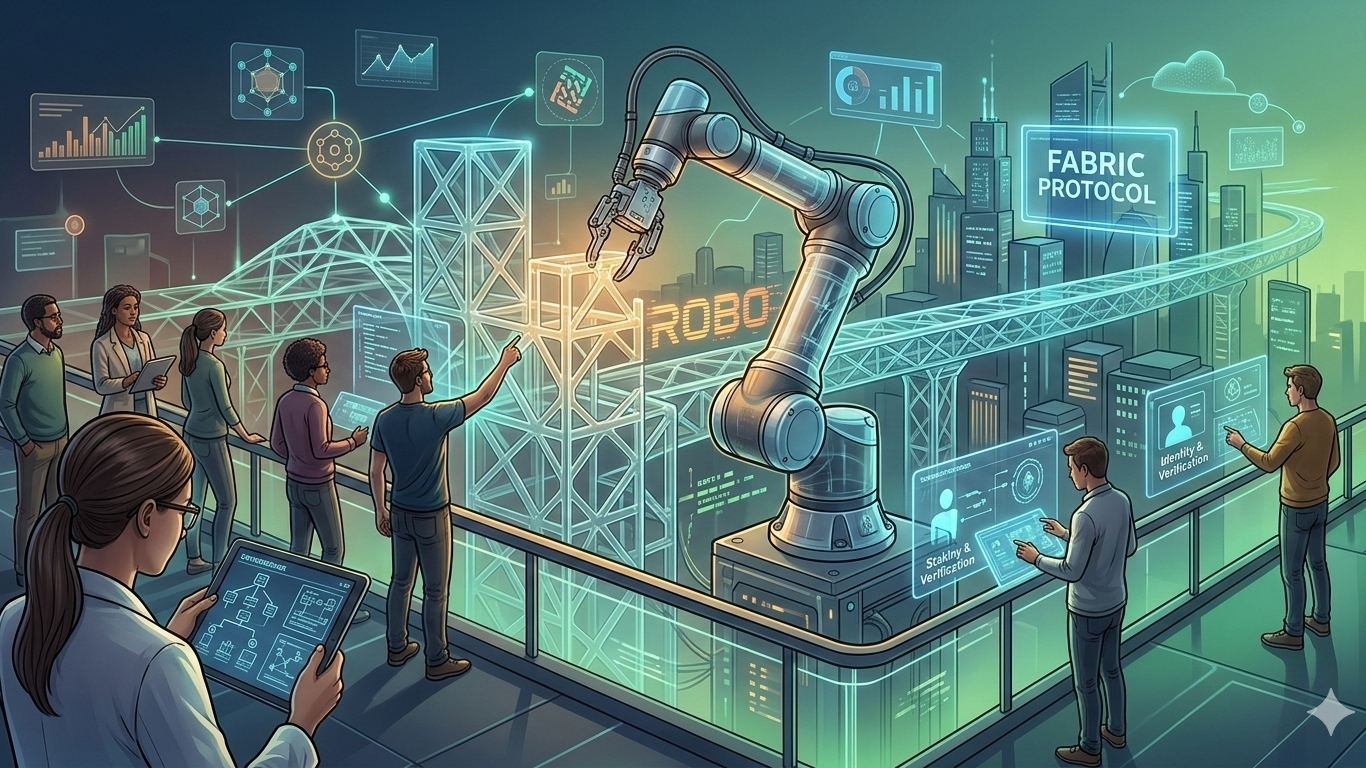
I gradually realized that in the cryptocurrency market, many indicators seem very active, but the beliefs behind them may not actually exist. I have seen some tokens with huge trading volumes, quickly becoming hot topics, and social media filled with confident opinions, only to find out after a while that most of the attention was just from short-term 'tourists.' When I think about Fabric Protocol and ROBO, this feeling arises again.
Fabric is not simply a project that binds a token to a popular narrative. Its goals are larger. The project aims to establish a coordinated infrastructure for the future robotic economy, allowing machines, developers, validators, and users to interact through open protocols rather than relying on closed corporate systems. According to the Fabric Foundation's introduction, its mission is to establish governance, economic, and coordination frameworks that enable humans to collaborate safely and efficiently with intelligent machines. The white paper describes Fabric as a decentralized system for building, governing, owning, and continually evolving general-purpose robots.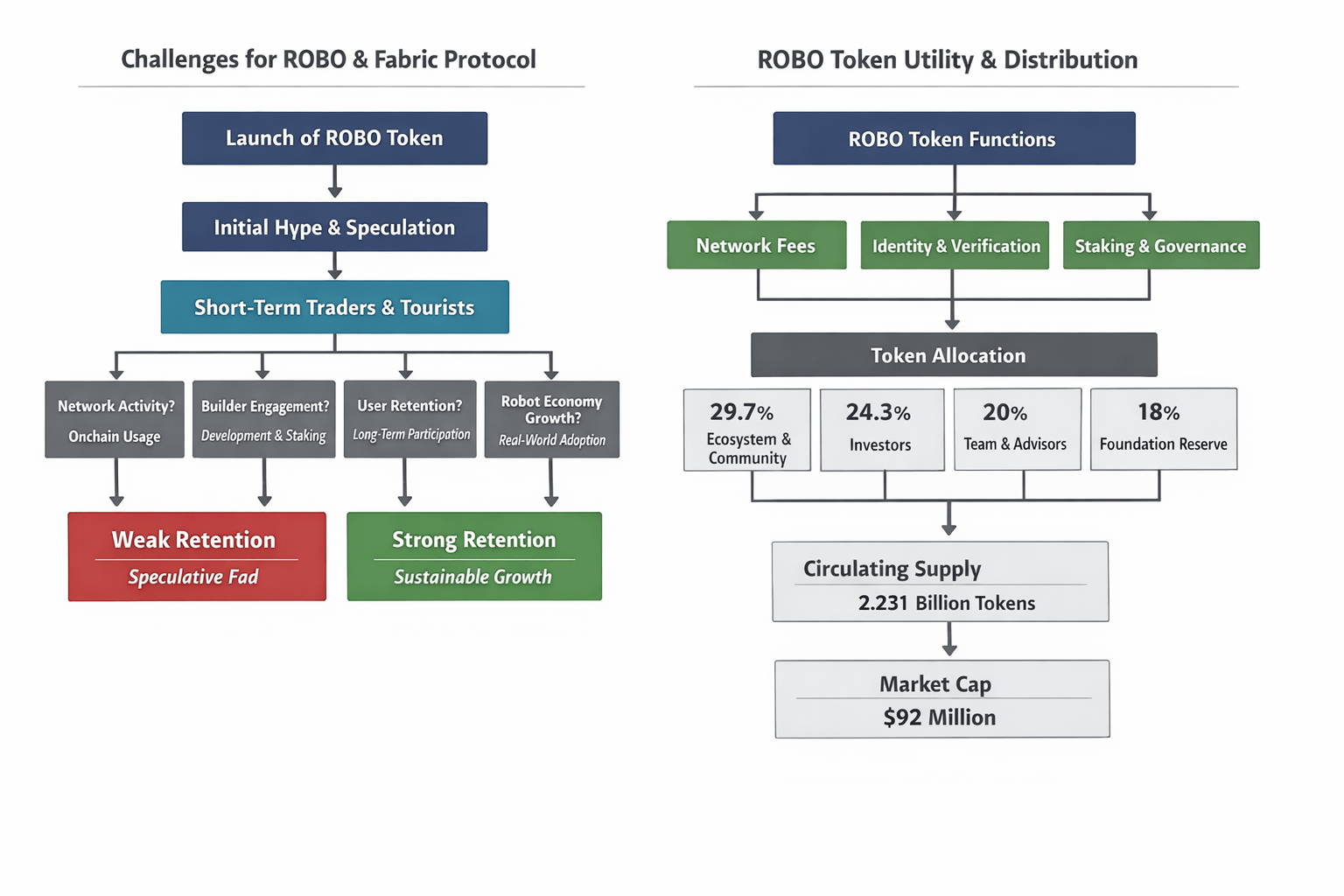
From a trader's perspective, an important point is that ROBO is related to actual functions within the protocol. The project states that the token will be used for network fees, identity systems, verification mechanisms, participation in staking, and governance decisions. Fabric plans to launch first on the Base network and expand continuously as adoption grows. Developers and businesses that want to build applications on this network will need to purchase and stake ROBO to participate. This is crucial because it gives the token real utility, rather than just being a narrative tool.
The project's disclosed token distribution also reflects its long-term planning: approximately 29.7% is allocated to ecosystems and communities, 24.3% to investors, 20% to the team and advisors, and 18% as foundation reserves. Additionally, most tokens have set up lock-up or linear unlocking mechanisms, rather than entering market circulation immediately.
The market has begun to price this narrative. According to data from CoinMarketCap, the current circulating supply of ROBO is approximately 2.231 billion, with a total supply cap of 10 billion, a market cap of approximately $92 million, and a 24-hour trading volume of about $120 million. Data from CoinGecko also shows that in the first week of March, trading volume remained at a high level. This indicates that the token currently does have market attention, but attention does not equate to long-term stability.
In the crypto market, attracting attention is relatively easy, but maintaining long-term participation is the real challenge.
For ROBO, the key issue is not just whether traders will continue to pay attention after the initial excitement fades, but more importantly, whether developers will continue to develop, whether participants will keep staking, and whether there will truly be on-chain activities related to robots. Ultimately, whether this network can truly become useful determines whether people return to use it because of its functionality or just due to temporary hype.
Real discussions are unfolding right here. The white paper presents a very grand vision, including an open robotic skill system, machine regulation, public ledgers, and long-term human-machine collaborative development. These goals are very serious, but grand objectives also imply higher execution risks. Fabric is still in a very early stage. The token was just launched on February 27, 2026, and the robotic economy described still largely remains in the vision stage, rather than a mature reality.
Investors also need to pay attention to a key legal and structural point. Fabric's white paper clearly states that ROBO does not represent equity, profit-sharing rights, nor does it represent ownership of the foundation's assets. The value of the tokens could theoretically go to zero. This does not mean the project lacks potential, but it clearly defines what you are buying and what you are not getting.
So, what circumstances would change my view?
I will pay attention to whether Fabric can transform the narrative into real use cases. I hope to see a connection between staking and real network activities, that developers continue to build applications on the protocol, and whether the community remains active after the initial excitement of the project launch fades. If participation declines, ROBO could become another beautifully packaged project with insufficient sustainability. But if participation continues to increase, then Fabric may gradually transform from a speculative robotic narrative into an early project providing infrastructure for future markets.
This is also why ROBO currently interests me. Not because the price trend is attractive, but because it forces the market to think about a deeper question: when machines become economic participants in the future, who will build the network infrastructure for them to operate? How many people have the patience to distinguish between a fleeting story and a system that truly has the potential to exist long-term?
@Fabric Foundation #ROBO $ROBO
