
The global energy market is heating up as oil prices continue to rise sharply due to geopolitical tensions in the Strait of Hormuz – a shipping route that accounts for about 20% of the world's daily oil consumption.
Any fluctuations in this 'energy choke point' could trigger a ripple effect on financial markets, including crypto.
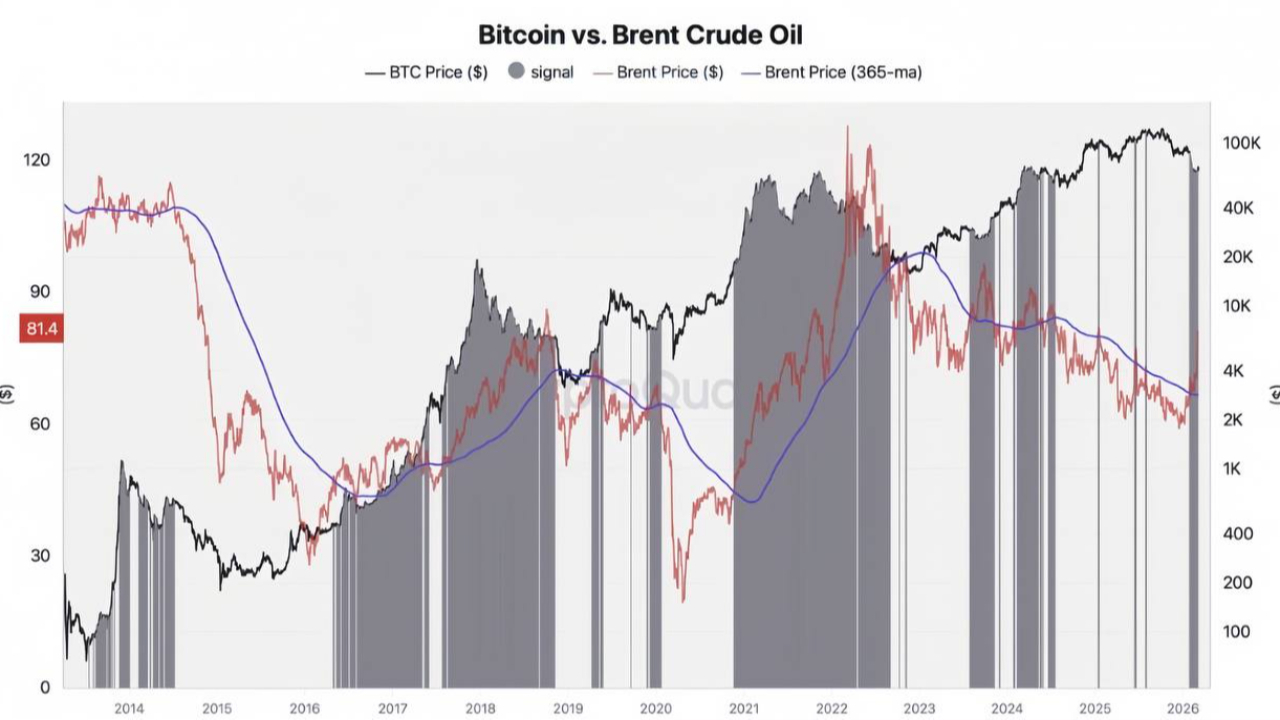
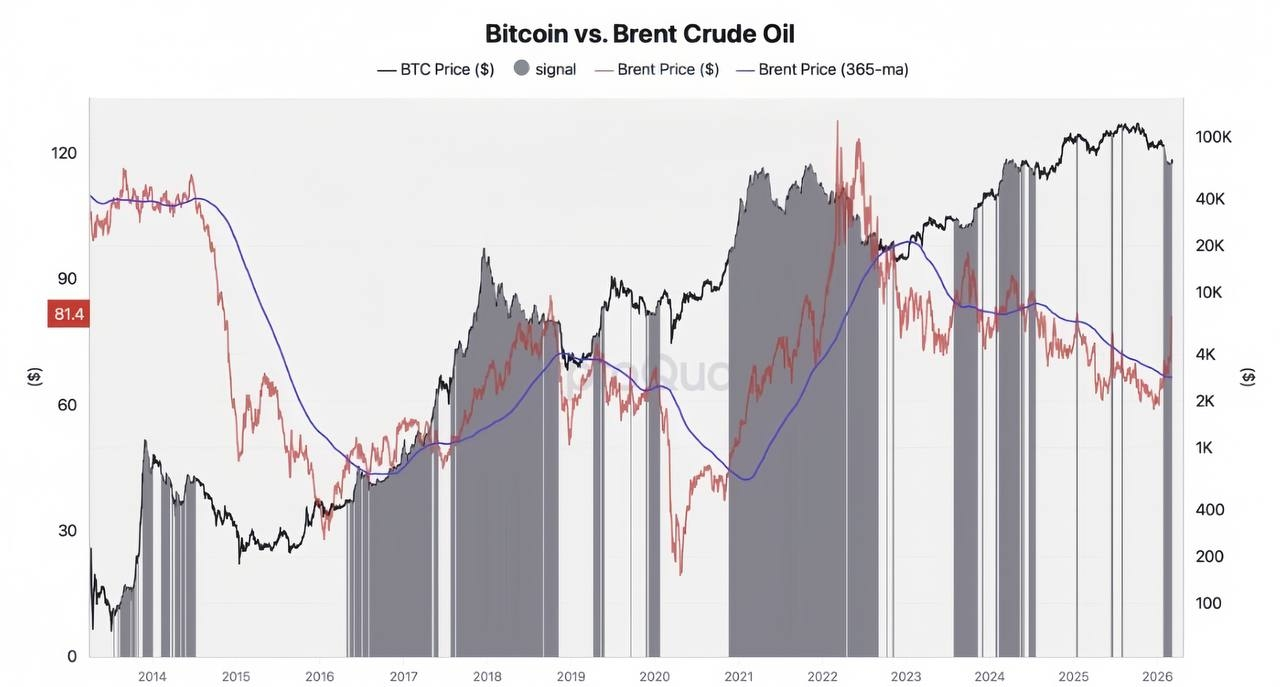
It is noteworthy that in history, strong increases in oil prices often occur near the cycle peaks of Bitcoin.
📊 History shows a notable pattern
🔹 Cycle 2017–2018
Oil starts to recover strongly
BTC peaks at ~20,000 USD
Then the crypto market entered a prolonged bear market, BTC dropped to ~3,000 USD
🔹 Cycle 2021
Oil prices rise due to economic recovery after the pandemic
Bitcoin reached an ATH of ~69,000 USD
Then the market entered a downtrend throughout 2022
🔹 Cycle 2024–2025
Strong oil price surges continue to appear near the local peaks of BTC
⚠️ Why can oil prices affect crypto?
Rising oil prices often lead to:
Inflation rises
Central banks maintain high interest rates
Global liquidity is tightened
In that environment, risk assets like crypto often face correction pressure.
Moreover, as geopolitical tensions escalate, capital often shifts to defensive assets like gold or bonds instead of crypto.
🧠 Is this cycle different?
The current crypto market has many new factors:
Spot Bitcoin ETF
Strong institutional participation
Global acceptance of crypto is higher
These factors may make this cycle different from the past.
However, with oil prices continuing to rise and geopolitical risks increasing, the crypto market may be entering a new challenging phase.
📌 Therefore, monitoring macroeconomic fluctuations may be the key to understanding Bitcoin's next move in this cycle.