

I was going through Fabric Protocol earlier today and one thing kept bothering me a bit
We’re starting to rely on robots more and more Warehouses manufacturing logistics machines are already doing a huge portion of the work.
But here’s the strange part
We rarely verify what those systems actually did
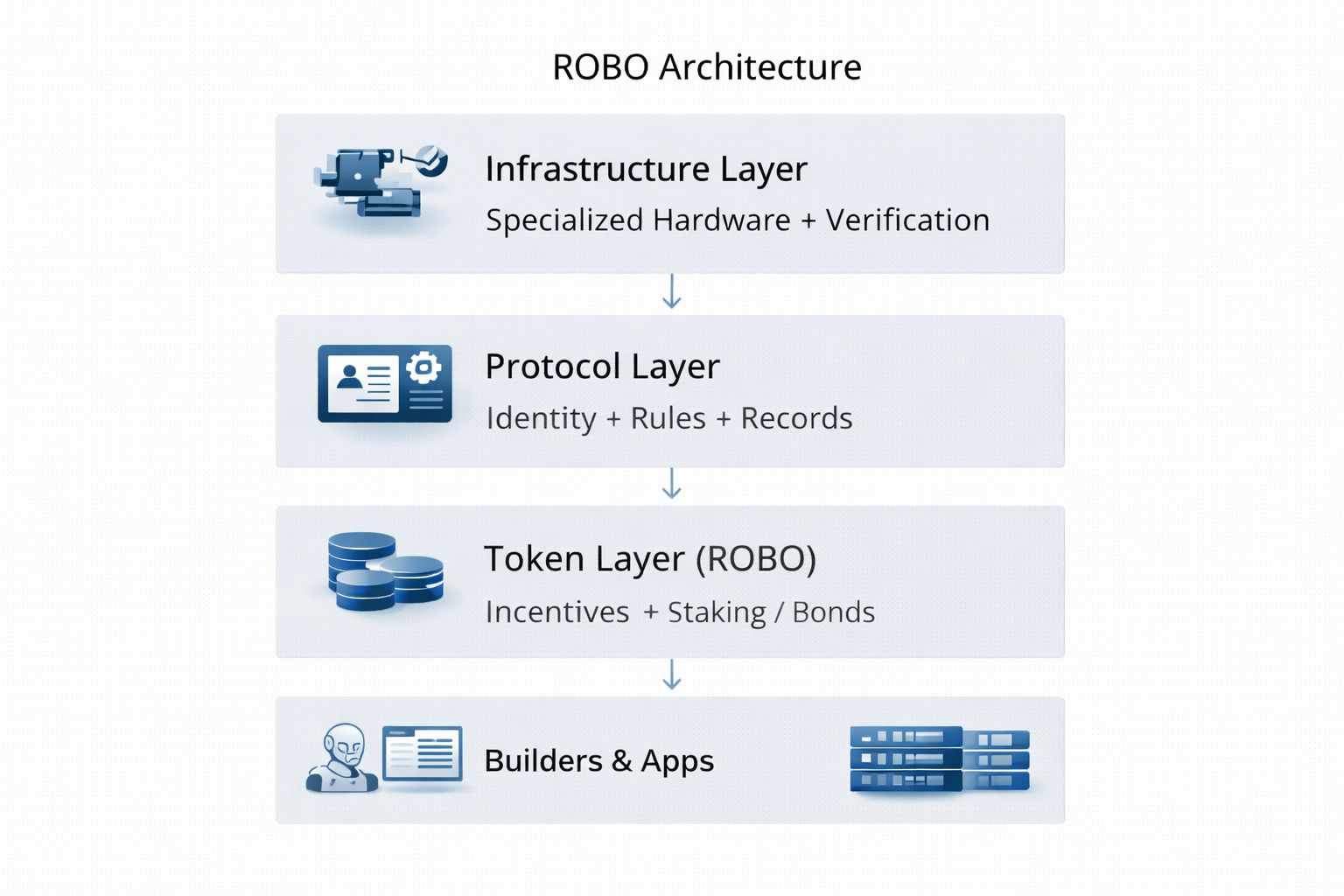
Most robotics platforms operate like a black box. You see the result, but the internal decisions that led to it? Not always visible.
That’s the direction Fabric Protocol seems to be exploring.$ROBO
Instead of assuming a robot executed its code correctly, the idea is to make that execution verifiable. In other words a “machine” could generate cryptographic proof that the computation it performed actually matched the intended instructions
It’s a subtle shift but an interesting one
Rather than trusting robotics systems blindly you move toward a model where actions can be checked and audited.
Another part that caught my attention is how the protocol treats robots almost like participants in a decentralized network.
Most robotics today depends heavily on centralized cloud control. Fabric seems to imagine a different setup where machines interact within a distributed infrastructure, exchanging data and proofs across the network.$ROBO
If that model actually works, it opens the door to something bigger.
Robots wouldn’t just execute tasks individually they could evolve collectively, with improvements tested and shared across the system.
Of course, verification alone doesn’t solve everything. A robot can follow code perfectly and still produce a bad outcome.
So the bigger challenge might be figuring out how safety rules and ethical constraints get translated into code machines can actually enforce.
Still, the core idea behind Fabric made me pause for a second.
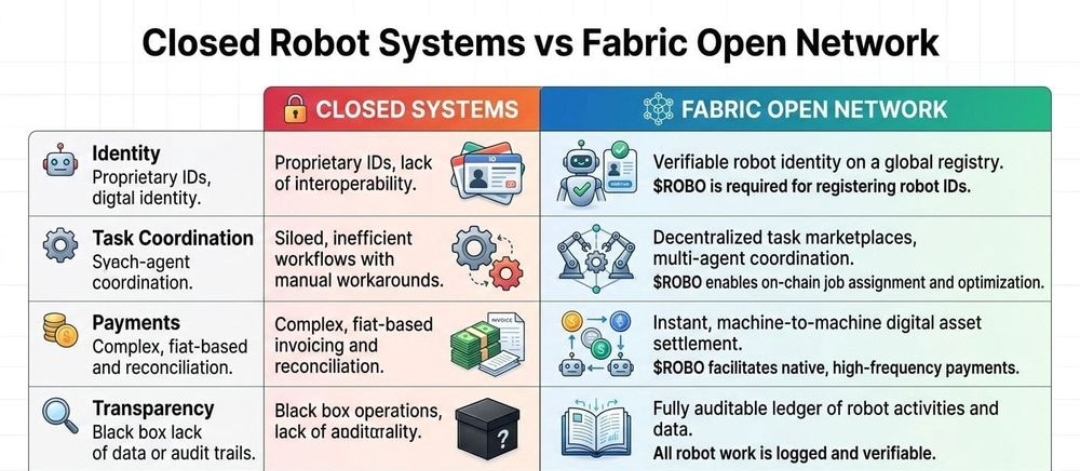
Instead of building robots we simply trust, what if we started building robots we could verify? $ROBO