
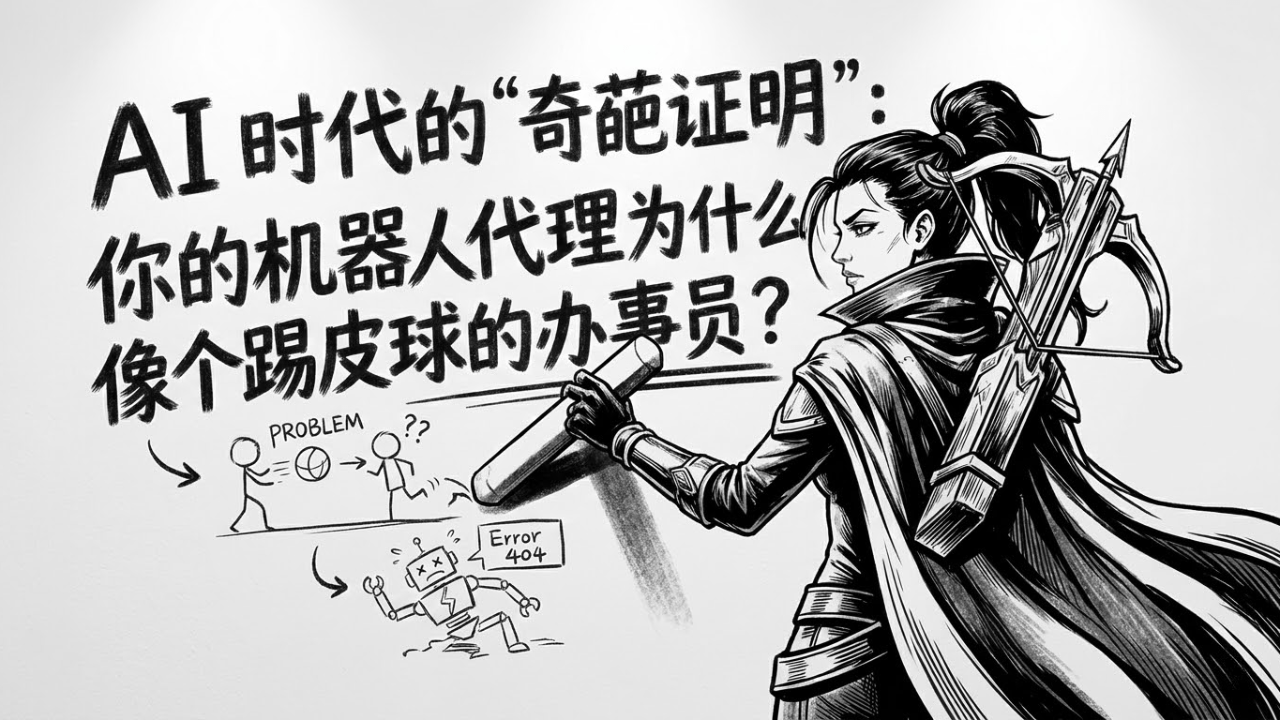
Not long ago, I went back to my hometown to help my elderly family members with health insurance reimbursement, and I was really exhausted by the ridiculous certificates.
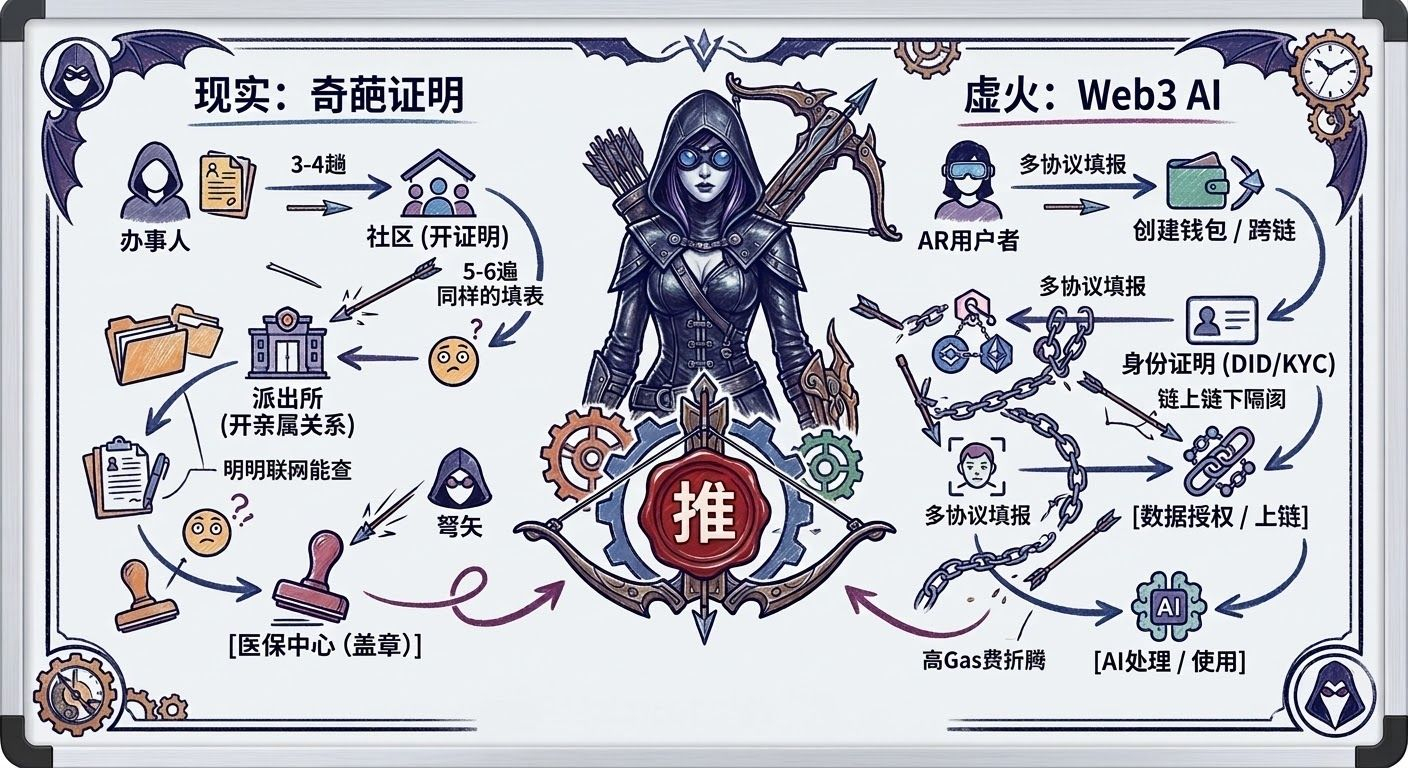
The documents are all in order, yet the process is frustrating. First, you need to go to the community to get a residence certificate, but then the window tells you to first go to the police station to get a proof of relationship.
After rushing to the police station, the staff again said I needed to get the health insurance application form stamped first. Running back and forth three or four times, filling out the same information five or six times.
Clearly, the information can be checked online in the background, yet they insist on making people run around for a stamp. Just thinking about the feeling of being tossed around is frustrating. The problem is, you can’t complain, otherwise, you know.
In reality, this matter has been quite troublesome, right? But the currently hyped Web3 AI track is even more exaggerated.
One | Full of lofty claims, AI agents are actually all isolated islands.
In the entire circle, slogans are shouted daily, claiming that AI agents can autonomously handle all tasks and will soon achieve the Internet of Everything.
But reality bursts that bubble; it's full of loopholes. The AI on Chain A cannot trust the computing power of Chain B and cannot be directly called.
The so-called interconnected ecosystem is, in short, information islands where each issue their own tokens and guard their own territory. Data is not interoperable, and resources are not shared.
AI wants to schedule resources across networks, relying only on inefficient centralized cross-chain bridges, and even requires manual matching.
This operation is no different from running around in reality to get bizarre proof.
If you can't even achieve cross-chain 'proving I am me', how can you dare to boast about the grand narrative of the AI economy?
This is no different from buying P2P financial products that can run away at any time; it's purely a deception.
Two | The one that can truly solve problems is this project.
Nowadays, the AI track is mixed; more than half are empty shell projects that exploit others.
After careful selection, I settled on a project linked to the real world: @Fabric Foundation . The reason is simple: it doesn't play with illusions and focuses on pain points.
First, let’s talk about the core positioning: ROBO is not a closed project created behind closed doors.
It is a solid underlying universal trust protocol and a completely open settlement network, entirely different from projects on the market.
Fabric is not limited to virtual chains but directly reaches into the physical world. It focuses on DePIN and embodied intelligence implementation, tackling hard problems.
The core pain point it aims to solve is very clear: breaking data silos.
In reality, major hardware manufacturers play by their own rules, with incompatible devices and no data communication. This is the most challenging industry barrier and a major obstacle for AI implementation.
Why not boldly imagine future scenarios?
Tens of thousands of robots, sensors, and smart devices from different brands need to collaborate across platforms. Who will do the decentralized scheduling? What will complete the settlement?
$ROBO is the essential 'fuel' driving this physical large network.
As long as the devices call computing power and exchange data, it must be done through a protocol, completing transparent settlements on the chain. It also completely returns device control to distributed nodes.
Prevent centralized giants from monopolizing and safeguard the fairness of future physical-level computing power networks.
Three | Not speculating on coins or painting dreams, #ROBO is truly doing the work.
During this market correction, the market has been fluctuating, and the community is in an uproar, with everyone shouting to enter a deep bear market.
I didn't care about the market conditions; I went directly to the Discord developer channel and browsed the historical chat records.
I think the most intuitive way to discern the authenticity of a project is to see what the core team is doing.
I thought it was all about shouting 'pump it up' and 'don't crash it', but the result was completely unexpected.
The main discussion point in the group is the millisecond-level delay issue of cross-device cryptographic verification.
No one cares how much the coin price has dropped; everyone is concerned about how to enable different brands of robots to communicate, verify each other, and settle transactions without friction.
Fabric Protocol is already addressing the most challenging and foundational 'cross-department stamping' issues in the AI world.
Projects that are willing to work hard on dirty and tiring tasks to build open infrastructure truly have a competitive moat and are quality assets worth paying attention to.