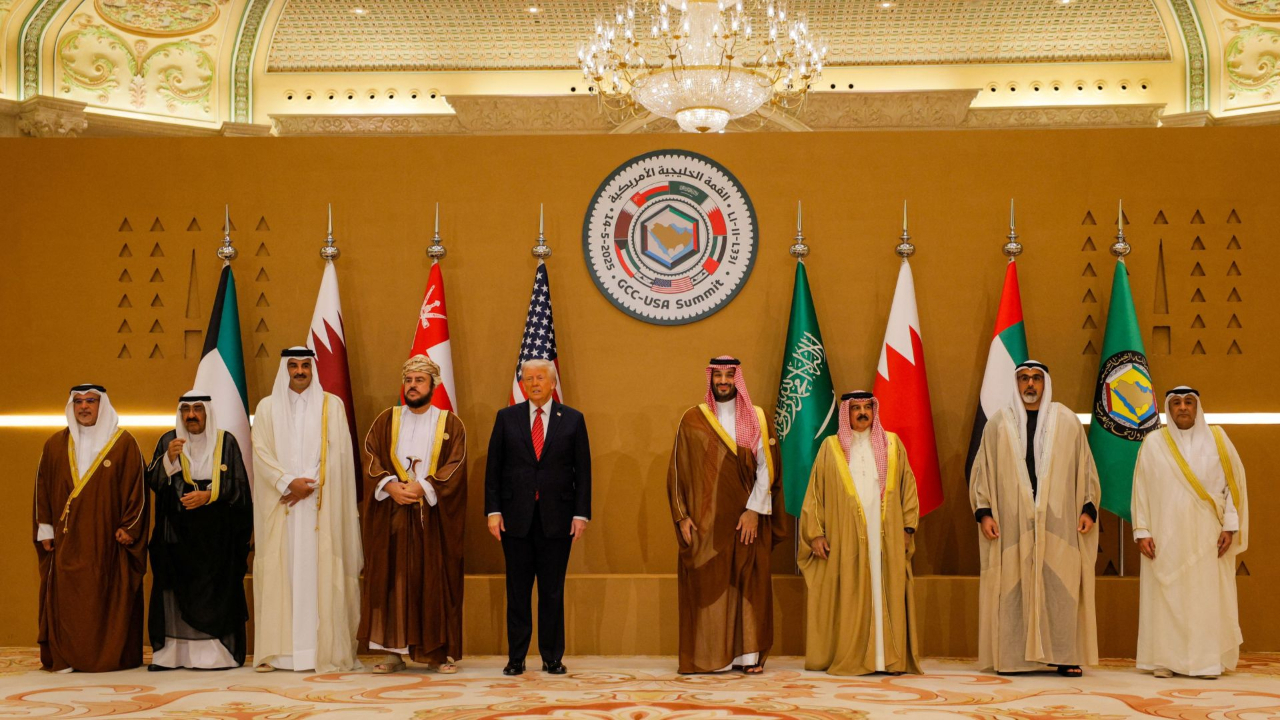
🚨 Why haven't Arab nations taken military action against Iran?
Some individuals argue that Arab countries could easily collaborate with Israel and the United States to execute a coordinated attack on Iran. Nevertheless, the situation is much more intricate.
Reliance on Water Resources
Numerous Gulf states are significantly dependent on desalination facilities to meet their drinking water needs:
Qatar – nearly 99%
United Arab Emirates – approximately 99%
Kuwait – around 92%
Bahrain – close to 85%
Saudi Arabia – about 60%
These nations transform seawater into potable water through energy-requiring desalination operations. In the event of conflict, such facilities may become highly susceptible to attack.
Iran has shown its capability to put pressure on energy sectors with assaults and threats targeting oil installations and maritime routes. If Gulf nations were to directly confront Iran, their desalination plants could be major targets, leading to catastrophic water shortages for millions.
Strategic Weakness
Military strategists often identify a country's most significant vulnerability as its "center of gravity. " Striking this area can incapacitate a nation's functionality. For numerous Gulf nations, water infrastructure embodies this concept.
Issues of Food Security
Food reliance presents another critical challenge:
Saudi Arabia obtains about 80% of its food via imports
UAE approximately 85%
Qatar is around 90%
Kuwait nearing 90%
Bahrain has about 90%
Local agricultural output is minimal, with fish supplies addressing only a minor fraction of demand. Some nations are boosting their poultry and dairy production, but food imports are still crucial.
The majority of Gulf nations hold 3 to 6 months' worth of food supplies. A disruption in shipping—especially through the Strait of Hormuz—could swiftly impact supply chains.
Healthcare Supply Lines
The capacity for local drug production is also limited:
Saudi Arabia manufactures roughly 35% of its medications
Iraq has about 20%
UAE around 25%
In Qatar, Oman, and Kuwait, approximately 20%
Bahrain is near 10%
However, the essential raw materials for producing these medicines are entirely imported, many of which travel through the Strait of Hormuz.
Defense Readiness
Another consideration is the ability to maintain military self-sufficiency. Iran has established its own production of various systems, including drones, missiles, naval vessels, and launch technologies, while several Gulf nations depend significantly on imported military assets—primarily from the United States.
$SIGN $RIVER $UAI