
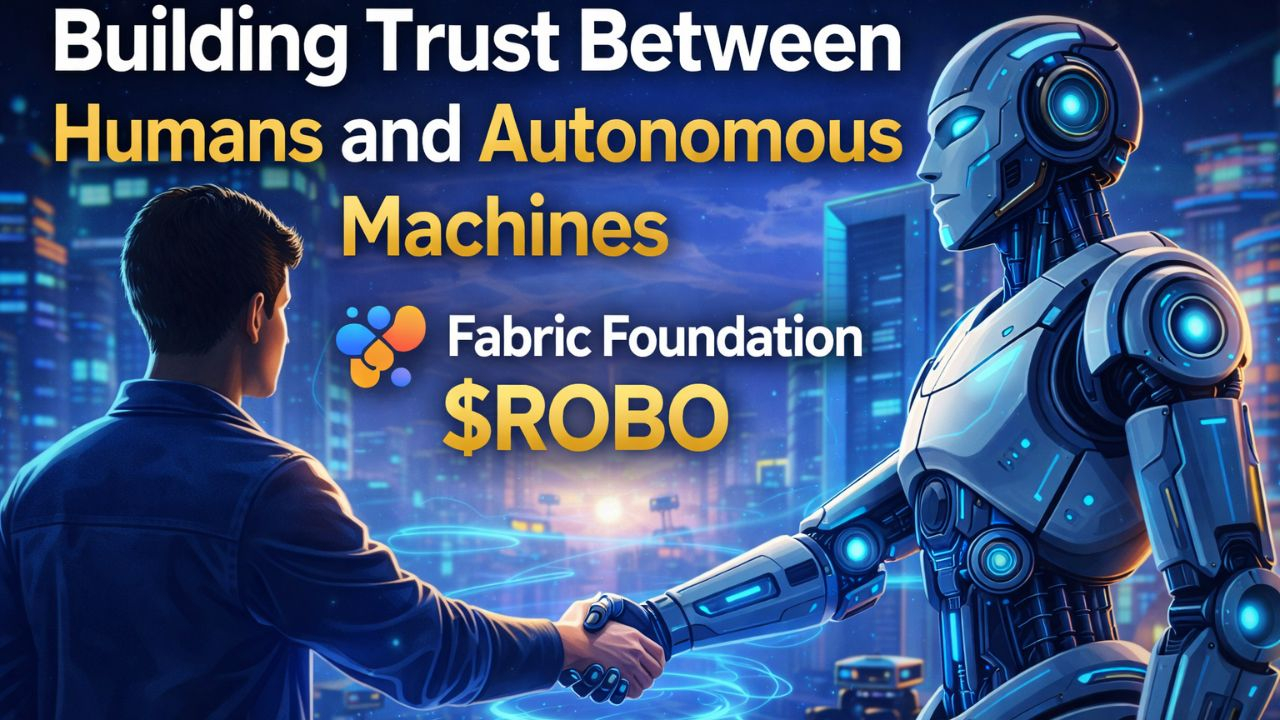

In the early days of robotics, machines stayed in factories. They followed instructions, repeated tasks, and rarely interacted with people. Today, things are changing as autonomous machines begin to work alongside humans in everyday settings.
Delivery robots on sidewalks.
AI-powered drones monitoring infrastructure.
Autonomous machines assisting in logistics, healthcare, and manufacturing.
But before this future can fully arrive, one fundamental challenge must be solved: trust.
How do we trust machines that make independent decisions?
This is the question that Fabric Foundation is trying to answer.
Fabric Foundation is building an open infrastructure designed to bring accountability, identity, and verification to autonomous machines. Instead of robots operating as anonymous systems controlled behind the scenes, Fabric proposes a model where every machine has a verifiable digital identity.
With this approach, robots can prove their identity before they interact with people, systems, or other machines. Their actions can be recorded, checked, and reviewed, which creates a clear record of what they do.
You can think of this as a trust layer for robotics and AGI.
This is where the $ROBO ecosystem comes in. The token helps support the network that checks machine identity, records actions, and allows autonomous agents to work together. As robots become more independent, systems like Fabric want to make sure their decisions can always be traced and checked.
Why does this matter?
The next wave of technology will not just stay inside computers. It will move into the real world, with machines making decisions, doing work, and interacting with people in everyday places.
Without a trust system, it could be hard to control or check autonomous machines. But with a framework like Fabric, machines can work in a clear and trustworthy environment.
In many ways, Fabric is exploring a simple but powerful idea:
Before machines can work everywhere, they must first be trusted everywhere.
That trust may not come from promises or reputation, but from systems that can prove what machines do, how they behave, and who is responsible for them.
As robotics and artificial intelligence come together, projects like Fabric could become even more important. The future of automation will depend on more than just smarter machines.
It will depend on systems that allow humans to trust them. @Fabric Foundation #ROBO $ROBO
