

For developers, the hard part in robotics is often not making a robot do something once. It is figuring out why it behaved that way, why it failed on the next run, and why the fix took three different tools and a late night to trace. That is where Fabric Protocol gets interesting. In its own materials, Fabric frames itself as infrastructure for robot identity, task settlement, structured data collection, and public oversight, with an explicit goal to make machine behavior “predictable and observable.” The whitepaper even describes a “Global Robot Observatory,” where humans can observe and critique robot actions, while OpenMind presents FABRIC as a peer to peer layer for trusted identity, verified location, collaboration, and real time decision making.
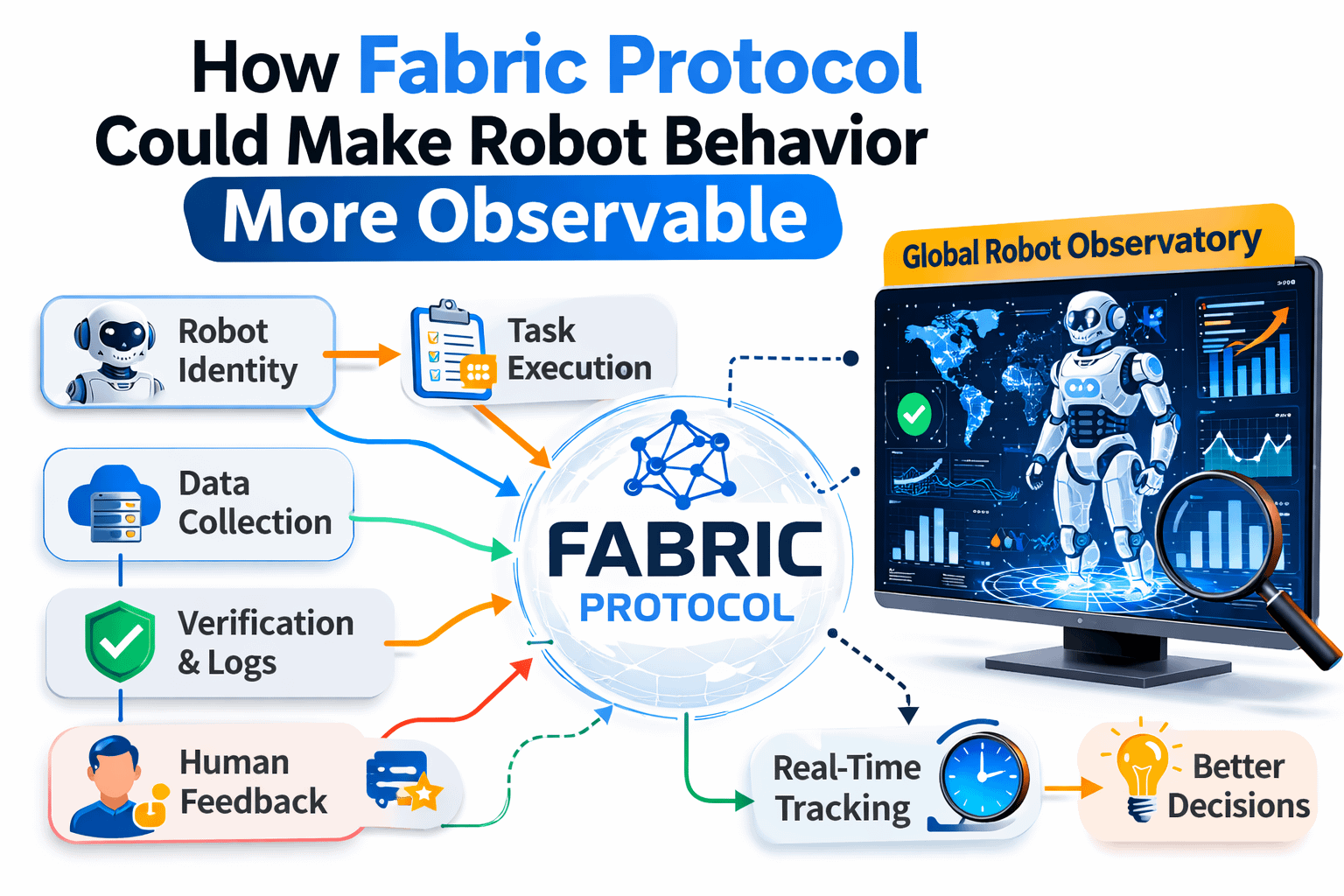
What matters for builders is speed and reduced friction. A lot of robotics debugging today feels messy because logs are scattered across local devices, cloud dashboards, custom scripts, and whatever a team hacked together during the prototype stage. Fabric’s pitch is simpler: give each robot a verifiable identity, record important actions in a shared system, and standardize how task execution and data submission are tracked. That does not magically solve robotics, of course, but it does attack a very real bottleneck. When behavior is easier to trace, teams spend less time arguing about what happened and more time improving what happens next.
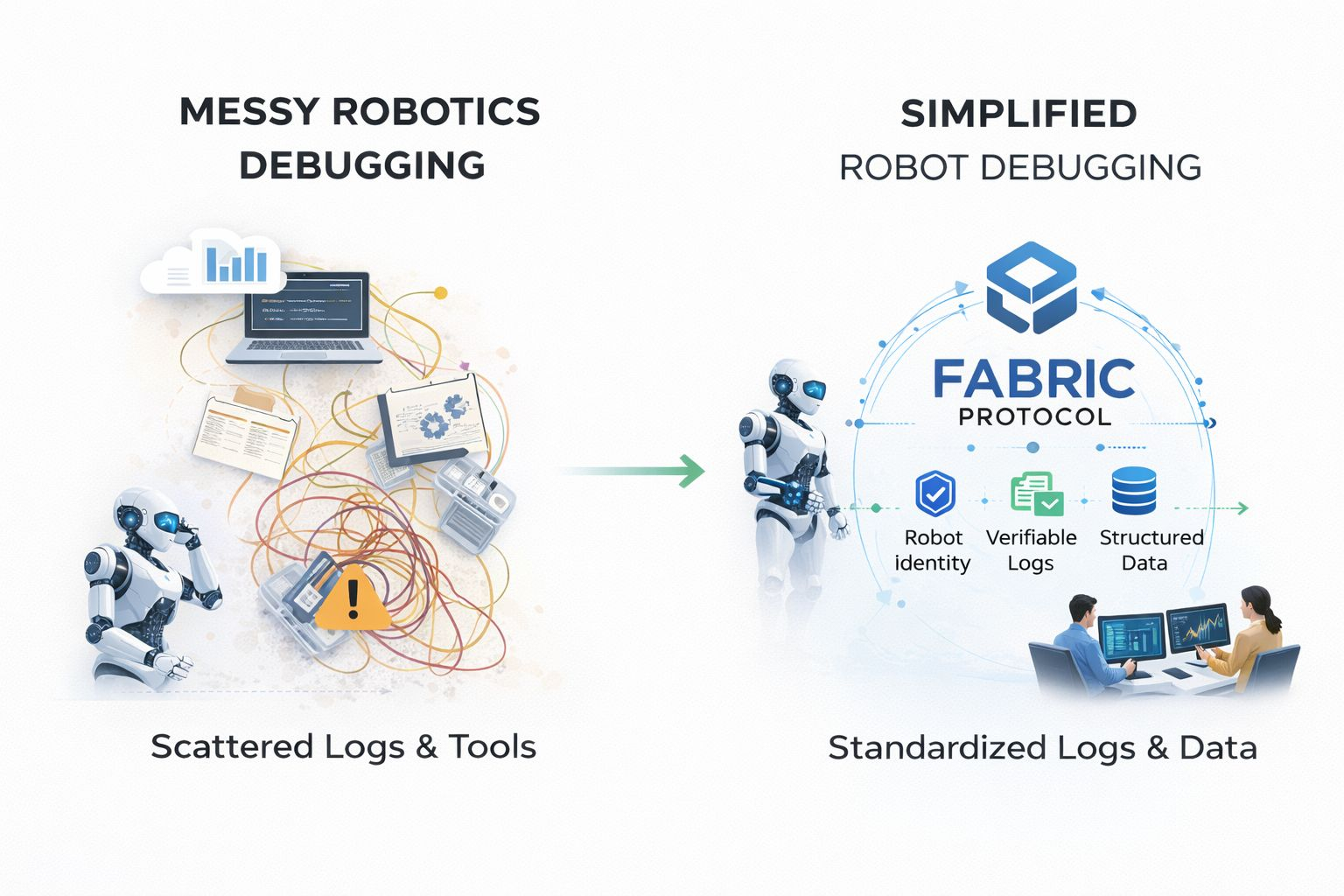
The idea becomes more practical when you strip away the crypto language. “Observability” just means being able to see what a system did, in what order, under what conditions, and with what result. In software, developers rely on logs, traces, and metrics. In robotics, that same need is even sharper because code touches the physical world. A delivery robot that hesitates at a crowded doorway or a warehouse arm that misjudges a pickup is not just generating an error message; it is creating a real operational problem. Fabric’s roadmap says 2026 Q1 is about robot identity, task settlement, and structured data collection, then Q2 and Q3 expand incentives, data collection, and multi-robot workflows. That progression makes sense to me because good observability usually starts with clean data before it scales into automation.
A simple real life example helps. Imagine a small robotics startup deploying ten inspection robots in industrial sites. One robot keeps missing a valve reading task after sunset. In a typical stack, the team might check camera logs in one place, inference outputs somewhere else, and maintenance notes in a separate spreadsheet. That is development friction in its purest form. Fabric’s model suggests a cleaner path: the robot has a persistent identity, the task is recorded, the result is tied to verified execution, and humans can attach feedback when edge cases appear. I like this angle because it treats robotics less like a black box and more like a system that can be audited without slowing every release to a crawl.
It is also easy to see why the market is paying attention right now. The whitepaper only appeared in December 2025, the blog introduced ROBO in late February 2026, and ROBO began trading on major venues around February 27. As of the latest public trackers, ROBO is trading around $0.04, with daily volume above $90 million on one tracker and above $176 million on another, which shows both strong early interest and the normal variation you get across data sources. That trading attention does not prove the protocol works, but it does explain why traders, developers, and investors suddenly care about its execution roadmap.
My view is fairly balanced here. The observability story is compelling because robotics desperately needs better shared tooling, and Fabric is speaking directly to that pain. The risk is that this is still early, and early protocols often describe a cleaner world than the one developers actually inherit. Even the whitepaper is clear that many governance and measurement details are still open questions, including how to define non-gameable metrics beyond revenue and how to verify work, compliance, efficiency, power use, and human feedback scores. So the honest takeaway is not that Fabric has solved robot observability today. It is that Fabric could make robot behavior more observable if it turns identity, verification, and structured feedback into tools developers can use without adding more complexity than they remove