
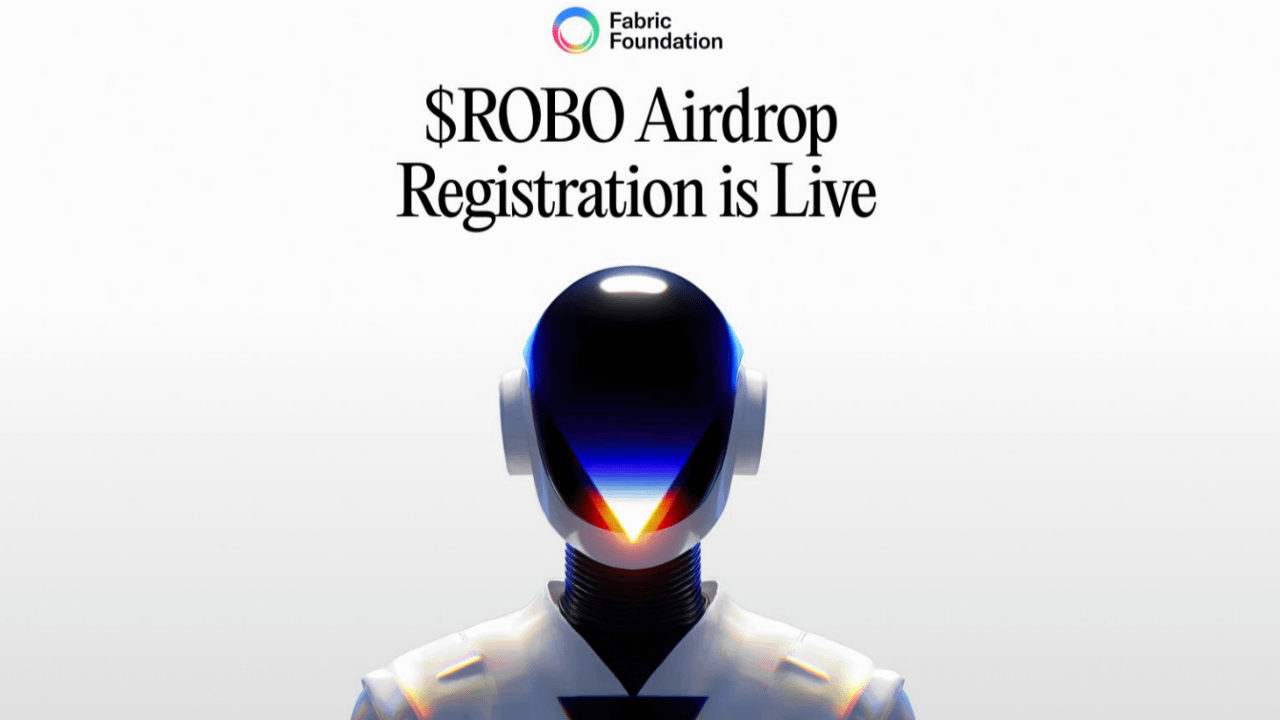
Robotics is the next major step for AI, and this statement aligns perfectly with current real trends. This is the official promotional content from Fabric Foundation – a non-profit organization established by OpenMind (@openmind_agi on X).
This is a project combining AI + robotics + blockchain to create a “decentralized robot economy.” What exactly is the project? OpenMind is developing OM1 – an open-source operating system for robots, functioning as a common “AI brain” for various types of robots (humanoid, quadruped, arm… from multiple manufacturers). They have implemented this in practice with partner Unitree (thousands of robots in schools).
The Fabric Foundation is the economic & governance infrastructure: providing on-chain identity, automated payments, and decentralized governance for robots. Robots can receive money, pay for charging/compute, sign contracts, and cooperate with each other without intermediaries.
The ROBO Token is the “fuel” of this ecosystem (utility + governance token), launched in February 2026 and currently trading on major exchanges like Binance, Bybit, Gate.io, MEXC, Coinbase... Real collaboration with big players Circle (USDC): Official partnership to integrate protocol x402 – allowing robots to perform thousands of real-time payment transactions per second (recognized by the CEO of Circle).
Unitree: Practical deployment partner, proving that robots can operate independently and manage their finances. Additionally, OM1 is designed with high compatibility, supporting the integration of large language models (LLM) from various providers, including advanced models from xAI or OpenAI.
This allows robots not only to perform basic tasks but also to continuously learn from their surroundings, improving performance over time.
For example, in schools using Unitree, quadruped robots have helped teach programming and AI to students while collecting anonymous data to train a common model, creating a positive feedback loop for the entire ecosystem.
On the part of the Fabric Foundation, this organization not only focuses on building infrastructure but also on ensuring transparency and safety. Each robot is assigned a unique on-chain identity, similar to a "digital passport", helping to track activities without violating privacy.
Automated payments using stablecoins like USDC allow robots to pay immediately for charging services at public stations or purchase compute from the decentralized cloud network. Moreover, the governance mechanism allows the robot owner community to vote on software upgrades, avoiding the situation where a large company controls everything. The Token $$ROBO is not only a payment tool but also carries real governance value.
Users can stake tokens to receive rewards from the transaction fees generated by robots, or participate in proposing new feature developments. The launch in February 2026 received strong support from the crypto community, leading to quick listings on many reputable exchanges like Binance, Bybit, Gate.io, MEXC, and even Coinbase, enhancing liquidity and global reach.
Collaboration with NVIDIA brings exceptional compute power to OM1, enabling the training of complex AI models on high-end GPUs without relying on centralized infrastructure. This is particularly important as humanoid robots begin to gain popularity, requiring massive data processing to move smoothly and interact intelligently.
Overall, this project opens a new era where robots are no longer passive tools but become independent economic entities. They can participate in DeFi, provide services to humans, and even collaborate with each other to complete large tasks such as building infrastructure or monitoring the environment.
According to forecasts from reputable research organizations, the robotics market will exceed 150 billion USD in the next 2 years, and the Fabric Foundation is the bridge to make this development more decentralized, democratic, and sustainable.
If you are interested in participating, you can start by downloading the open-source OM1 from the official OpenMind website, connecting compatible robots, and setting up your $R$ROBO robot's self-operating economic wallet.
This is truly a significant advancement, a perfect combination of AI, robotics, and blockchain, promising to change the way we live and work in the near future.