
While the market is still defining ZKsync with the label of 'another L2', the true builders have already seen clearly: ZKsync was never built to become 'another Rollup'.
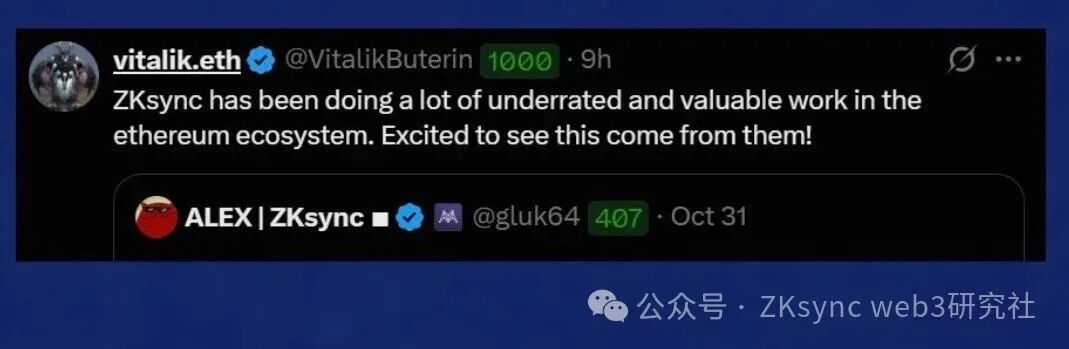
ZKsync Era ≠ ZKsync is just a starting point.
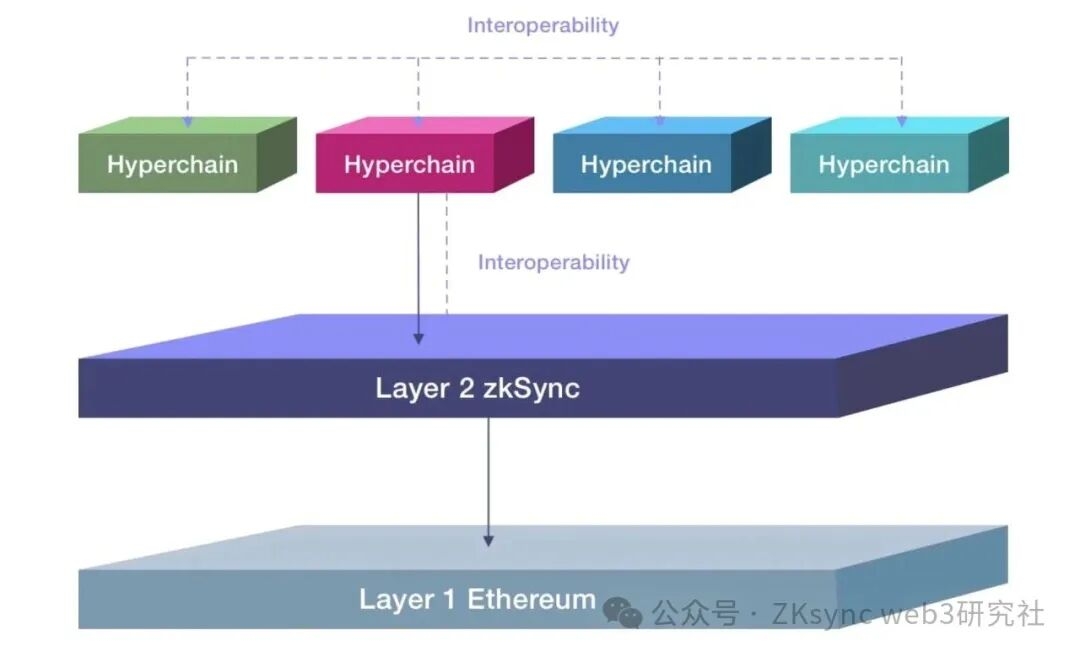
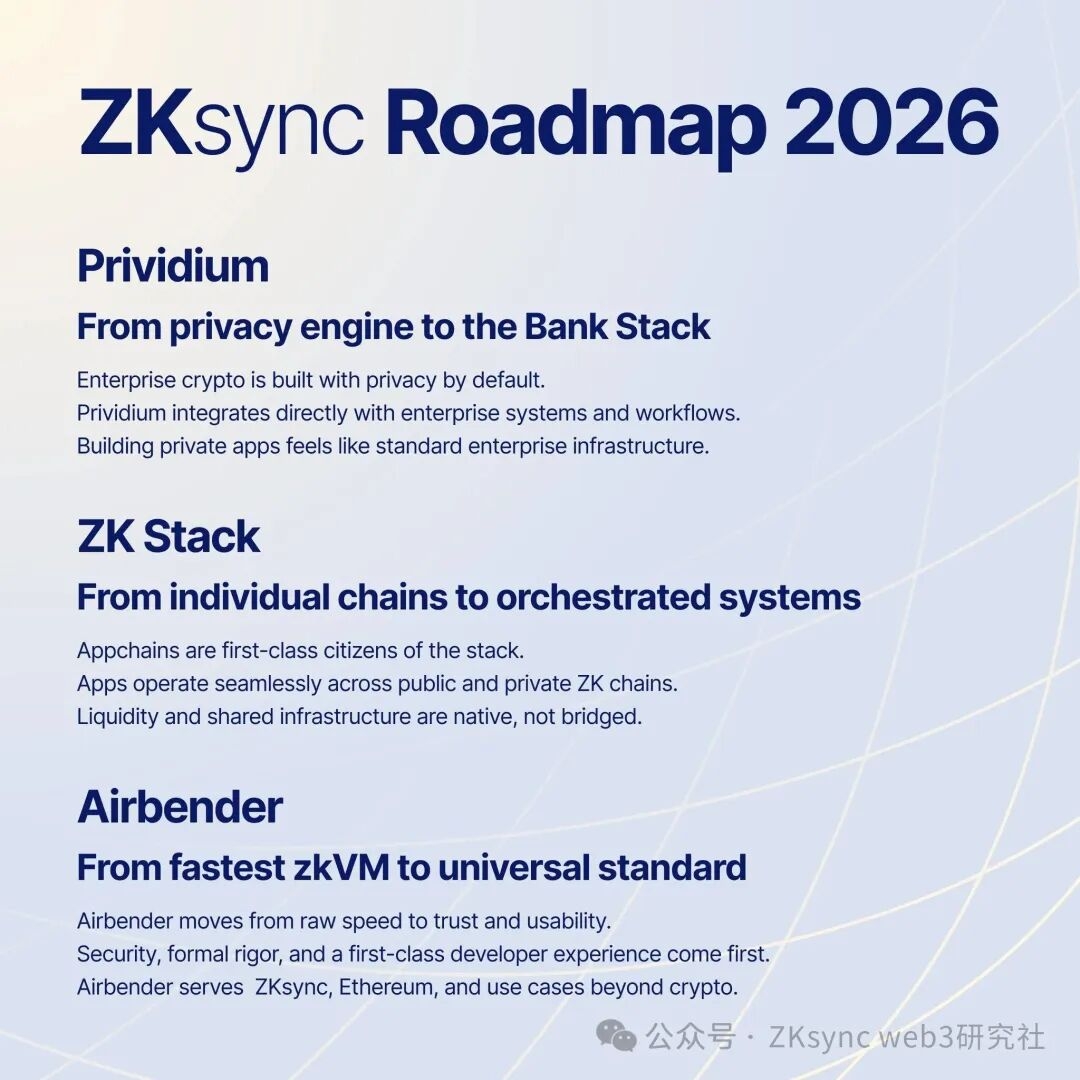
Today's ZKsync is a resilient network composed of over 20 zkChains, a private chain architecture called Prividium that allows institutions to confidently go on-chain, an Atlas protocol that enables native cross-chain interoperability, and an Airbender engine that significantly reduces proof costs.
This is not an evolution of L2, but a redefinition of 'what L2 is'.
I. Difference in positioning: From 'scaling tool' to 'institutional track'.
Vitalik Buterin explicitly pointed out in his latest discussion on L2 directions: As Ethereum L1's scaling capacity increases, L2 must shift from 'pure scaling' to 'creating unique value'—privacy, sovereignty, specific application efficiency, and non-financial use cases.
ZKsync's answer to this shift began planning as early as 2025:
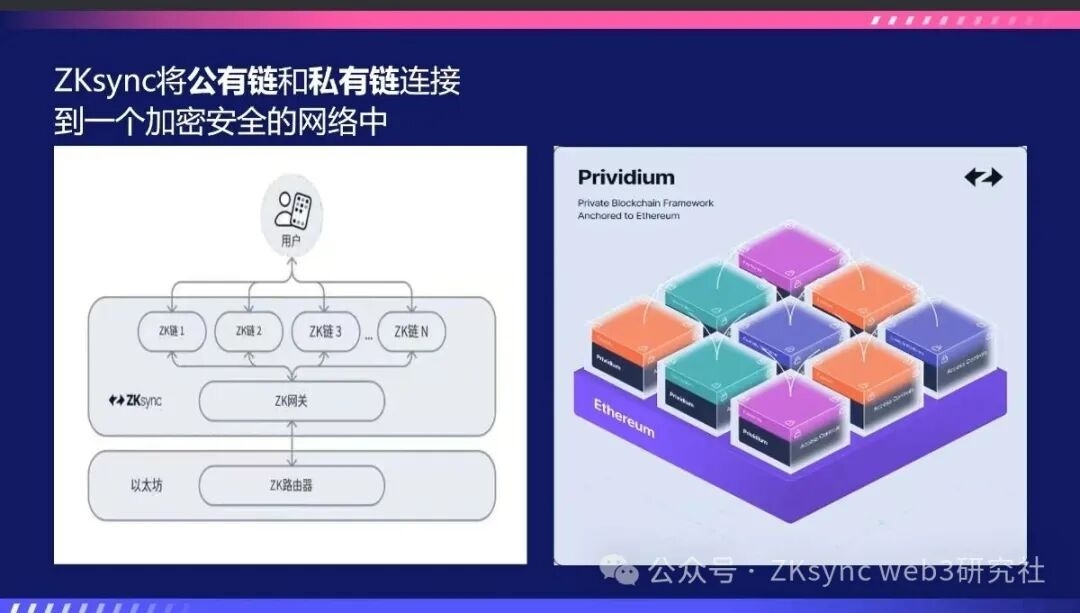
· Prividium (Bank Stack): Enables institutions to access Ethereum liquidity while maintaining complete data sovereignty. This is not a concept, but a production-level solution being piloted by top institutions like Deutsche Bank.
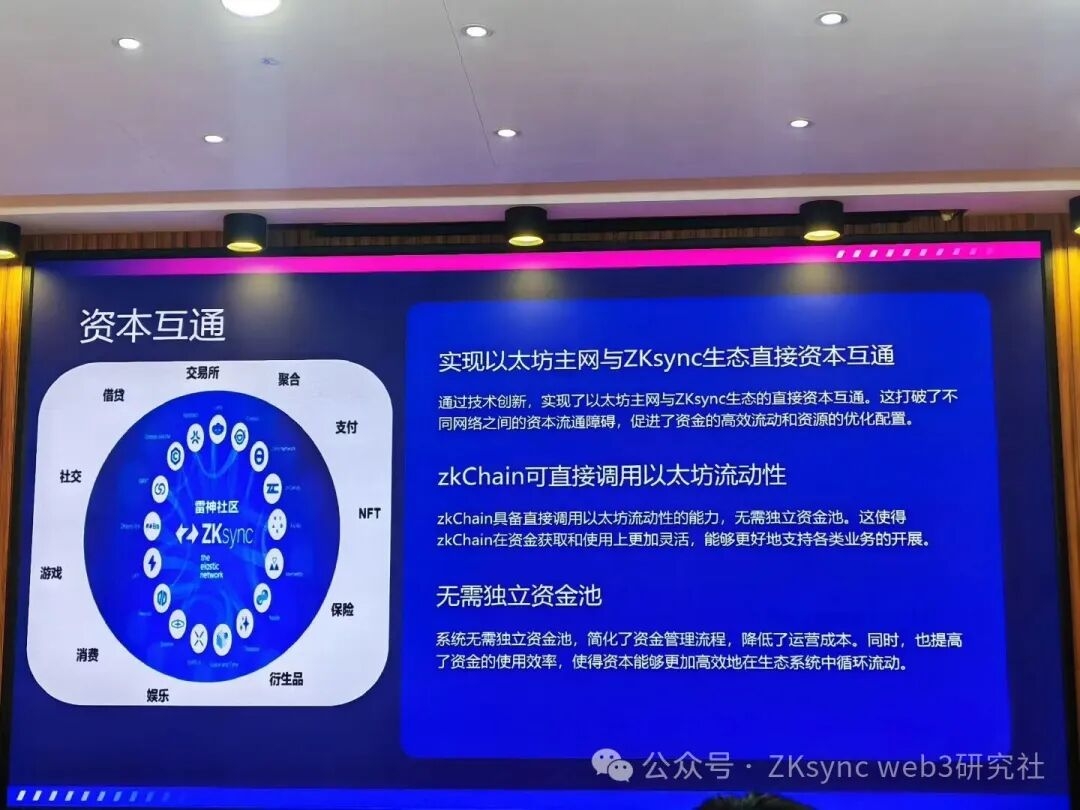
· Atlas Protocol: Achieving native cross-chain coordination between public chains, application chains, and private chains, without fragile bridging or wrapped tokens. The elastic network composed of over 20 zkChains is validating the feasibility of this architecture.
· Airbender Verifier: Making validation faster and cheaper, clearing cost barriers for long-term decentralization and high-performance expansion.
The direction of this combination is clear: ZKsync is becoming the backbone track for Ethereum aimed at institutions—payments, RWA (real-world assets), fund management, and regulated financial services. These scenarios that require large-scale privacy, interoperability, and reliability are precisely the origin of ZKsync's design.
II. Difference in technology: Not a single chain, but a 'federation of chains'.
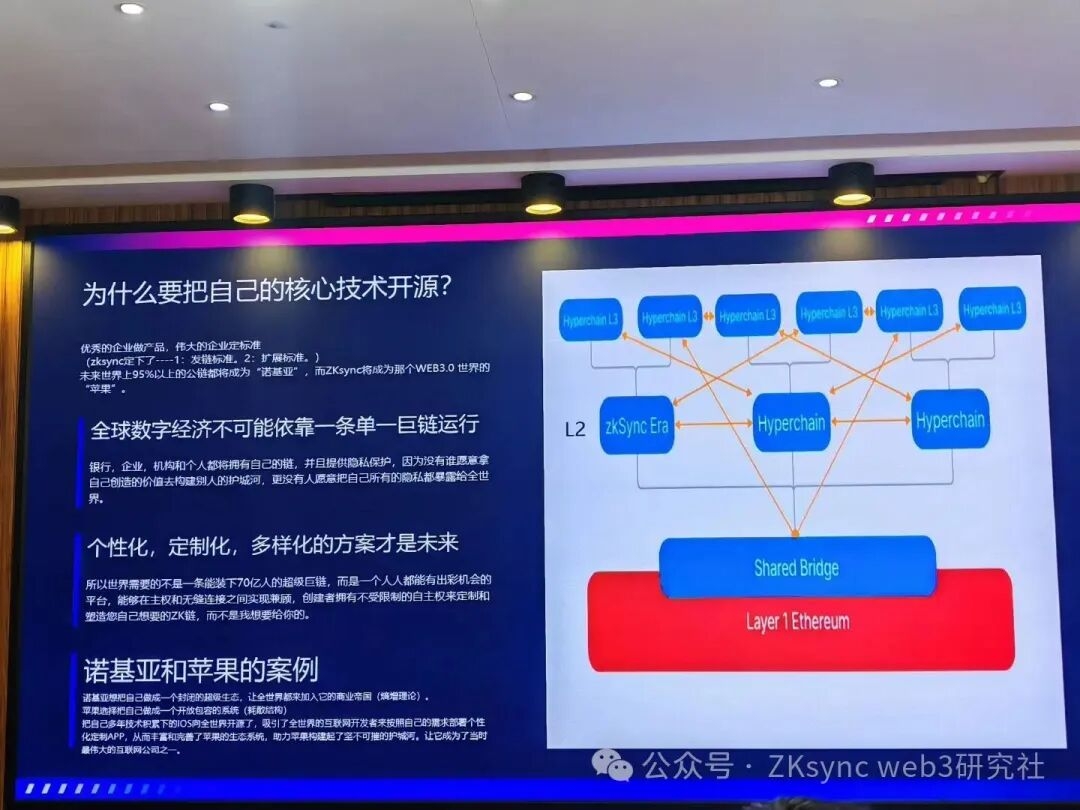
The narratives of the vast majority of L2s still stay at 'My chain is faster and cheaper.' ZKsync's narrative is: We are building a 'chain federation' composed of multiple chains, natively interoperable, and can be private or public.
· Elastic Network: Over 20 zkChains connect with each other, sharing security and liquidity while retaining their own governance and execution environments.
· Prividiums: Institutions can run sensitive businesses on private chains while seamlessly connecting to Ethereum through ZK proofs.
· Atlas: Cross-chain coordination like single-chain operation, atomic-level finality of about 1 second, without third-party trust.
This is no longer a competition of 'one chain,' but a competition of a set of architectures. While other L2s are still vying for DEX liquidity, ZKsync has already paved the track for the on-chain migration of trillions in institutional assets.
III. Difference in timing: Planning in 2025, shaping in 2026.
This architecture did not come from nowhere. From the launch of Atlas in 2025, to the validation completed by Prividium and institutions like Deutsche Bank, to Airbender becoming the fastest zkVM—every step lays the foundation for today's 'clearer long-term architecture.'
By 2026, ZKsync is no longer a 'potential stock,' but an operational institutional-level infrastructure. Over 20 zkChains in the ecosystem, a migration option of $20 billion in sovereign assets, and deep collaboration with top financial institutions—these are not roadmaps, but established facts.
IV. Perspective of ordinary people: How to find the right position in this reconstruction.
What does ZKsync's 'standing out' mean for ordinary participants?
The first understanding of the track change: The competition of L2 has shifted from 'who is faster' to 'who can serve institutions.' ZKsync's institutional focus is becoming its biggest differentiation advantage.
II. Focus on ecological opportunities: The elastic network of over 20 zkChains means that a large number of application scenarios are emerging: RWA platforms, compliant DeFi, cross-chain protocols, privacy applications... Each segmented track may breed new value heights.
Third, embrace long-termism: The migration of institutional assets is a process of five to ten years, not just a few months of speculation. What truly deserves investment are those projects that have completed positioning across technology, compliance, and ecological dimensions.
V. Conclusion: The 'endgame narrative' that ZKsync is writing.
Vitalik said that L2 must find unique growth points. ZKsync's answer is: privacy + interoperability + institutional readiness.
While other L2s are still vying for 'cheaper Uniswap,' ZKsync has already built a compliant bridge to Ethereum for banks, sovereign funds, and regulated financial institutions. This is not just a technical choice, but a strategic positioning—in an era where trillions of assets are about to go on-chain, becoming the 'backbone track' that understands institutions the best, is the safest, and is the most interoperable.
This is the true reason why ZKsync stands out.
Follow us for insights into the future.
Here is the lighthouse in the deep waters of blockchain, a safe harbor and lookout in the Web3 wave.
We provide more than just information; we build cognition. Here, you will gain:
· In-depth interpretation: Going beyond the surface of the news to analyze the core technology and ecological trends.
· Pitfall Guide: Using professional experience to identify risks for you, protecting assets and attention.
· Exclusive perspective: As a deep participant in the zkSync ecosystem, delivering frontline insights and builder thinking.
· Value Network: Connecting truly focused developers, thinkers, and long-termists.
Every technological leap breeds new opportunities. Instead of fragmented chasing in the flood of information, it is better to anchor direction and move forward together with a group of peers.
Follow us.
Participate in building together, not just observing.