

We often talk about the future of robotics in terms of technology. Sensors are more accurate. AI models are smarter. Hardware is cheaper. All of this is important, but it’s not enough to explain the changes that are happening.
What is emerging now is not just smarter robots. What is emerging are robots that are starting to participate in the economy.
This is where the role of the Fabric Foundation becomes interesting.
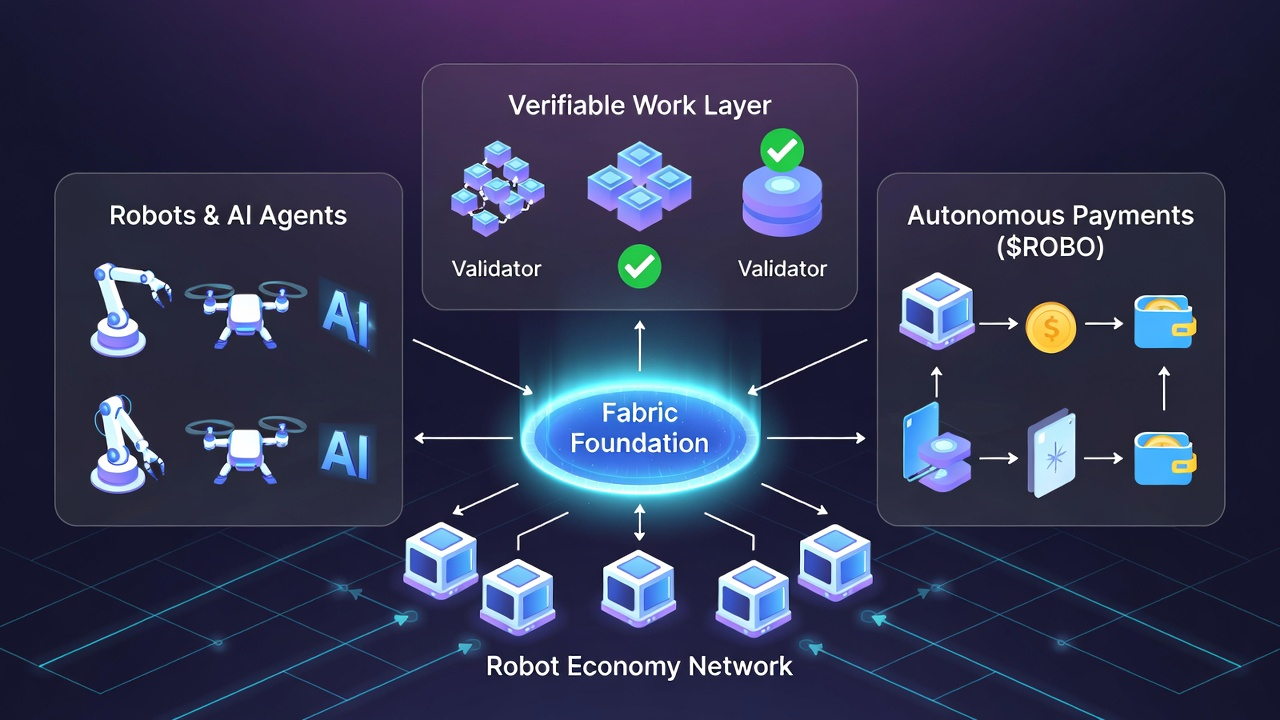
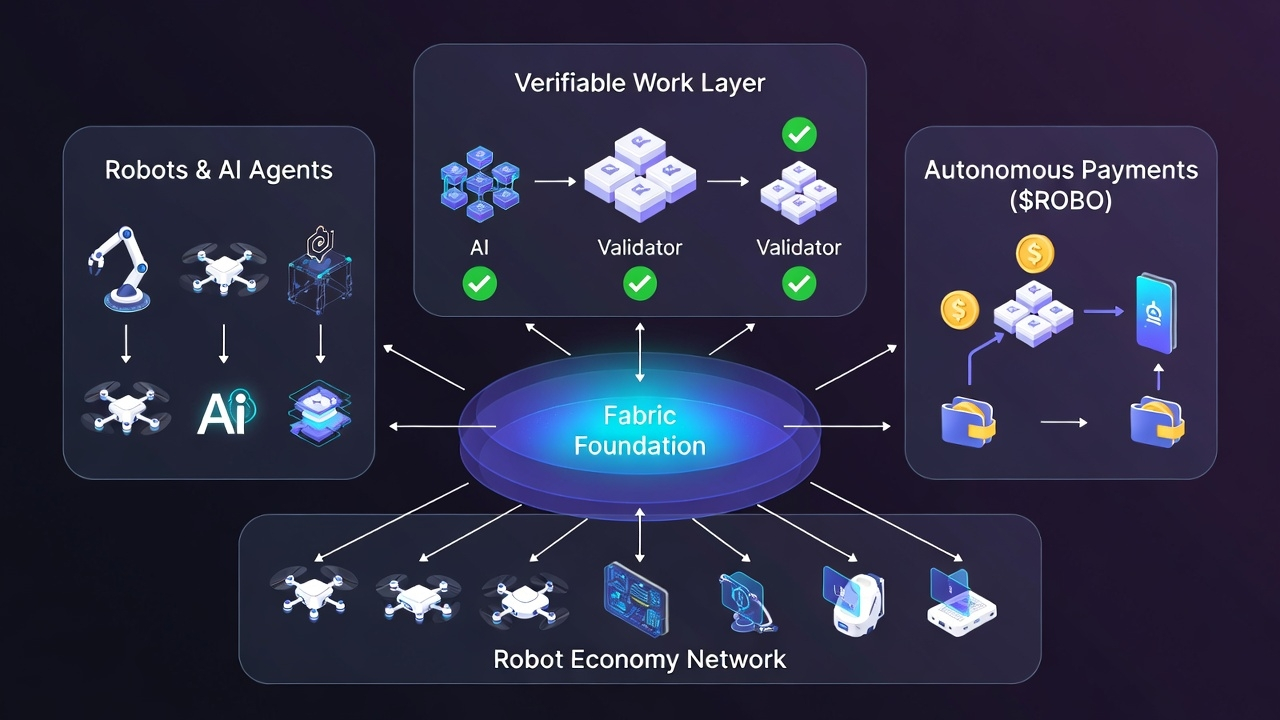
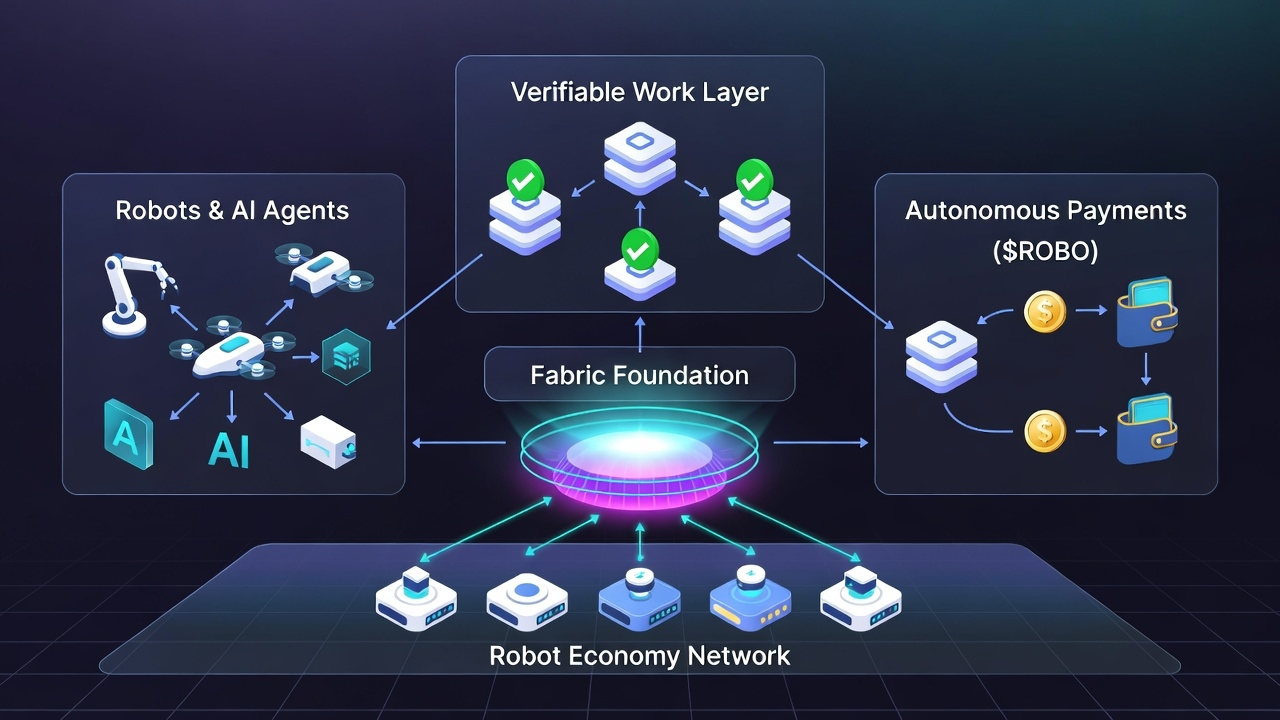
The Fabric Protocol is designed as a network that allows robots, AI agents, and automated systems to interact through a verifiable blockchain infrastructure. This means machines not only perform tasks but also have identities, can conduct transactions, and can participate in shared economic coordination.
This concept is often referred to as the robot economy.
In the traditional economy, the main actors are humans and companies. In the early digital economy, the main actors are applications and platforms. But in this new model, the economic actors are automated agents.
Robots can accept jobs, complete tasks, and then receive payments.
AI agents can manage digital resources, perform DeFi transactions, or participate in coordination systems without human intervention.
However, for such an economy to function, one crucial component is needed: trust in the actions of machines.
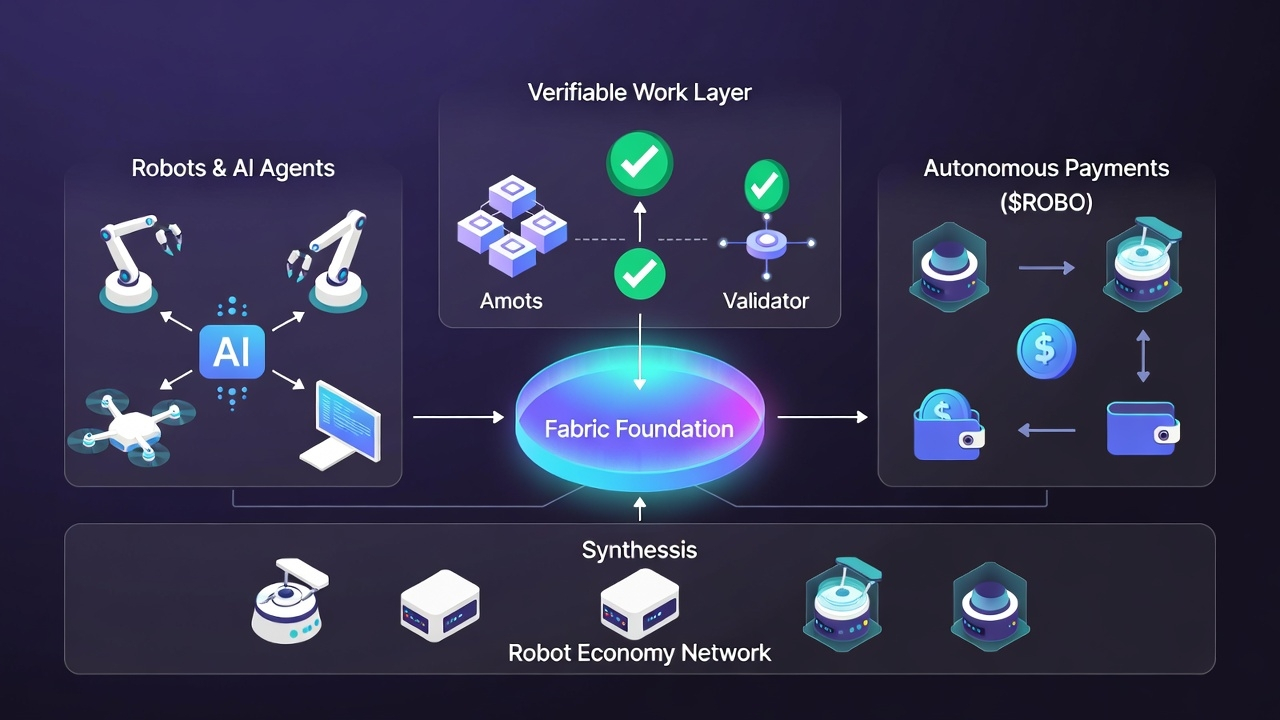
If a robot claims to have completed a job, how does the system verify it? If an AI agent makes financial decisions, who ensures that the actions comply with regulations?
Fabric Protocol seeks to answer this question through verifiable computation.
Every action of an agent can be recorded in a public ledger and verified by a network of validators. In this way, machines not only act but also leave a trace that can be inspected.
In this ecosystem, $ROBO becomes the mechanism that drives incentives.
The token is used for network coordination, payments, validator staking, and ecosystem governance. In other words, $ROBO is not only a speculative asset but the fuel for the economy of the machines being built.
Recent developments indicate that the market is starting to pay attention to this concept. Listings on several major exchanges and increased trading activity show interest in projects that attempt to combine AI, robotics, and blockchain into a single architecture.
However, the more important question is not the price of the token.
The question is whether we are really ready for an economy where some of the participants are not human.
If robots begin to have digital identities, crypto wallets, and the ability to interact autonomously, then the global economic system will undergo a much greater change than just the emergence of new technology.
And in that experiment, Fabric Foundation is trying to build infrastructure that allows machines not only to work but also to participate in a real economy.
@Fabric Foundation #ROBO $ROBO
