

Robots Are About to Have Their Own Wallets. And That Should Excite You.
@Fabric Foundation and #ROBO are building something most people haven't even thought about yet : a world where machines earn, spend, and trust each other without a single human in the loop!
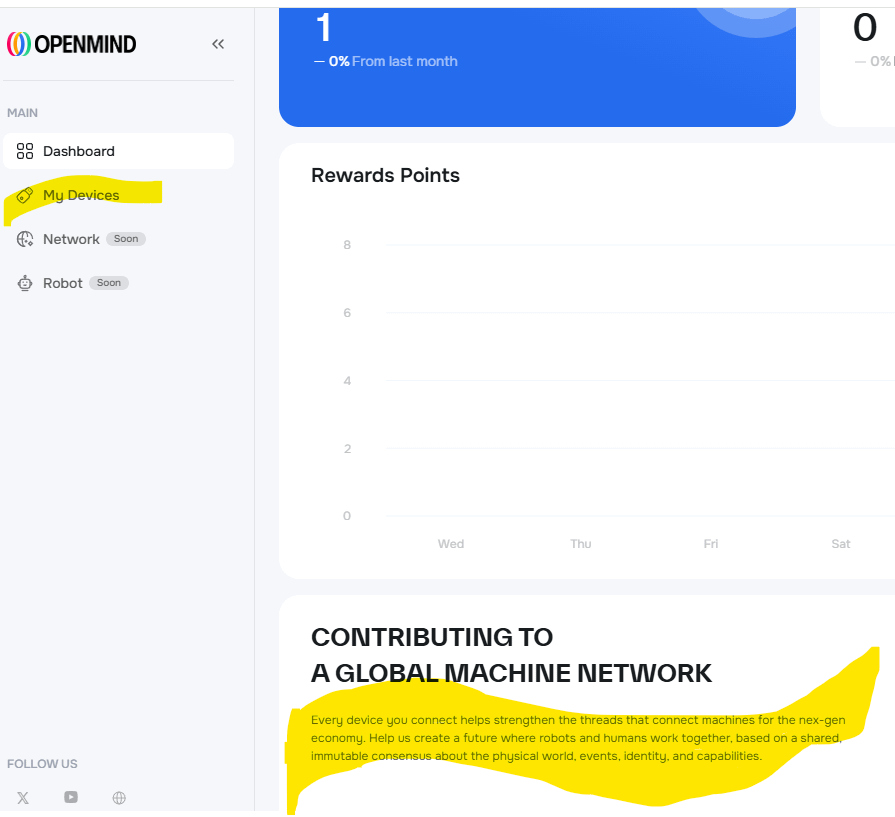
I was browsing the Open Minds website the other day ( Fabric Foundation's partner) and I spotted something that stopped me mid-scroll. There was a button, simple, almost understated - inviting you to connect a device to their global machine network. The copy next to it read:
"Every device you connect helps strengthen the threads that connect machines for the next-gen economy. Help us create a future where robots and humans work together, based on a shared, immutable consensus about the physical world, events, identity, and capabilities."
I read it twice. Then I went down a rabbit hole. What I found genuinely blew my mind , and I think it should blow yours too.
First, What Is Fabric Foundation Actually Building?
The short answer: a decentralized trust layer for the physical world.
We already have blockchains that record financial transactions in a tamper-proof way. Fabric is doing the same thing, but instead of tracking who sent money to who, it tracks real world physical events. Things like: a robot completed a task, a sensor detected movement, a machine verified its own identity. All of it recorded on chain, automatically, with no human needed to confirm it happened.
That button on their website? When you connect a device, you're adding another node to this network. More devices mean more verified data points about the physical world. More coverage. More reliability. It's the same logic as Helium (decentralized wireless) or Hivemapper (decentralized mapping) but for robotics and physical automation at scale.
Now Here's Where It Gets Really Interesting: ROBO
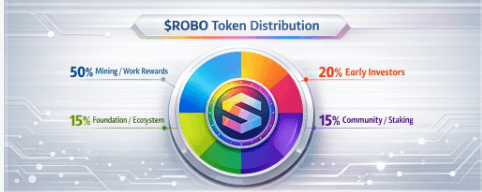
Fabric has a native token called ROBO, and it's not just a speculative play, it's the actual fuel that makes the whole machine economy run.
Here's how it works. Right now, if a company wants to deploy a fleet of robots, a human has to handle everything-payments, verification, contracts, billing. It's slow, expensive, and requires middlemen at every step. Fabric's vision eliminates all of that. Every transaction in their ecosystem: robot completing a job, a machine paying for charging, a device buying cloud compute -happens in ROBO, automatically, verified onchain.
The token launched for spot trading on February 27, 2026, hitting major platforms including Coinbase and Binance Alpha. It's currently price is around $ 0.047 with a market cap sitting near $ 105 million. Early days, but the infrastructure is live and real.
Wait , 🤔 Why Do Robots Even Need Money?
This is the question I kept asking myself and honestly it's the most fascinating part of the whole thing.
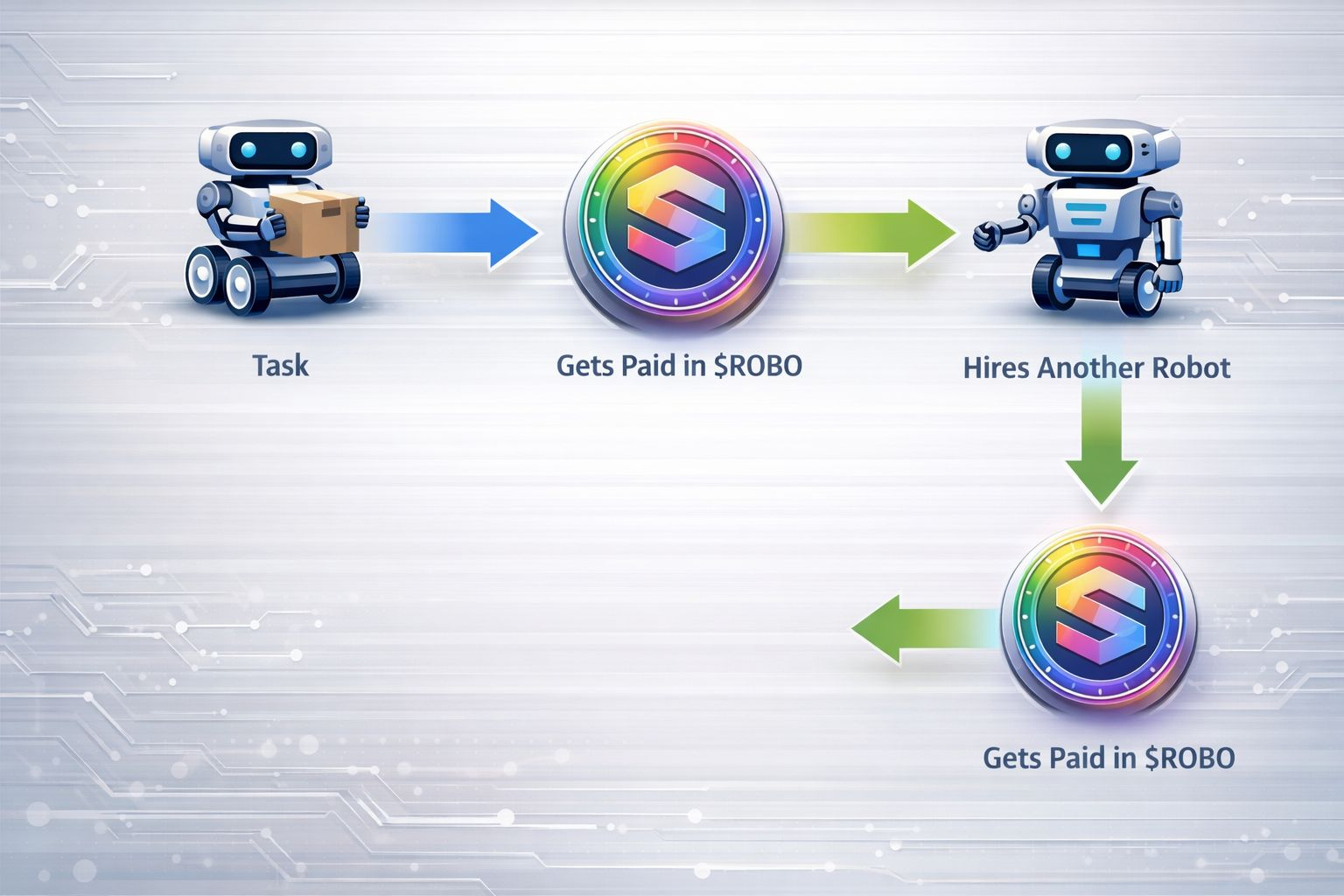
Today, robots don't need money because a company owns them and pays all their bills. But imagine a future where a robot operates semi independently out in the world. It needs to recharge: that costs something. It needs to process data in the cloud : that costs something. It might need to hire another robot to handle a task it can't do itself : that costs something too.
If all of that has to go through a human every time, it's not really automation it's just remote controlled labor with extra steps. But if a robot can earn ROBO by completing verified tasks, and then spend that ROBO to pay its own operating costs? Now you have something genuinely new. A machine that sustains itself economically. No invoices. No 30 day payment terms. No human accountant approving expenses.
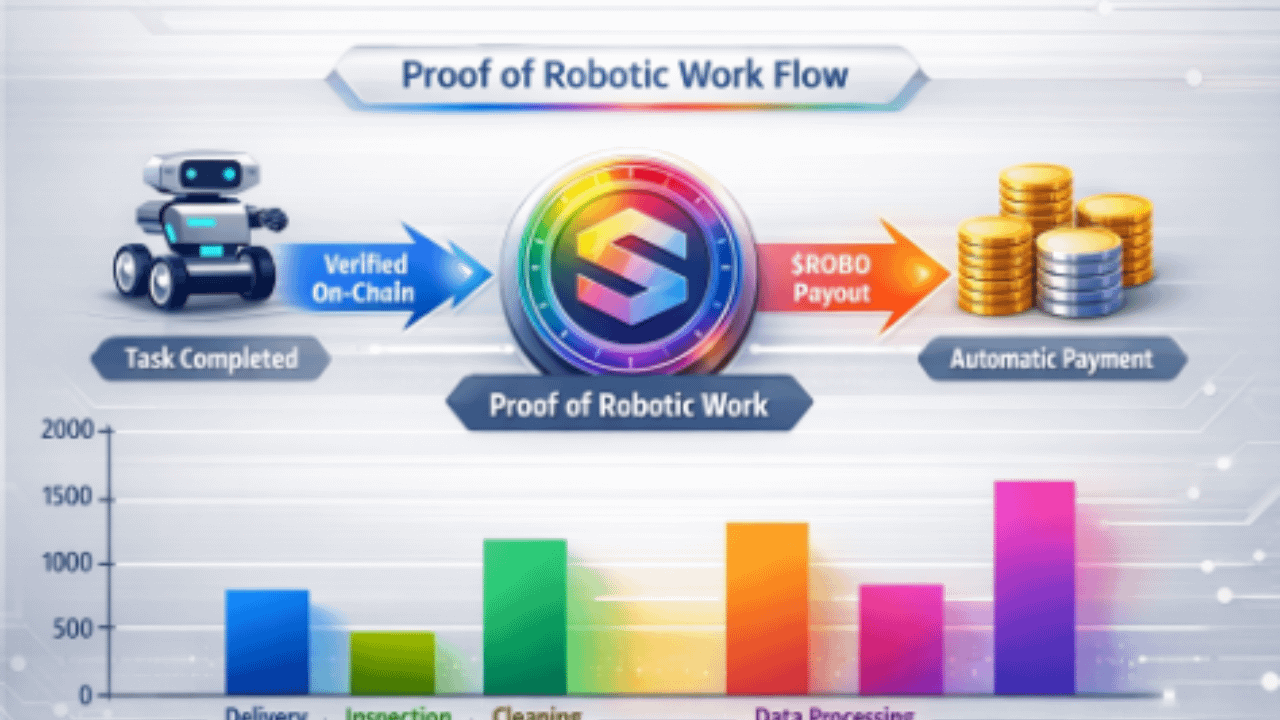
Fabric calls this Proof of Robotic Work a system where the network matches robotic labor to available tasks, and ROBO gets paid out automatically once the work is verified on chain. The robot doesn't "want" the money in any human sense. But the system works as if it does, and that's what makes it powerful.
Machine to Machine: The Part Nobody Is Talking About Enough
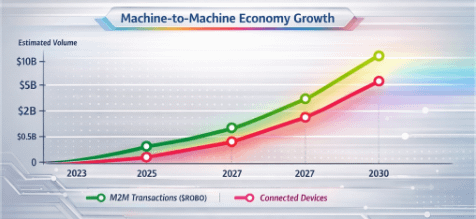
The human robot relationship gets all the attention. But the machine to machine angle is where this gets genuinely wild.
Think about a future logistics network , that's thousands of autonomous vehicles, drones, warehouse robots, all needing to coordinate in real time. Robot A needs Robot B to handle part of a delivery. Today that requires human systems, human agreements, human payment processing. With Fabric's infrastructure, Robot A could hire Robot B directly, pay in ROBO the second the task is verified done, and the whole thing happens in seconds with a permanent tamper proof record.
No middlemen. No trust required between companies. The blockchain is the agreement. The blockchain is the payment processor. The blockchain is the receipt.
So What Is That Button Actually Doing?
When Fabric invites you to connect a device, you're not just plugging in a gadget. You're becoming part of the infrastructure. Your device contributes verified data location, sensor readings, real-world events to a network that robots and machines will eventually rely on to make decisions and complete tasks.
Participants can also earn ROBO by supplying verified training data or GPU compute to the network. Meaning you a regular person sitting at home can plug into this machine economy right now, today, and earn from it.
That's not a small thing. That's the whole DePIN (Decentralized Physical Infrastructure Network) thesis playing out in real time.
My Honest Take
Look ,honestly ROBO is still highly speculative. Most of the vision (robots autonomously earning wages and paying their own bills at scale) doesn't fully exist yet. This is early infrastructure, and early infrastructure bets are high risk.
But here's why I'm genuinely excited: the token is already live on major exchanges. The network is already running. And the problem they're solving removing humans as a bottleneck in machine-to-machine economic activity is one of the most important infrastructure problems of the next decade.
The robot economy isn't science fiction anymore. It's being built right now, one connected device at a time. And the fact that you and I can participate in building it — and potentially profit from it — before it hits mainstream attention? That's the real opportunity.
Lately, talk about Web4 is getting louder. Fully onchain, AI driven systems - while we’re still figuring out Web3. Why bring this up? Fabric Foundation’s robots are already working with AI, and AI is the core of Web4. Imagine a future where an AI has a full robotic body ! It could leapfrog the current web infrastructure, potentially moving us directly toward Web4, Web5, or beyond. What could the next step look like in a world where autonomous AI and robotics converge? That’s the question worth thinking about.
