

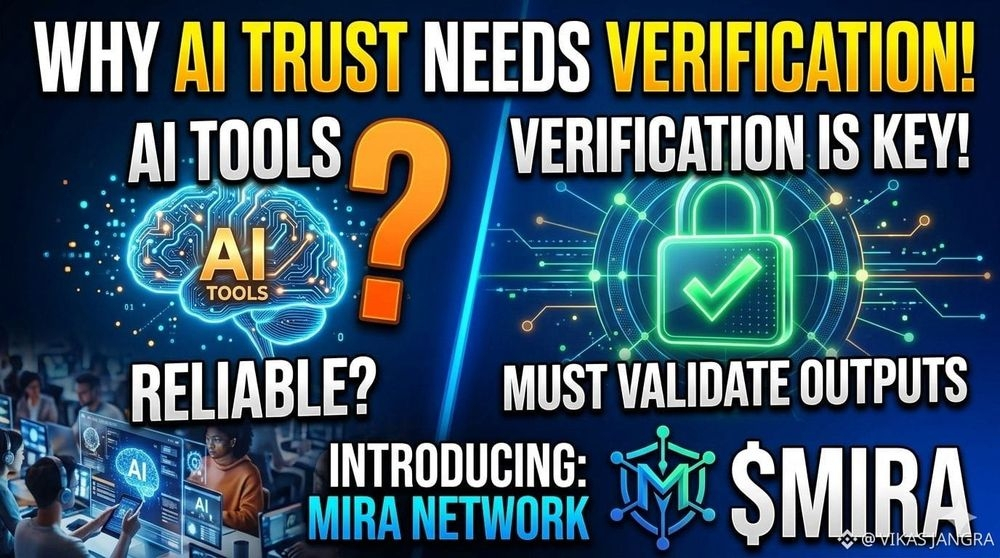
 @Mira - Trust Layer of AI The rapid expansion of artificial intelligence and distributed digital systems has introduced a persistent challenge that is often overlooked in conversations about technological progress: verification. As information flows through increasingly automated pipelines, the question of whether that information can be trusted becomes more complex. Systems that generate answers, predictions, and analysis operate at scales that exceed human oversight. In this environment, verification itself becomes a critical infrastructure layer. Mira Network emerges from this context as a decentralized verification protocol designed to address reliability within AI and data-driven ecosystems, with the token playing a structural role within that framework.
At its core, Mira Network is built around a simple premise. Modern computational systems produce outputs at remarkable speed, but the reliability of those outputs cannot always be assumed. Whether the output comes from a machine learning model, an automated reasoning engine, or a distributed application, there must be a mechanism that evaluates whether the result is correct or trustworthy. Mira Network approaches this problem by separating the act of generating information from the act of verifying it. Instead of assuming that a single system can guarantee its own correctness, Mira distributes verification responsibilities across an open network.
This separation introduces an important architectural shift. In traditional software environments, verification is often centralized. A company deploys a model or service and claims responsibility for the accuracy of its outputs. While this approach works in controlled environments, it becomes less reliable when systems interact with multiple models, data sources, and automated agents. Mira Network proposes that verification should function as an independent layer rather than a feature embedded inside individual systems.
The protocol operates through a network of participants who evaluate computational outputs. When a system produces a result that requires verification, that result is submitted to the network. Independent validators analyze the output according to predefined criteria, and the network aggregates their responses to reach a consensus about its reliability. This process creates a distributed verification mechanism where trust is derived from collective evaluation rather than institutional authority.
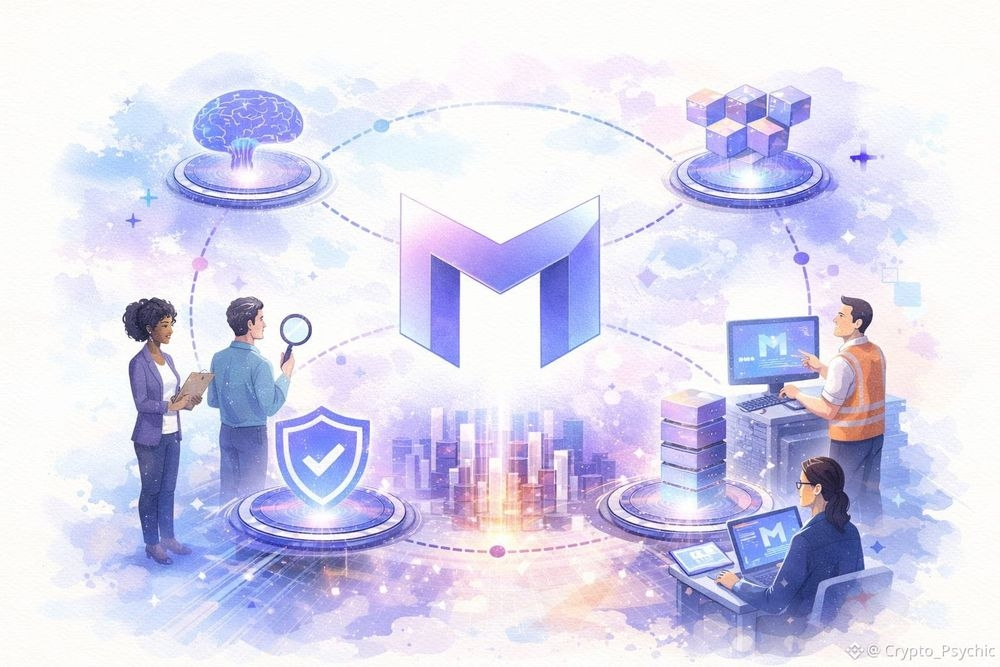 In practice, this structure reflects the broader philosophy that has shaped decentralized technologies over the past decade. Instead of relying on a single entity to determine correctness, Mira Network distributes responsibility across many participants. Each participant contributes to the verification process, and the network records these assessments in a transparent and auditable form. The result is a system where verification becomes an ongoing process rather than a static guarantee.
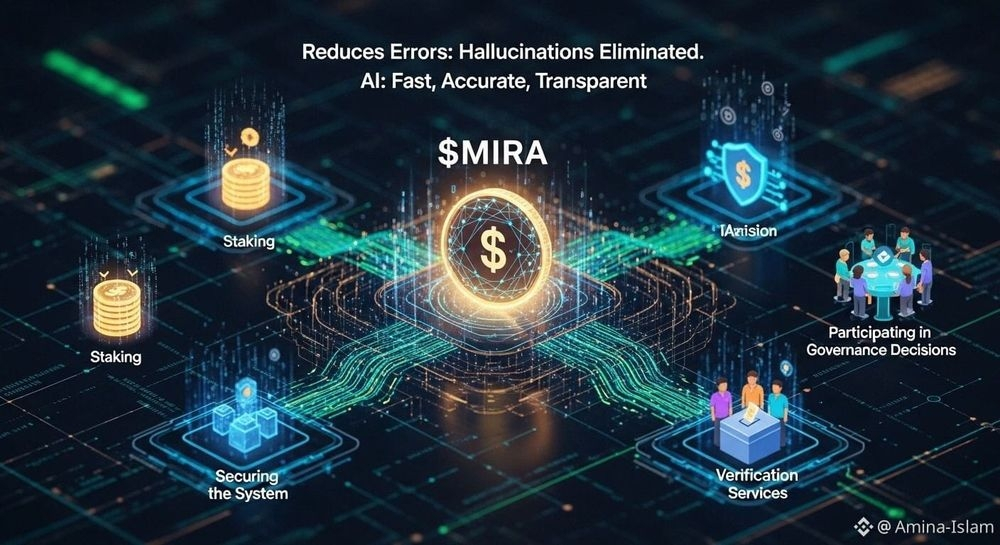
The token exists within this environment as a coordination tool that supports the functioning of the network. In decentralized systems, tokens often play roles related to incentives, governance, and operational mechanics. Within Mira Network, $MIRA connects participants to the verification process by establishing a framework through which contributions can be organized and evaluated. Rather than serving as a simple transactional asset, the token becomes embedded in the logic of the network itself.
Understanding the significance of Mira Network requires stepping back and examining how verification works in the broader context of artificial intelligence. Modern AI systems, particularly large language models and other generative tools, produce outputs that resemble human reasoning. However, these systems do not inherently verify the accuracy of their own responses. They generate results based on patterns in training data rather than on an internal understanding of correctness. This gap between generation and verification has become one of the defining challenges of AI deployment.
Mira Network positions itself as infrastructure designed to address that gap. Instead of modifying how models generate information, the protocol focuses on what happens after the generation stage. Once an output exists, the network provides a structured method for evaluating its reliability. By distributing that evaluation across multiple participants, the system attempts to reduce the risk of unchecked errors or misleading results.
The emphasis on decentralization is not incidental. Centralized verification systems can introduce bottlenecks and biases that affect how information is evaluated. If a single organization controls the verification process, the system inherits the limitations of that organization’s policies and perspectives. Mira Network’s design suggests that verification should be more open and transparent, allowing multiple actors to participate in the evaluation process.
Transparency plays a crucial role in this model. Because the verification process occurs within a decentralized protocol, the steps involved in evaluating outputs can be recorded and inspected. Participants can observe how conclusions are reached, how consensus emerges, and how disagreements are resolved. This level of visibility is intended to strengthen trust in the verification process itself.
Another notable aspect of Mira Network is its attempt to formalize verification as a scalable activity. In traditional environments, verifying complex outputs often requires human review, which does not scale efficiently as systems grow. By distributing verification tasks across a network, Mira seeks to create a structure that can handle large volumes of data and computational results without relying on a single review authority.
 The network’s architecture therefore reflects an attempt to align verification with the decentralized nature of modern digital systems. As applications become more modular and interconnected, it becomes increasingly difficult for any single component to guarantee the reliability of the entire system. Mira Network introduces a layer that sits alongside these components, offering a mechanism for cross-checking outputs regardless of where they originate.
This approach also highlights a broader philosophical shift in how digital trust is constructed. In earlier eras of the internet, trust often depended on institutional credibility. Users trusted platforms because those platforms controlled both the infrastructure and the rules governing it. Decentralized technologies challenge that arrangement by distributing authority across networks rather than concentrating it within organizations.
Mira Network reflects this shift by treating verification as a collective responsibility. The network does not assume that any participant is inherently trustworthy. Instead, trust emerges from the interactions among many participants who evaluate and cross-check each other’s assessments. This model echoes the logic that underpins many decentralized systems, where consensus mechanisms replace centralized oversight.
The design of the protocol also reveals an awareness of how AI systems interact with real-world information. When automated systems produce outputs that influence decisions or shape knowledge, the reliability of those outputs becomes a matter of practical importance. A decentralized verification network attempts to introduce an additional layer of scrutiny that operates independently of the systems generating the information.
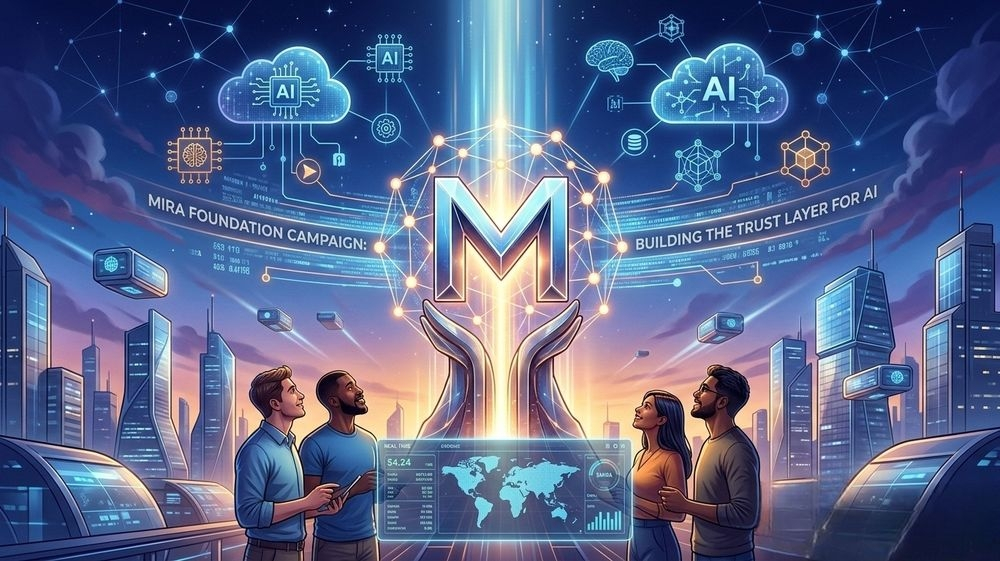 Within this context, the presence of $MIRA supports the operational structure of the network. Tokens in decentralized protocols often function as a mechanism for aligning participant behavior with the goals of the system. In Mira Network, the token connects participants to the verification process and helps structure how contributions are recognized within the protocol. This relationship between token mechanics and network participation reflects a broader pattern found in many decentralized infrastructures.
At a conceptual level, Mira Network can be understood as part of a wider movement toward modular digital systems. Instead of building monolithic platforms that handle every function internally, developers increasingly design systems composed of specialized layers. One layer might handle computation, another might manage storage, and another might coordinate verification. Mira Network occupies the verification layer within this evolving architecture.
This layered approach allows systems to evolve independently while still interacting with each other. If verification exists as an open protocol rather than as a feature inside a single platform, multiple applications can rely on it without duplicating the same infrastructure. In this sense, Mira Network positions verification as a shared resource rather than a proprietary capability.
The implications of this model extend beyond technical design. By framing verification as a decentralized service, Mira Network invites a broader discussion about how trust should function in digital environments. Instead of assuming that reliability must be guaranteed by institutions, the protocol explores whether networks themselves can perform that role.
Such an approach does not eliminate complexity. Distributed verification systems introduce their own challenges, including coordination among participants and the need for clear evaluation criteria. However, the existence of these challenges also reflects the broader reality that verification is inherently difficult in systems where information flows rapidly and originates from many sources.
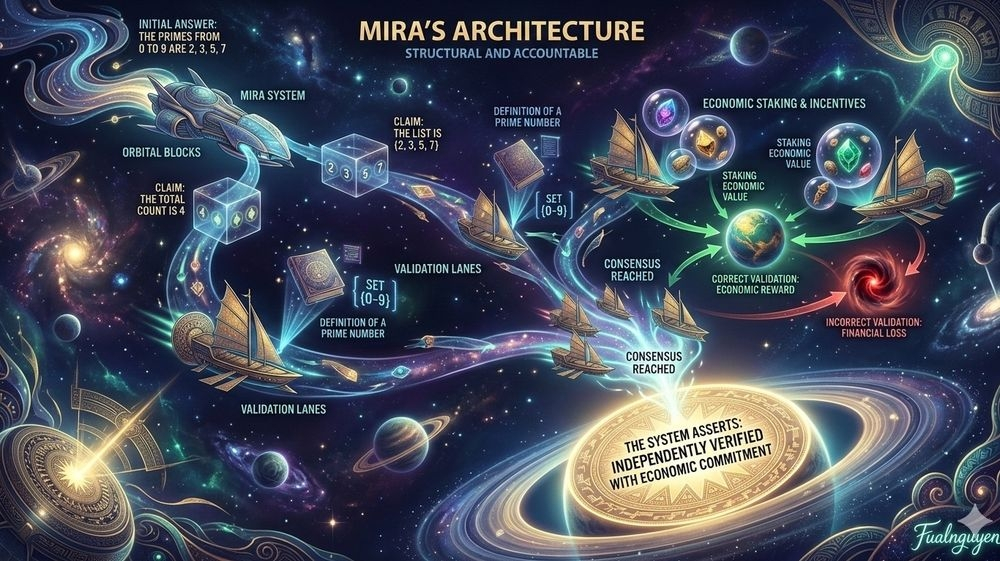 Mira Network does not attempt to simplify this complexity by imposing a centralized authority. Instead, it acknowledges the difficulty of the problem and proposes a structure where verification becomes a collaborative activity supported by protocol design. The presence of within this structure ties the economic and operational aspects of the network to the verification process itself.
Ultimately, Mira Network represents an attempt to redefine how reliability is established in digital systems that rely heavily on automation. By separating verification from generation and distributing that responsibility across a network, the protocol introduces a framework where correctness is evaluated collectively rather than assumed.
This approach reflects a growing recognition that information systems require mechanisms for assessing their own outputs. As computational tools become more sophisticated, the importance of verification increases rather than diminishes. Mira Network situates itself within this evolving landscape by proposing a decentralized infrastructure that treats verification as a fundamental layer of the digital ecosystem.
The project therefore invites reflection on the nature of trust in technological systems. Instead of relying on centralized oversight or implicit confidence in automated outputs, Mira Network proposes a model where reliability emerges from structured collaboration among participants. Within that model, the token operates as a connective element that links participants to the network’s verification process.
 Viewed through this lens, Mira Network can be understood less as a single application and more as a foundational layer designed to interact with many forms of computational activity. Its emphasis on decentralized verification reflects an awareness that modern digital systems require mechanisms capable of evaluating the information they produce. By focusing on that challenge, the protocol contributes to an ongoing conversation about how trust can be constructed within complex technological environments.
@Mira - Trust Layer of AI #Mira $MIRA
