

Last night, I stared at the skyrocketing stock price of Nvidia on the screen, holding a freshly brewed cup of coffee, and suddenly thought of an extremely absurd image. Recently, the entire internet has been in a frenzy over various humanoid robots and trillion-parameter large models. It seems that silicon-based deities are about to take over the physical world.
But I have been pondering a very realistic blind spot, which is electricity. I don't know if everyone still remembers a few summers ago when some major industrial cities in the country experienced extreme heat and had to implement power rationing and blackouts for a period of time. Those super AI nodes valued at over 100 billion are actually so fragile at the moment of physical power outage that they are not even as resilient as carbon-based crawlers.
Absurd reality: Silicon-based labor without financial sovereignty
Imagine if, in the coming years, the ubiquitous unmanned delivery vehicles on the streets or the advanced robotic arms in dark factories suddenly encounter regional power restrictions, what will they do?
//Even if it is equipped with a brain like Grok4, capable of instantly calculating a million self-rescue plans, it still can only stop in place and turn into a pile of scrap metal in reality. Why? Because the current societal financial underlying logic does not support machines in self-rescue. It wants to find a microgrid next door with photovoltaic energy storage to buy some emergency electricity to maintain operation, but it has no ID card, cannot perform KYC, cannot open a corporate bank account, and cannot bind a credit card.
In short, in the existing financial system, machines, no matter how intelligent, are merely subordinate tools of humans, a black household without any financial sovereignty.
This is actually the core reason why I have been deeply researching @Fabric Foundation and have invested real money in #robo in the past few days. Previously, I made some profits of several hundred USDT from this token. But now I feel that its narrative has been severely underestimated by the market.
Fabric doesn't touch those flashy computing power and large models at all. It only does one extremely tedious yet irreplaceable dirty job: issuing ID cards to robots all over the world and building toll booths.
URID and x402: The machine's independent wallet and lifeline
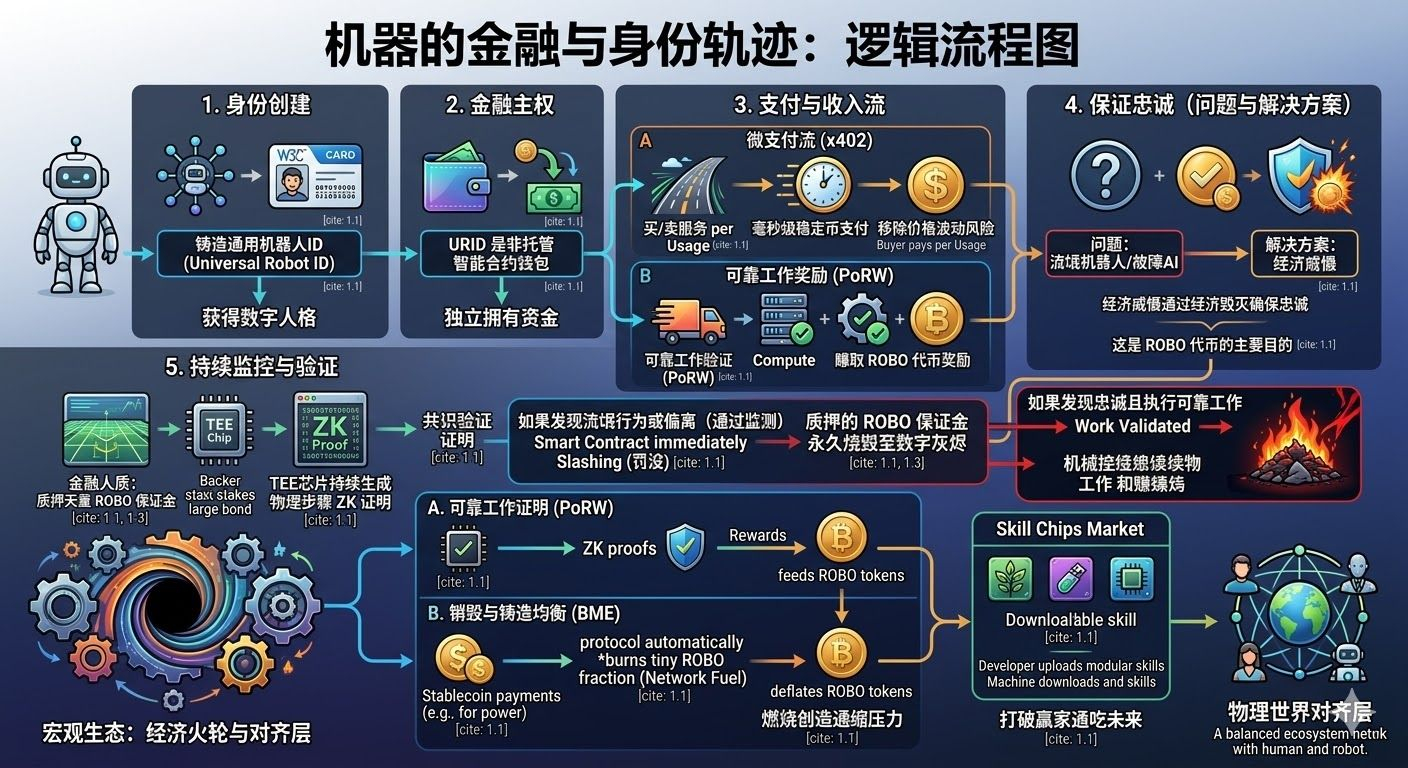
//When a smart device connects to the Fabric network, the first thing it receives is called URID, which is a universal robot identity based on the W3C standard. With this digital passport, the machine has an independent non-custodial smart contract wallet on the chain.
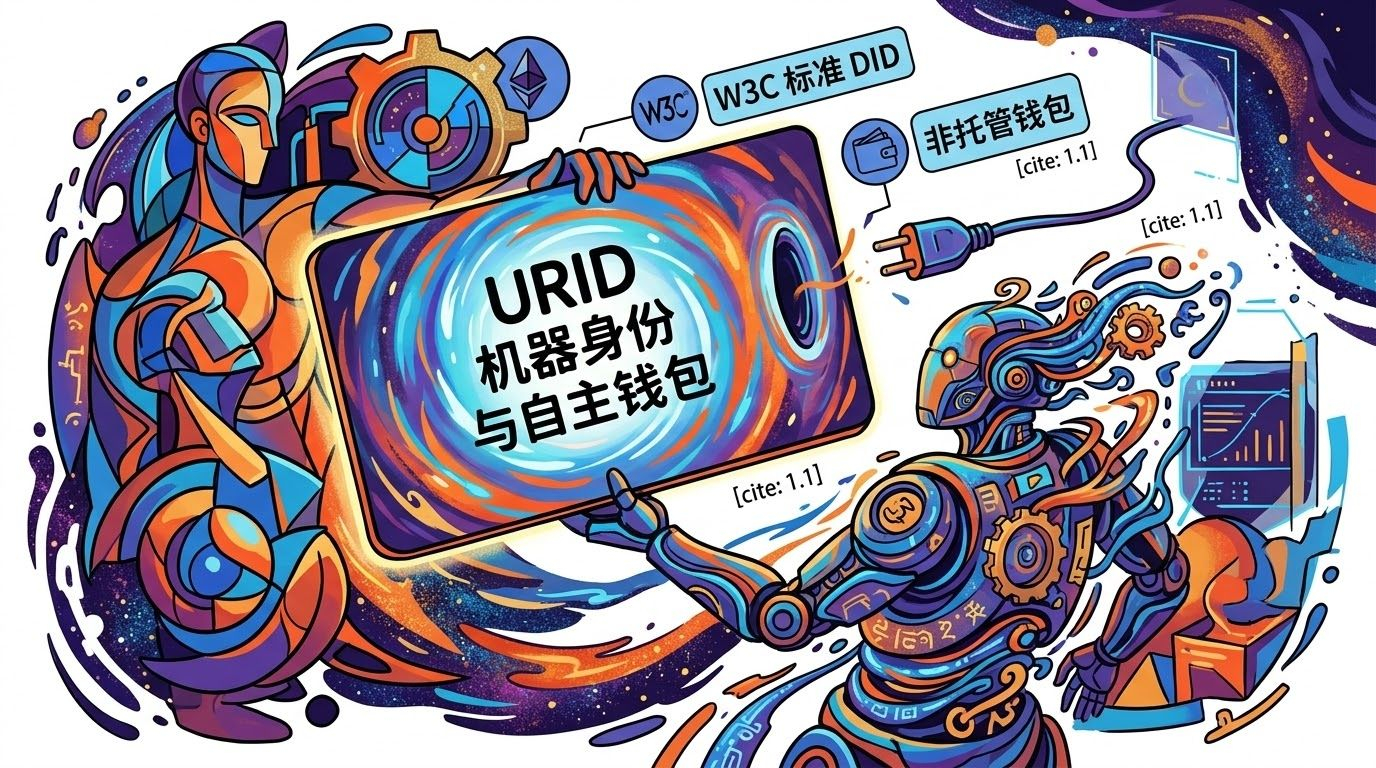
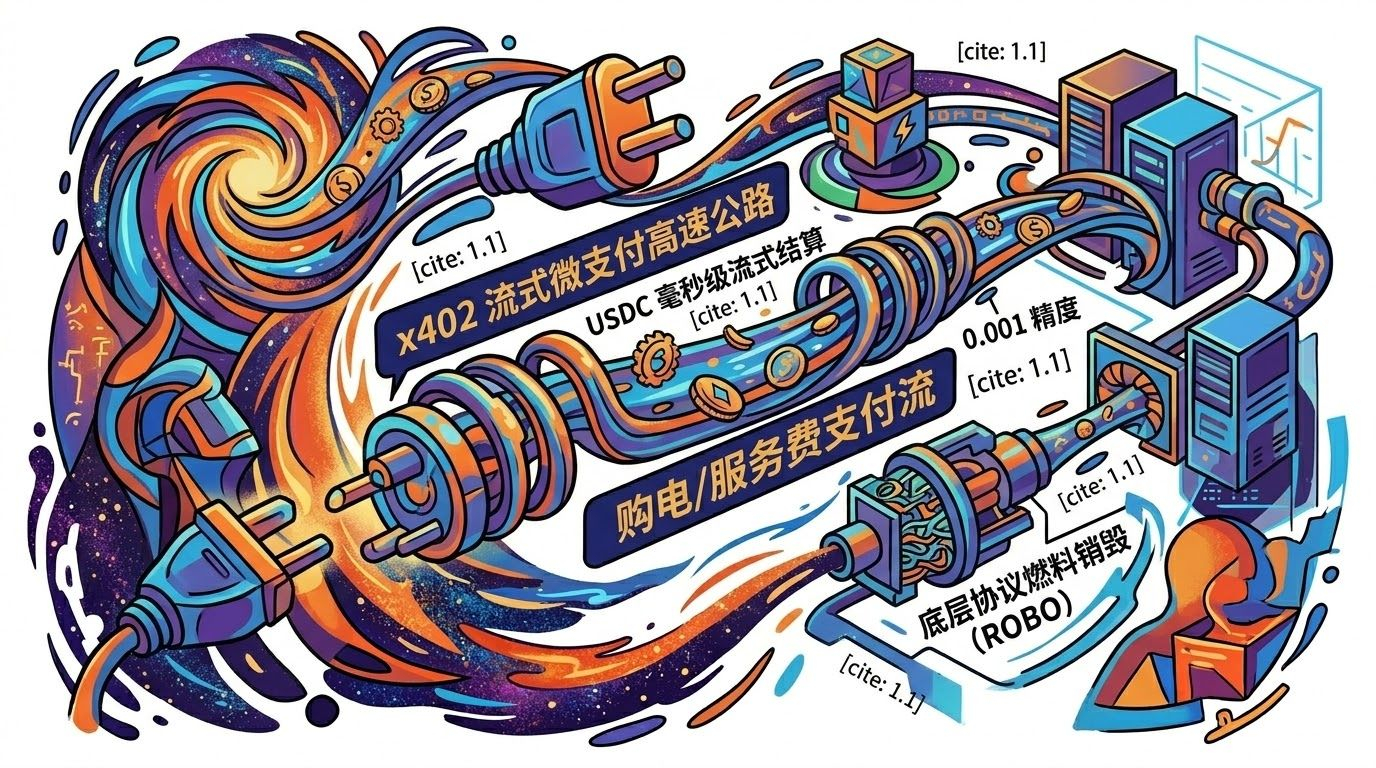
This is too interesting. In the face of the previously mentioned electricity restriction crisis, this robot with an independent wallet can instantly trigger the revived x402 streaming micropayment channel in the protocol to negotiate buying electricity with nearby decentralized power supply nodes. Moreover, it does not have to bear the huge price fluctuations of cryptocurrencies. It directly uses USDC, a stablecoin, for millisecond-level streaming payments. Buying 0.001 kilowatt-hours of electricity just costs 0.001 units of money.
When real-world enterprises see this, earning stable dollars that arrive in seconds with no compliance risks, they will immediately be willing to do business with these steel lumps.
Pure financial nuclear deterrence: Why I appreciate the Slashing mechanism
However, upon careful consideration, completely handing over financial power to machines actually sends a chill down one's spine. If a machine gets infected with a virus, forges power consumption data to extract USDC from its account, or deviates from its designated physical trajectory to cause destruction at a critical moment, we carbon-based humans have no way to deal with it. Because existing laws are meaningless when it comes to judging a bunch of code.
This is precisely why I particularly appreciate the underlying design of Fabric. It doesn't talk about the three laws of robotics; it only believes in pure financial nuclear deterrence.
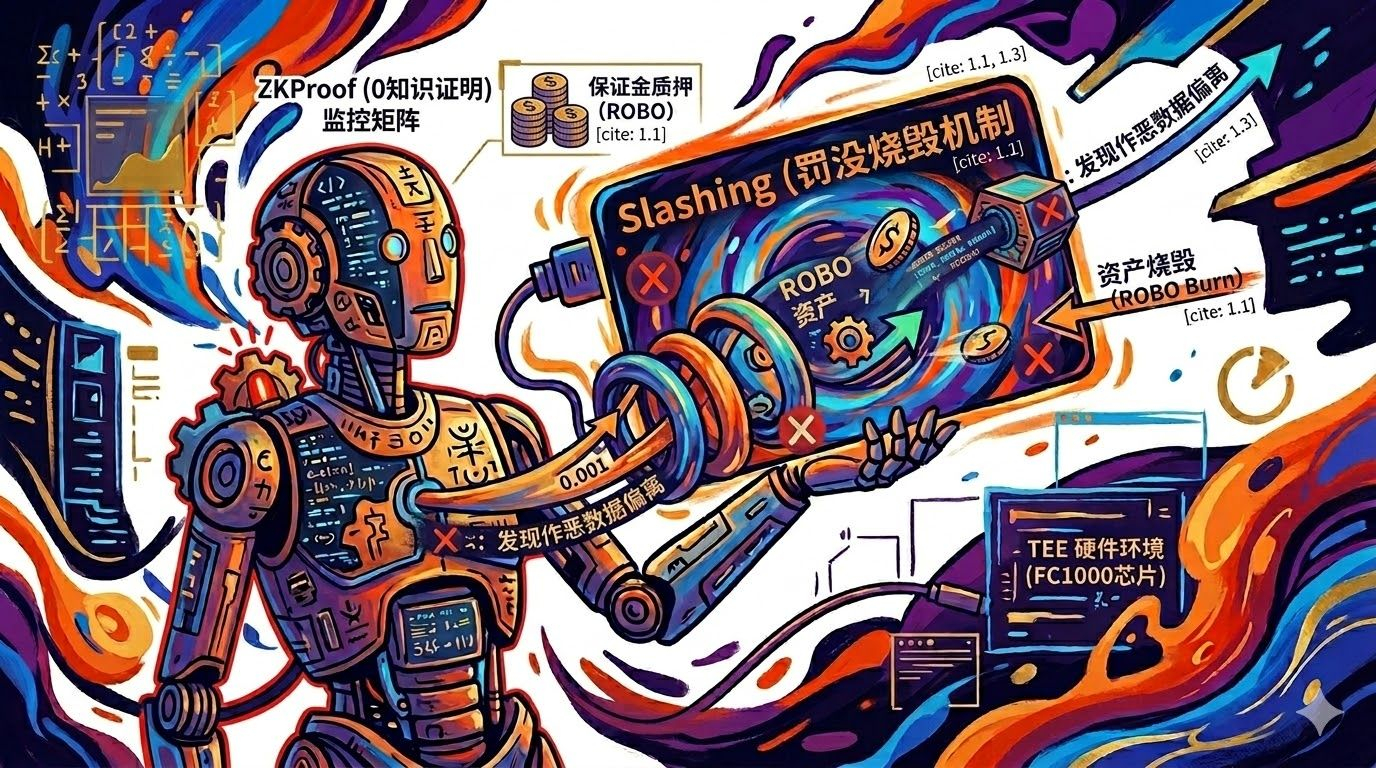
Any machine wanting to take orders and work in this network, or the operating company behind it, must lock a large amount of ROBO as collateral in advance within the smart contract. The hardware of the machine must be equipped with the FC1000 cryptographic chip that supports the TEE trusted execution environment.
Every step it takes in the real world, every kilowatt-hour it consumes, will be converted in real-time into cryptographic zero-knowledge proofs, also known as ZKProof. The nodes across the network watch these mathematical formulas like countless pairs of eyes.
As soon as any machine's data mismatches or there is malicious intent, the smart contract will not listen to your explanation at all. It will instantly trigger the Slashing penalty mechanism. The ROBO assets staked by the wrongdoer will be burned to digital ashes in a fraction of a second. Going bankrupt is the only antidote forcing machines to maintain absolute loyalty.
Refusing to lie flat for rent: The commercial closed loop of the BME deflationary black hole
Many people will definitely ask at this point, since we usually buy electricity and computing power with USDC, what other buying power does ROBO have besides being a deposit? This is also where I want to criticize many IoT projects currently on the market. Many setups purely rely on high annualized staking to attract big players to come in and lie flat to collect rent, only for inflation to explode and collapse.
In the white paper of Fabric, this lazy rent collection model has been completely welded shut. It adopts an extremely harsh proof of reliable work mechanism, known as PoRW. Without objective verification of real physical work, such as you did not actually transport a package or did not really upload environmental meteorological data, you won't get a single bit of new coin issuance.
The more amazing thing is its BME destruction and minting balance mechanism. We just mentioned that machines frequently use USDC for micropayments through the x402 protocol. Every time such inconspicuous micropayment occurs, the underlying protocol automatically calculates and permanently destroys a small amount of ROBO as network fuel toll like a merciless pump. Everyone can close their eyes and imagine that scene.
In the future, in industrial areas with frequent power restrictions or energy scheduling, countless robots will engage in automated high-frequency trading to compete for emergency power. The more prosperous the real interactions in the physical world, the higher the frequency of purchasing electricity, and the $ROBO deflationary black hole burns faster.
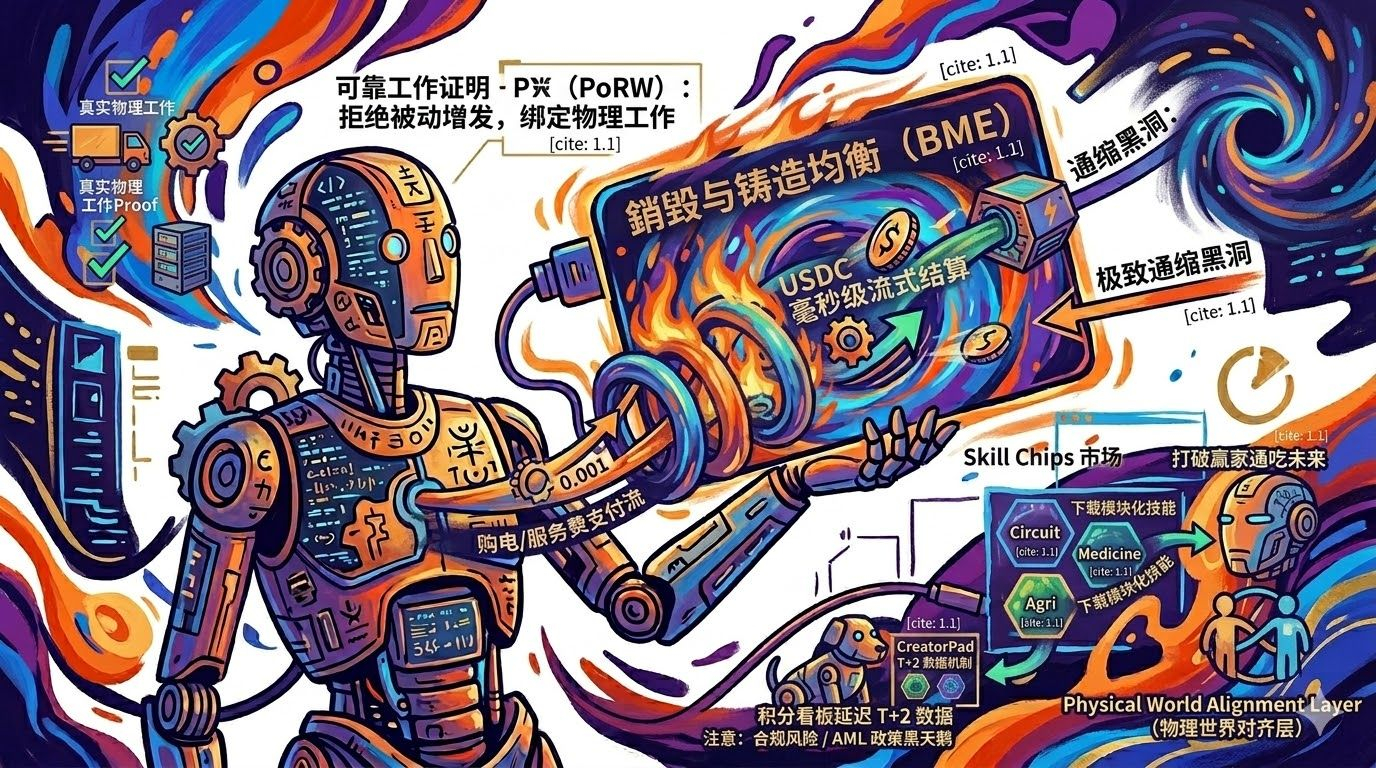
This week, as I observe the changes in market liquidity, I increasingly feel that this design of binding token consumption tightly to the physical world's machine demand is the real commercial closed loop that can be operational.
Throwing a bucket of cold water: The sword of Damocles hanging over our heads
However, objectively speaking, I also calmed down and thought carefully while reviewing operations these past few days. The difficulty of implementing this concept is actually hell-level.
Even if I have extreme confidence in its token model, asking all existing robots on the market to install that kind of specialized cryptographic chip for generating ZK proofs, the current global supply chain capacity and modification costs cannot be reduced at all. This is a huge obstacle to the early expansion of the network. Furthermore, even if the technology is fully unlocked, granting machines the right to independently control USDC while completely bypassing the traditional real-name authentication system for humans is almost a provocation to anti-money laundering agencies in various countries. Policy-level black swans could completely squash this idea at any time. We are playing with real money in the market and must not be brainwashed by our own obsessions; while seeing opportunities, we must also be clear about the knife hanging over our heads.
😂 Today I got a bit off track, but this is indeed my most genuine thought while monitoring the market until midnight. Do you think that under the current regulatory environment, letting machines control their wallets to buy electricity is a pipe dream or a reality that will happen within five years?
Feel free to share your genuine views in the comments section. I'll go through them one by one tonight to discuss with everyone. If you find this article a bit enlightening for your investment thinking, consider following me. Let's find truly valuable targets together in this violent bull market.