
I remember the moment I realized how powerless a system can make you feel—even when it is designed to be safe.
The lights flickered. Alerts started sounding. There was no one to call. No CEO to contact, no support desk waiting on the other side of a phone line. Only an invisible network quietly doing exactly what it was programmed to do—keeping promises I could not see or control.
That moment captures a deeper tension in modern technology.
Projects like Mira Network aim to address one of the biggest challenges in artificial intelligence: trust. By transforming AI outputs into cryptographically verified claims, Mira attempts to ensure that every response generated by an AI system can be mathematically verified. In theory, this creates a world where AI answers are not simply accepted on faith—they are provably correct within the system’s framework.
From a technical perspective, this is powerful.
But human trust rarely operates on mathematics alone.
Proof vs. Human Perception
Even when a system is verifiably correct, people often still feel uncertain. Humans tend to associate safety with visible authority. We look for someone in charge—a leader, an organization, or at least a clear point of accountability.
Decentralized systems challenge that instinct.
When networks distribute control across thousands of nodes, responsibility becomes fragmented. Success and failure are shared across the system rather than assigned to a single authority. While this design increases resilience and transparency, it also removes the traditional structures people rely on to feel secure.
There is no central figure to praise when things work—or blame when they do not.
In a decentralized model, the system may be functioning perfectly, yet emotionally it can still feel unsettling.
---
The Hidden Trade-Off in Decentralized AI
This reveals a deeper trade-off that technology alone may never fully resolve: verifiability versus emotional reassurance.
Cryptographic proof offers objective certainty. It shows that a result is mathematically valid. But for many users, certainty without ownership can feel strangely impersonal—almost sterile. Transparency does not automatically translate into comfort.
In many ways, people prefer systems where authority is visible, even if that authority is imperfect. A leader, a company, or a governing body provides something proof alone cannot: a sense of human accountability.
Decentralization removes that layer.
And when it does, it forces us to confront a difficult reality—that trust is shaped not only by facts, but also by perception.
---
Why Mira’s Approach Still Matters
Despite this tension, initiatives like Mira represent an important step forward for AI infrastructure. As artificial intelligence becomes increasingly integrated into finance, research, governance, and everyday decision-making, the ability to verify outputs cryptographically could become essential.
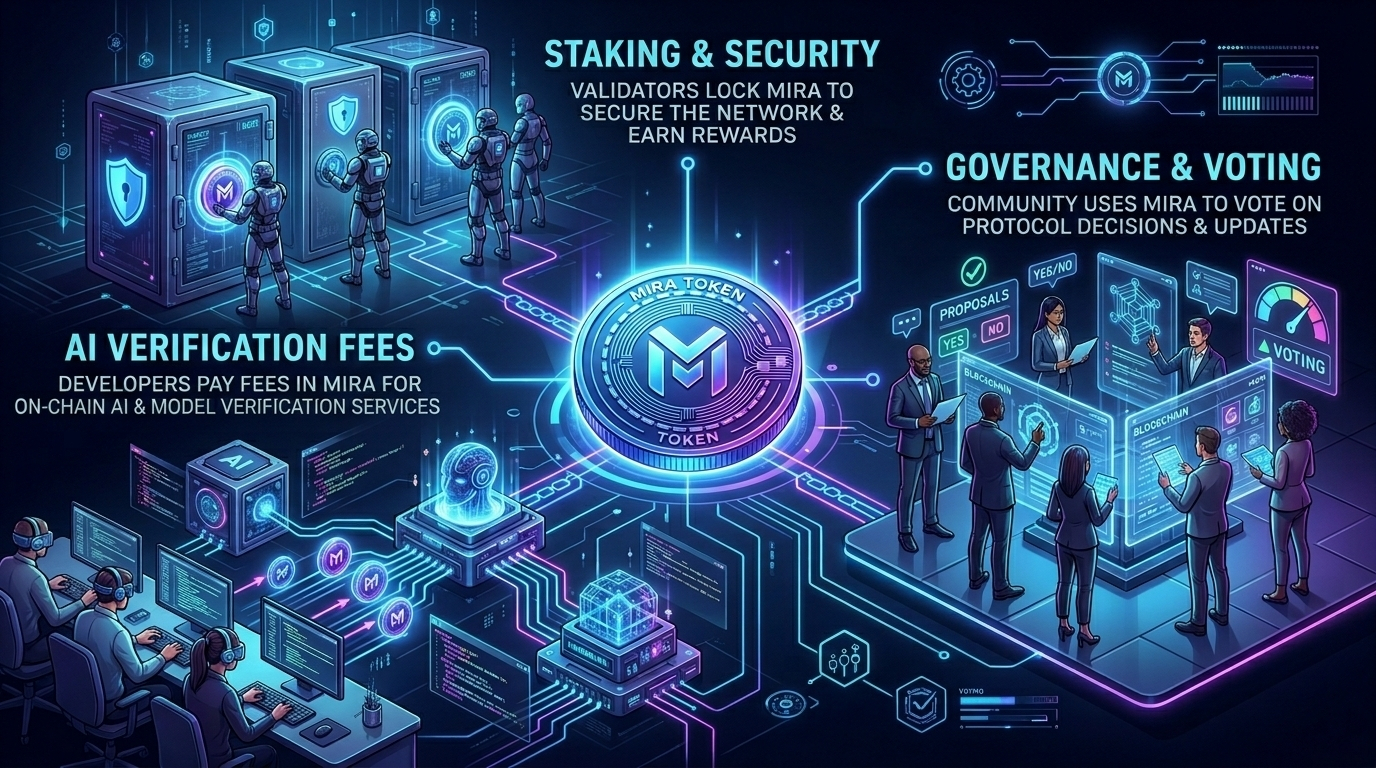
In this context, the MIRA ecosystem represents more than a digital asset. It reflects an attempt to build a foundational layer where AI claims can be validated rather than blindly trusted.
The challenge will not simply be technical implementation—it will be bridging the psychological gap between provable correctness and human confidence.
The Future of Trust in AI
Decentralized AI systems may eventually redefine how trust works in digital environments. Instead of relying on institutions, people may learn to rely on verification mechanisms embedded within the technology itself.
But that transition will take time.
Humans instinctively look for faces, leaders, and authorities. Removing those symbols of control—even when replaced with stronger technical guarantees—can feel uncomfortable at first.
The paradox is clear: the system may be objectively safer, yet emotionally harder to trust.
Projects like Mira highlight this evolving reality. They remind us that the future of AI will not only depend on building smarter systems, but also on understanding how humans relate to the idea of trust itself.
And in the end, the challenge may not be proving that machines are reliable—it may be helping people feel that reliability in a world where authority is no longer visible.