I’m waiting… I’m watching… I’m looking at the traffic patterns and the quiet space before the surge… I’ve seen systems act stable right until the moment they aren’t… I focus on the weak spots where pressure usually shows up first.
The structure behind Fabric Protocol is built around a simple but heavy decision: robots and AI agents are not treated as occasional users. They are treated as constant participants. The system expects machines to send requests, run tasks, verify results, and keep interacting all the time. That changes how infrastructure behaves. Human activity comes in waves. Machine activity is steady, fast, and relentless. When the system gets stressed, it is not because one person clicked too many times. It is because thousands of automated actions keep coming without pause.
The operational roles themselves are easy to understand. Validators maintain the chain and agree on blocks. Node operators keep the machines running and store the data. Compute providers supply processing power for robot and AI tasks. Data contributors feed information that helps train and guide these systems. Indexers turn raw blockchain activity into readable data so applications can quickly find what they need. Gateways sit at the edge and accept requests from apps, bots, and traders.
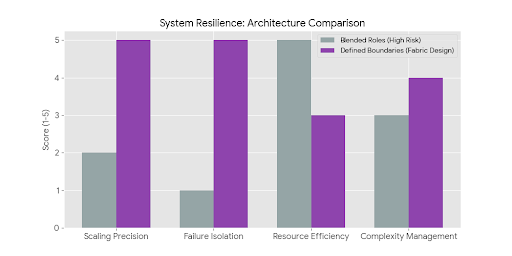
The danger appears when these roles start blending together. Sometimes a single operator runs a node, an indexer, and a public query service on the same machine. It saves cost and looks efficient. But it quietly ties different parts of the system together. When one part slows down, the others feel it. The system stops failing in small pieces and starts failing in chains.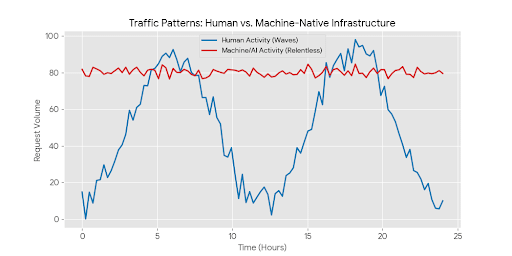
A typical breakdown starts at the edges. Gateways suddenly receive more traffic than expected. Automated agents begin sending repeated requests. Cache layers that normally handle most queries stop helping because the pattern of requests changes. The system falls back to deeper reads and heavier computation. Indexers begin to lag because they are busy answering public queries while also trying to keep up with new blocks.
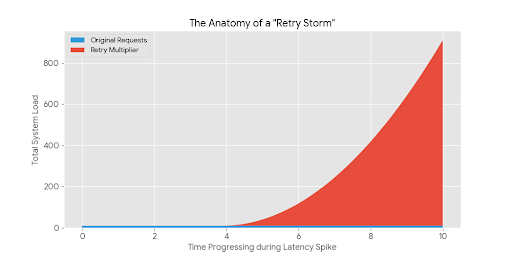
Clients start retrying requests when responses slow down. Those retries multiply the traffic even more. The result is a retry storm. Disk pressure builds as nodes handle both incoming data and constant reads. Indexers drift further behind the chain. On the surface everything looks stuck. Traders see missing transactions or wrong balances. Confirmations appear frozen even though the consensus layer underneath is still working normally.
What the design around Fabric Protocol tries to do is draw clearer lines between these responsibilities. Verifiable computing separates the question of correctness from the question of access. Agent-native infrastructure assumes that machines will push the system constantly and plans capacity around that reality. Data, compute, and verification each have their own space so pressure in one area does not automatically choke the others.
Scaling then becomes more precise. Gateway layers can expand horizontally with load balancing and strict rate limits. Cache systems absorb repeated machine queries. Ingest pipelines stay separate from public query services so indexers can stay close to the latest blocks. Catch-up mechanisms allow lagging services to recover without freezing the entire network. Storage and indexing strategies focus on keeping reads and writes predictable even under heavy load.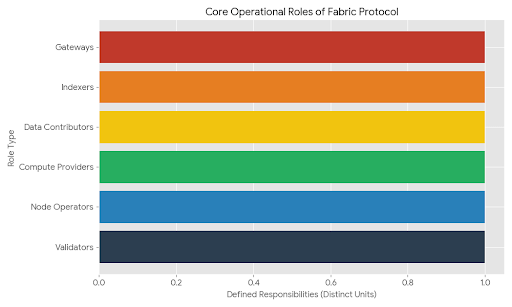
None of this solves every problem. Trust in the access layer becomes a real concern because many developers rely on default endpoints. Data consistency across multiple index providers is not always perfect. Latency numbers can look good on one endpoint but hide delays somewhere else. Too many independent operators can make development harder, while too few can concentrate risk.
Infrastructure problems tend to repeat in cycles because systems forget their boundaries. The networks that last are the ones that define those boundaries early. When pressure arrives, each layer can carry its own weight without crushing the rest. That is not optimism. That is discipline.