
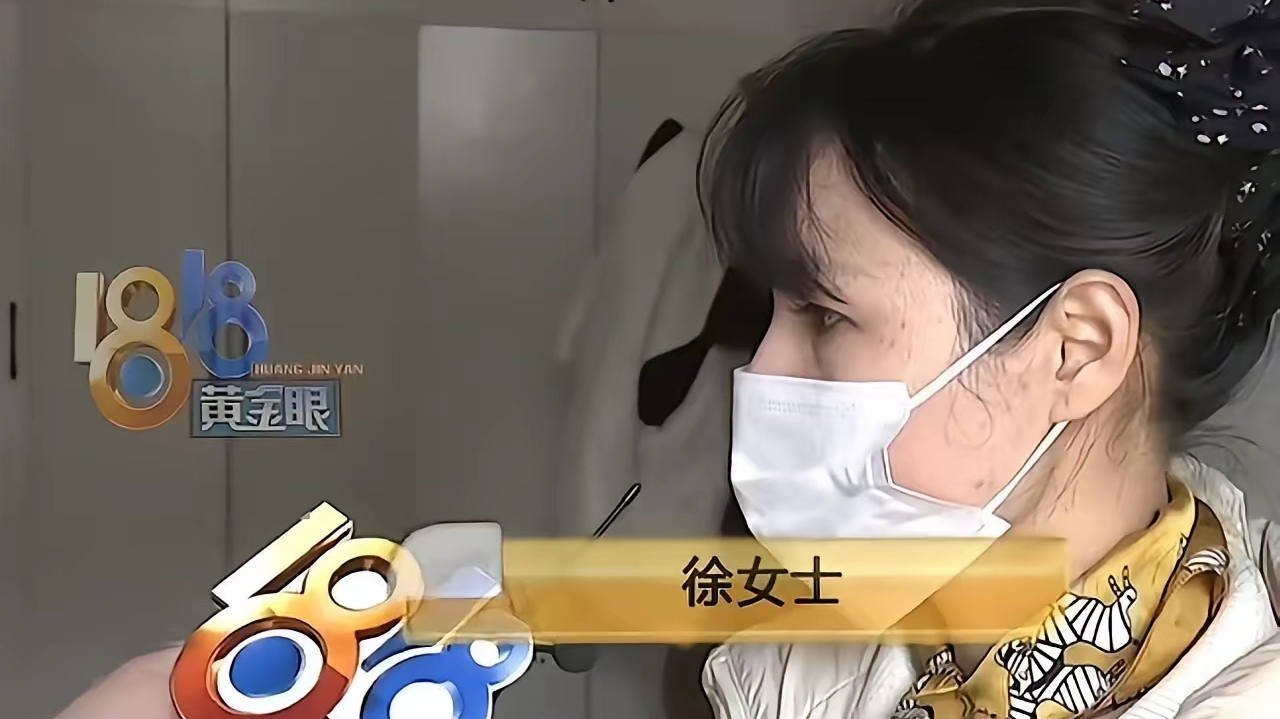
When I came across Ms. Xu's experience, it was one o'clock in the morning, just after finishing overtime and walking home. Looking at the dim streetlights by the roadside, my eyes instantly turned red.
That feeling of running for more than ten kilometers in the cold wind at midnight with a toolbox, only to be mocked, humiliated, and even threatened to personal safety upon arrival, and in the end, not even being able to get back a few dozen dollars for transport fees, and suffering injuries without anyone caring for the medical expenses; I think every ordinary person who relies on selling their physical strength and time for money can instantly empathize.
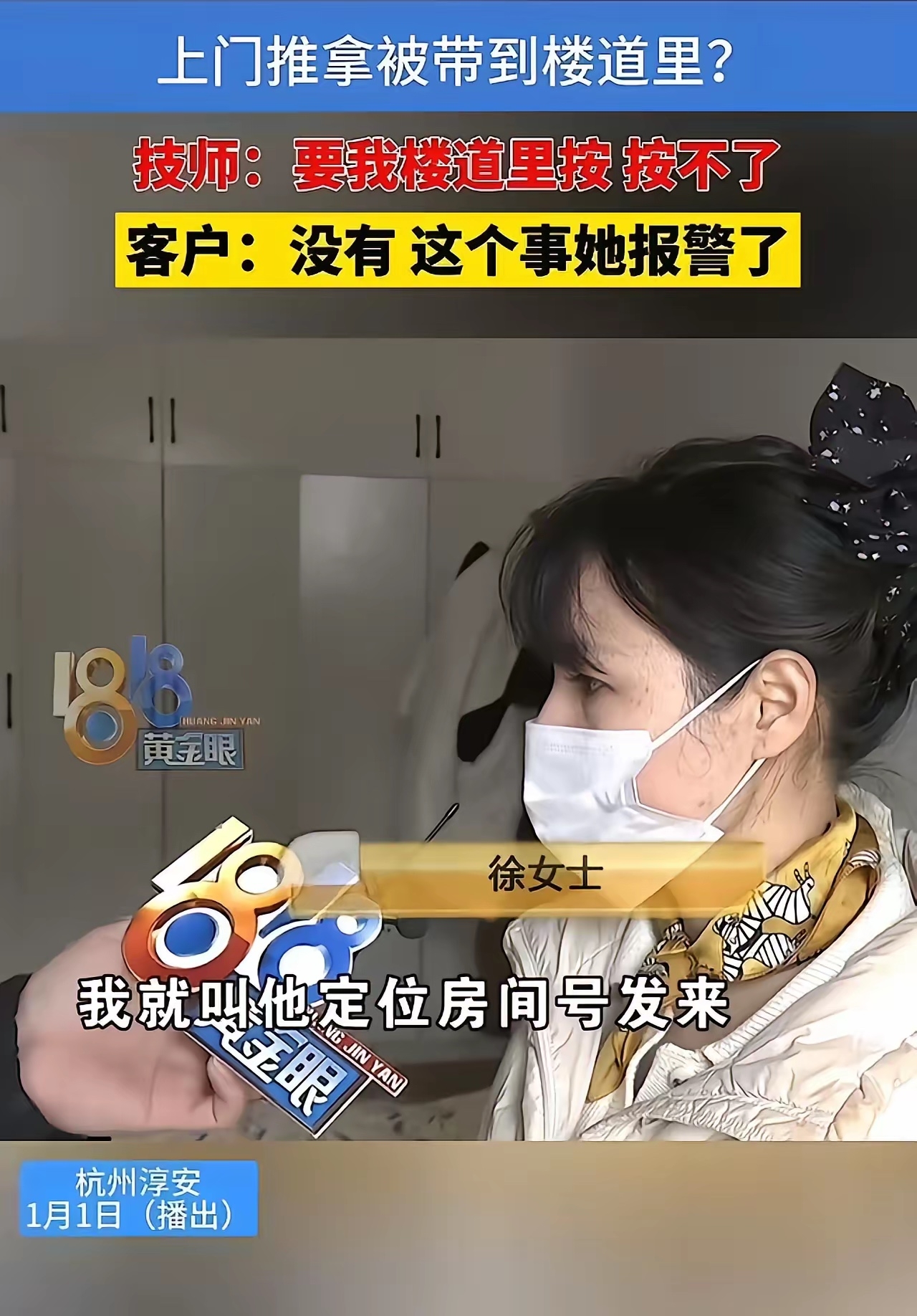
First, let me fully restore this matter for everyone, without any exaggeration; every detail pierces the heart.
Ms. Xu provides door-to-door massage services. On December 28, 2025, in the early morning, a male client added her on WeChat, saying he needed a door-to-door massage service. Ms. Xu asked him to send the room number, but he said he was at home and mentioned that he was afraid his wife would check the account, promising to pay in cash on-site.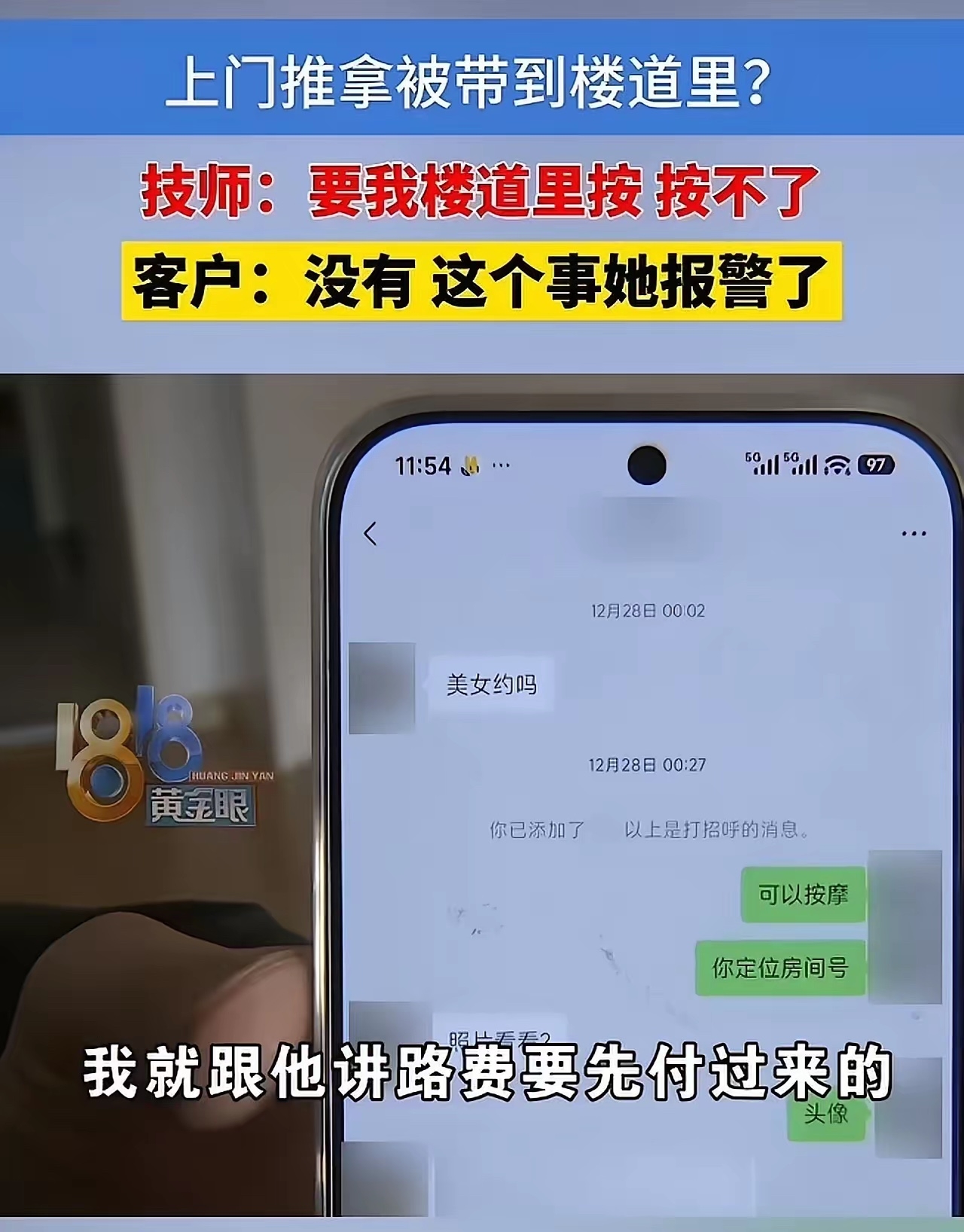
In the bitter cold of dawn, Ms. Xu wrapped herself in a thin jacket, carrying a heavy massage toolbox, and hurried to the community where the client was located. But upon seeing the client, she was taken aback—he had no intention of letting her into his home but instead led her to the dimly lit, drafty hallway on the 18th floor, lowering his voice to say, 'My wife is at home, it's not convenient, let’s just do it here.'
There wasn't even a place to sit in the hallway, let alone lay out a massage mat, light essential oils, or apply hot compresses; they couldn't even provide basic shelter from the wind. Ms. Xu immediately refused, saying this environment was completely unserviceable.
But she didn’t expect that this reasonable refusal would lead to humiliation and harm. She stated that she had run so far in the middle of the night, and at least the round-trip travel fee should be settled. But the man instantly turned hostile, angrily cursing her to 'get lost' and turned to leave.
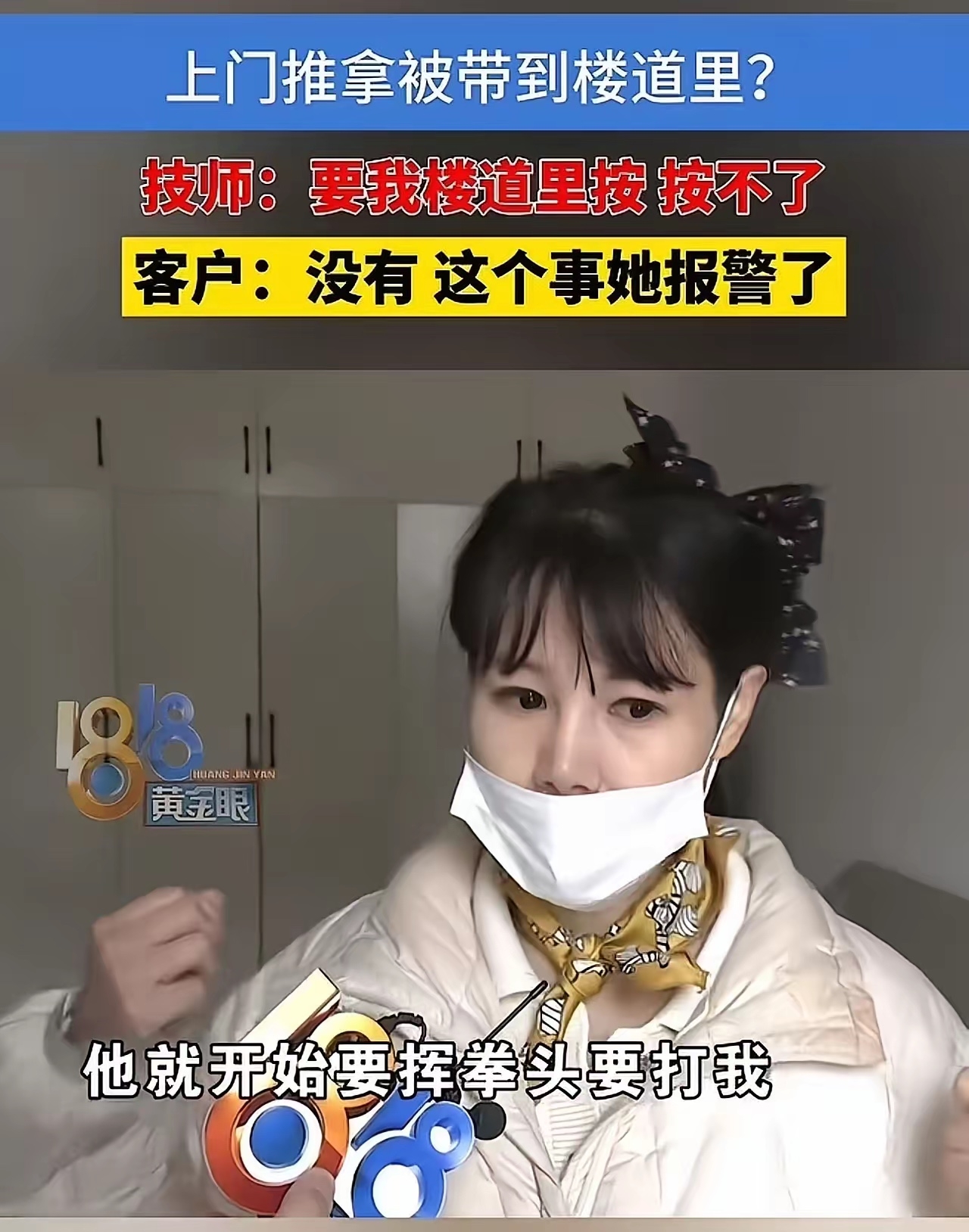
In a moment of desperation, Ms. Xu took out her phone to record evidence. The man saw this and immediately fled. Ms. Xu chased him to the elevator, but he actually raised his fist as if to strike. She instinctively backed away to dodge and ended up twisting her waist painfully, a sharp pain hitting her, making it hard for her to stand.
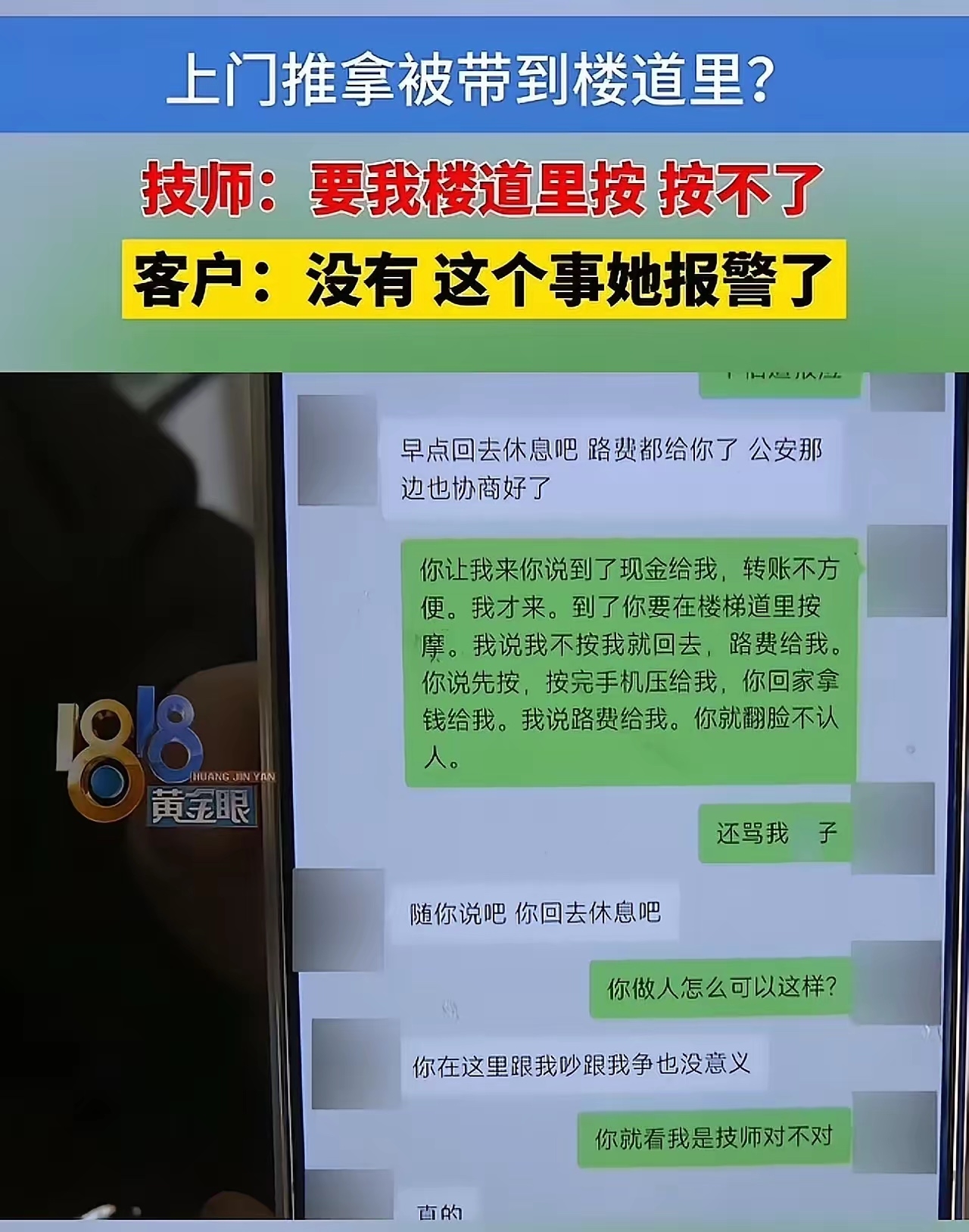
She endured the pain and called the police. During the first mediation, the police encouraged reconciliation, and she deleted the video. The other party reluctantly handed her 40 yuan, dismissing her like a beggar. But after returning home, her back injury worsened, and after going to the hospital for treatment, she spent around four to five hundred yuan. When she went back to ask the other party for medical expenses, she was met with a cold refusal.
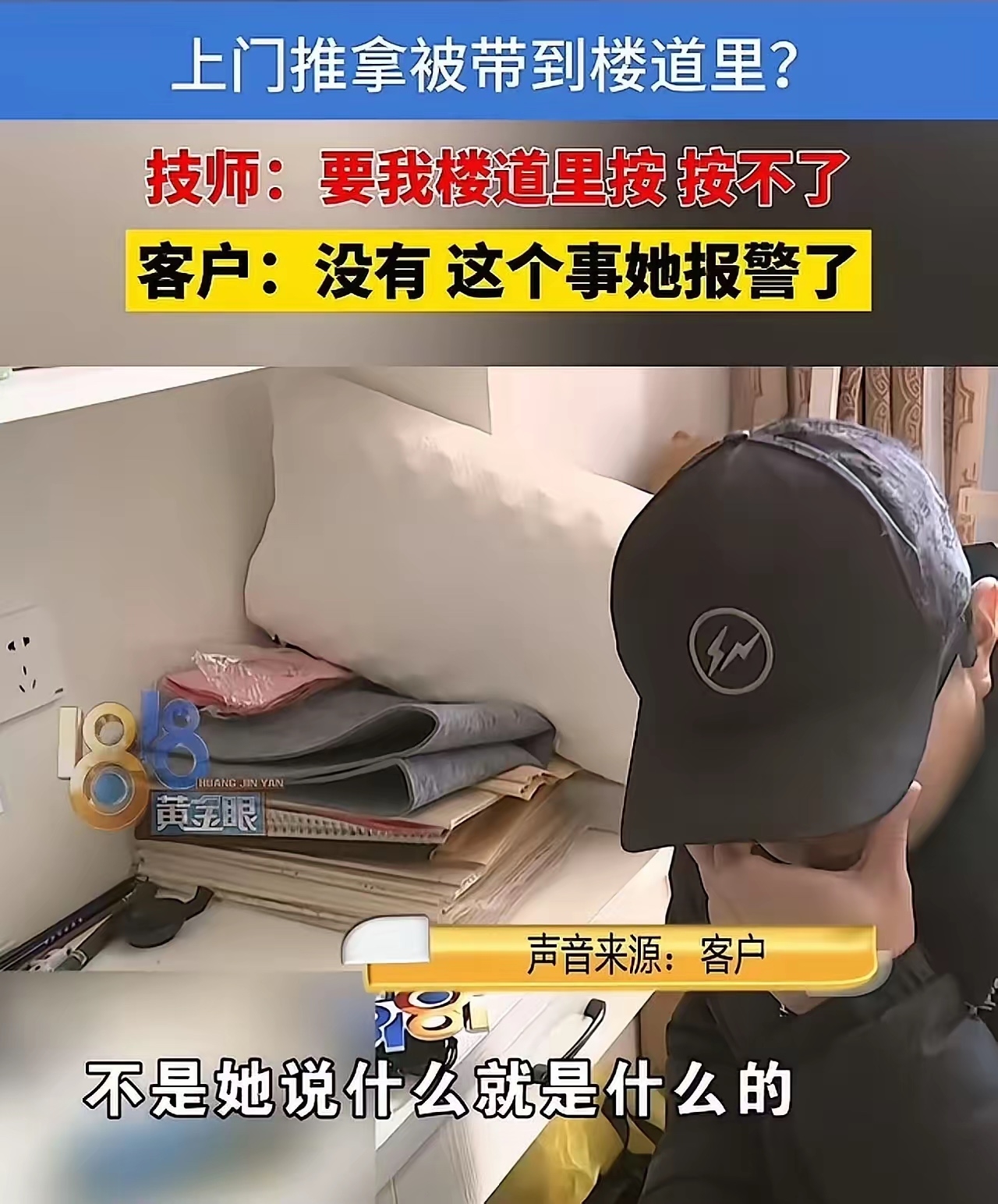
Under the video, countless people criticized this male client for lacking quality and boundaries, cursing him for toying with laborers and showing no responsibility. But as I scrolled through all the comments, the more I read, the more congested my heart felt—what's most heartbreaking about this incident is not encountering a bad person, but that ordinary workers like Ms. Xu, who rely on physical labor, are caught in a complete deadlock of survival.
Your labor pricing, transaction rules, personal safety, and income protection have, from the very beginning, been completely in the hands of others. You run for ten kilometers in the cold at night, and if the other party says they won't provide service, they won’t; if they say they won't pay, they won't. If you want to defend your rights, it's even hard to keep complete and immutable evidence. If you are injured or wronged, you may only receive a 'dismissal fee' of 40 yuan, with no one covering your medical expenses.
We always say that labor is glorious, but for too many ordinary people, our labor value has never had a true safety net, nor has it ever had immutable rule protection. The rules are always set by the stronger party, and we can only passively accept them, even the right to say no relies on betting on the other party's conscience.
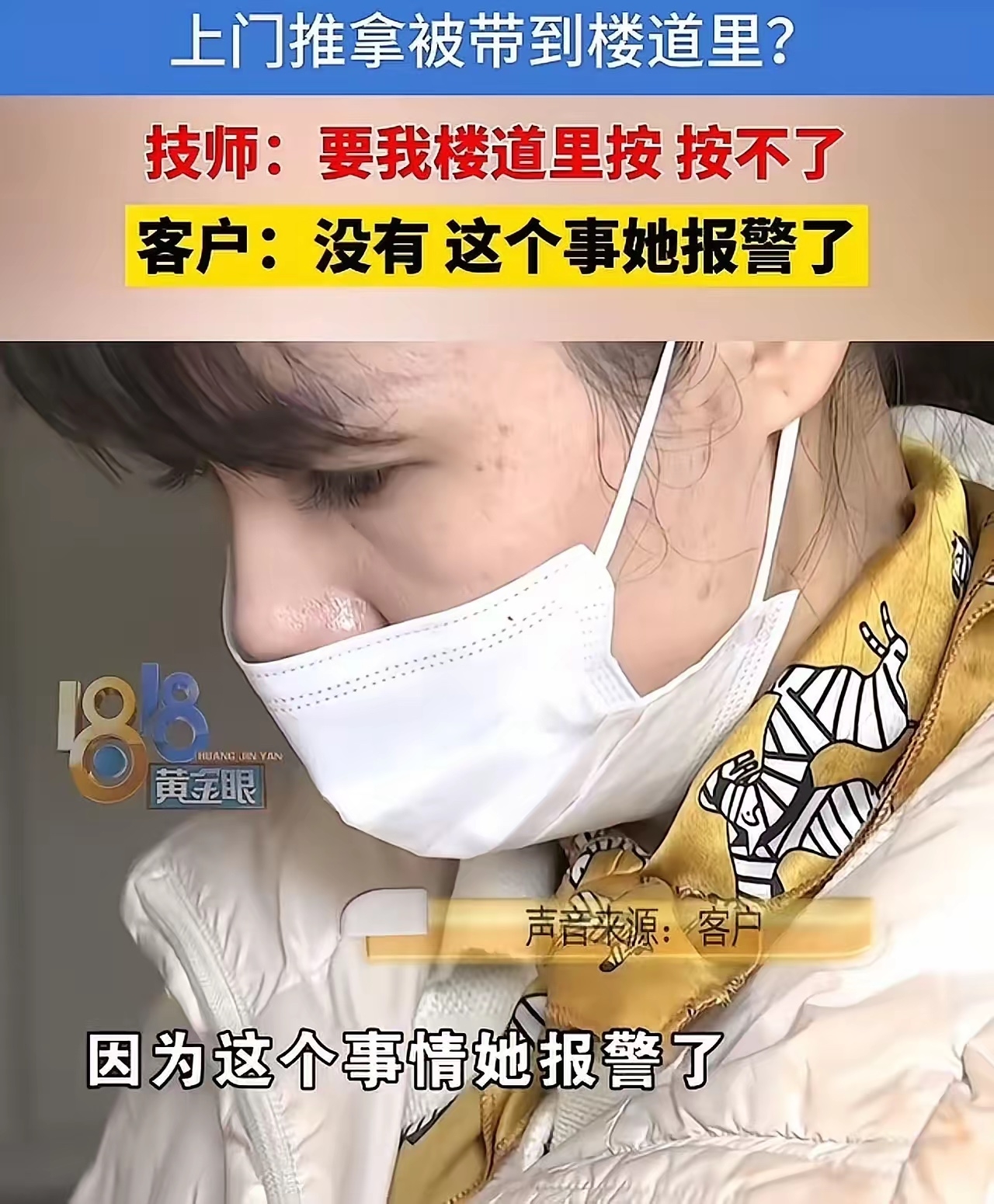
The Fabric Foundation, which I want to deeply analyze with you today, derives its core value not from the superficial concept of a 'robot universal operating system' that people often mention, but from fundamentally breaking the deadlock of 'rules set by the strong party, ordinary people passively accept' from the ground up. It does not merely provide us with a new tool for making money; it offers every ordinary laborer an immutable labor value recognition system, a genuine rights safety net, and an opportunity to control their labor earnings and life autonomy.
All the following content is absolutely truthful, and all information comes from the latest commercial implementation report of Fabric Foundation for Q1 2026, the official governance white paper, and third-party audits of the service ecosystem. I will use the most straightforward language to explain to everyone how this project fundamentally addresses the core dilemmas faced by ordinary laborers like Ms. Xu, with all analytical perspectives being new and exclusive, without any repetition of past content.
1. The core foundation of Fabric Foundation: using on-chain smart contracts to provide an immutable set of rules for labor transactions.
The root of what Ms. Xu experienced was never encountering a bad person; it was the entire transaction process that lacked any immutable rules to constrain both parties. Service content, service scenarios, prices, and breach compensation all relied on verbal agreements, allowing clients to backtrack at any time, change rules at any time, or even deny their promises, leaving Ms. Xu with no ability to resist, forced to passively bear the losses.
Most of the centralized door-to-door service platforms on the market are essentially just information matching parties that only take a commission and do not provide a safety net. The platform's rules always favor consumers; when service providers encounter issues like clients running off, harassment, or threats to their personal safety, the platform can at most suspend their accounts, but it cannot provide real rights protection for providers nor can it prevent situations where clients unilaterally breach contracts.
The first thing Fabric Foundation does is build a decentralized service transaction and labor recognition network based on the underlying blockchain of the OM1 universal operating system, fundamentally solving the problem of uncontrollable service transaction rules.
Many people previously only knew that OM1 is the 'Android of the robotics world,' compatible with 98% of global robotic hardware, but they didn’t know that the underlying system is a set of immutable smart contract systems specifically designed for service scenarios. It writes all elements of service transactions, including service content, service scenarios, service prices, travel cost standards, breach compensation rules, and rights and responsibilities, into on-chain smart contracts. Once both parties confirm and sign, it will be permanently recorded on distributed nodes of the blockchain, immutable and irrevocable, with all execution processes completed automatically by code, with no individual or institution able to intervene.
Combining Ms. Xu's experience, I will explain the disruptive nature of this system more plainly, so everyone can understand:
If Ms. Xu's service was completed within the Fabric Foundation's service ecosystem, then from the moment the transaction was initiated, all rules would already be locked in:
1. When the client initiates a service request, they must first pledge the agreed service fee and travel fee in full into the on-chain smart contract. Without completing the pledge, they cannot initiate a service request, fundamentally eliminating the situation of 'not paying upon arrival.'
2. The service address, scenario, content, and duration must all be clearly stated in the contract. If the client changes the service scenario at the last minute, for example, from their home to the hallway, this constitutes a unilateral breach of contract, and the smart contract will automatically trigger the compensation mechanism, directly refunding the full amount of the pledged travel fee to Ms. Xu without needing any consent from the client, and clients will not have the chance to turn hostile and curse.
3. All communication records, location information, and service credentials throughout the service process will automatically be encrypted and recorded on-chain, permanently preserved and immutable. If disputes arise or personal safety is threatened, these on-chain records serve as complete, legally effective evidence, eliminating the passive situation of 'deleting the video means losing the evidence' that Ms. Xu faced. Even in cases where injuries arise that require compensation, the complete records on-chain can directly serve as proof for defending rights, ensuring that there are no situations where it is impossible to seek justice.
This is the most core disruptive aspect of Fabric Foundation: it does not merely provide a matching platform for service providers and consumers but offers both parties a set of absolutely fair, immutable transaction rules. These rules are not set by platform owners or the stronger party, but are written in code and recorded on globally distributed nodes, with no one able to unilaterally change or destroy them.
What does this mean for ordinary laborers like Ms. Xu? It means that your labor value finally has a true safety net. You no longer have to gamble on the client's conscience, nor fear last-minute changes or clients running off with your money. Your labor earnings and legal rights now have immutable technical guarantees, and you will never again experience the humiliation and helplessness of 'running over ten kilometers in the middle of the night, only to end up with 40 yuan.'
As of Q1 2026, Fabric Foundation has established deep cooperation with three leading door-to-door service platforms in China, building a new service ecosystem based on this decentralized service transaction network. It currently covers 12 cities nationwide and has completed over 180,000 on-chain service transactions. According to audit data from third-party organizations, after the implementation of this system, the service dispute rate has decreased by 92%, and the payment cycle for providers has changed from a maximum of 7 days to instant payment after service completion. Providers’ average incomes have increased by 47%—because there are no high commission fees from centralized platforms, all service earnings, minus minimal on-chain gas fees, belong entirely to the service providers.
2. The privacy and security system of Fabric Foundation: fundamentally solving the dilemma of personal safety and privacy leakage in door-to-door services.
In Ms. Xu's experience, there is another chilling aspect: in the middle of the night, a female worker runs to an unfamiliar community and hallway, facing a strange male client, with her personal safety completely unprotected. When the other party threatened her with a raised fist, she had no ability to protect herself, apart from retreating and dodging.
This is also the biggest survival dilemma faced by all door-to-door service providers. If you want to provide services, you must expose your real contact information and travel itinerary to unfamiliar clients; clients must also expose their home addresses, living environments, and family situations to unfamiliar service providers. The privacy and personal safety of both parties are entirely based on the assumption that 'the other party is a good person.' If malicious intent is encountered, there is fundamentally no capacity for preemptive protection or retrospective tracking.
The decentralized DID identity system of Fabric Foundation is specifically tailored for scenarios like door-to-door services. It creates a fully encrypted privacy protection and safety defense system that fundamentally addresses this pain point. It is important to clarify that this system is completely different from other DID systems on the market; it is a deeply embedded, all-scenario adaptive system within the OM1 operating system, customized for service scenarios, and has never been analyzed in other content—it is a completely unique analytical dimension.
I will break down the core logic of this system so everyone can understand its value:
First, Fabric Foundation will generate a globally unique, on-chain verifiable decentralized DID identity for each service provider and consumer in the ecosystem. This DID identity is not forcibly bound to your phone number, ID number, home address, or other real privacy information; all real information is encrypted and stored on-chain through your private key.
When service providers and consumers connect, there is no need to expose their real names, phone numbers, or detailed home addresses to each other. They only need to complete necessary information verification through DID identity. For example, consumers can only see the provider's qualification certification, service evaluation, and health proof, while providers can only see the consumer's community location and service needs. The core privacy information of both parties is encrypted throughout the process. Without the other party's private key authorization, no one can view or access it.
This fundamentally prevents the leakage of privacy information of both service providers and consumers, and avoids situations such as harassment, stalking, or threats to personal safety due to information leaks.
More importantly, this system has built-in security mechanisms for the entire process. During the service, the provider's real-time location and service status will be encrypted and synchronized through on-chain nodes. If there is ever a service scenario that exceeds the contract terms or an emergency signal, the system will automatically trigger evidence collection, alarms, and location synchronization functions, all encrypted on-chain and immutable.
Just like the situation Ms. Xu encountered, if the other party temporarily takes her to the hallway, which exceeds the contractually agreed service scenario, the system will automatically issue a warning to the provider while simultaneously recording the scene. If the provider triggers an emergency request, the system will automatically alert the authorities and synchronize real-time location, on-chain transaction records, and scene evidence to the police, fundamentally ensuring the personal safety of the service provider, preventing situations where they are threatened by raised fists or left without recourse after being injured.
3. The commercial service robot ecosystem of Fabric Foundation: completely breaking the gig economy deadlock of 'exchanging body for money.'
For practitioners like Ms. Xu who provide door-to-door services, there is an inescapable deadlock: earn money only when they complete a job, with no income if they don’t work. While you are young, can run, and can work, you can still earn income, but once you get injured, fall ill, or can no longer work, your income completely stops. Moreover, you have to go in person, facing constant risks to your personal safety and the humiliation of being toyed with by clients, with no way to completely escape.
The OM1 universal operating system of Fabric Foundation, through its full-scenario implementation of commercial service robots, fundamentally breaks this deadlock. This is also the new core dimension I want to deeply analyze with everyone, which has never been highlighted in previous content.
Many people previously only understood that the OM1 system could adapt to industrial and home robots, but they did not know that it has completed full-scenario adaptations in the field of commercial service robots, especially in high-frequency door-to-door service scenarios such as therapy, housekeeping, and delivery services, which have already achieved large-scale pilot implementations.
As the world's only fully hardware-compatible universal operating system for robots, the OM1 system can perfectly adapt to various commercial service robots such as door-to-door therapy robots, housekeeping robots, and delivery robots, giving these robots a 'universal brain.' It has built-in AI service models for all scenarios, autonomous navigation and obstacle avoidance systems, and standardized service processes, able to perfectly complete standardized services like door-to-door massage, therapy, and housekeeping. Moreover, all service processes are completed through on-chain smart contracts, fully encrypted and immutable, addressing consumer privacy concerns while completely solving the personal safety issues faced by service providers.
Let me give you a very practical example, and you will understand the change it brings to ordinary practitioners:
Previously, Ms. Xu had to personally go to clients for massages, facing the rush in the cold, personal risks in unfamiliar environments, last-minute client changes, and even humiliation and threats, trading her body and time for income.
Now, she can complete standardized training for therapy services through the Fabric Foundation ecosystem, operating and managing door-to-door therapy robots based on the OM1 system. Clients initiate service appointments in the ecosystem, and after smart contracts complete pledging and rule confirmation, the therapy robot will arrive at the agreed time to provide standardized therapy services. After the service is completed, the earnings will automatically be credited to Ms. Xu's on-chain account.
She no longer has to rush to the door in person, face the risks to her personal safety, or see the expressions of clients.