

If you look at the history of technology, every major breakthrough has created a new economy. The internet has made information global, blockchain has redefined digital ownership, and now robotics is moving towards a new phase. Today, automation is not limited to factories. Robots are performing real work in warehouses, agricultural systems, and logistics networks. In this changing landscape, Fabric Foundation is exploring an interesting idea that can be called the Robot Economy.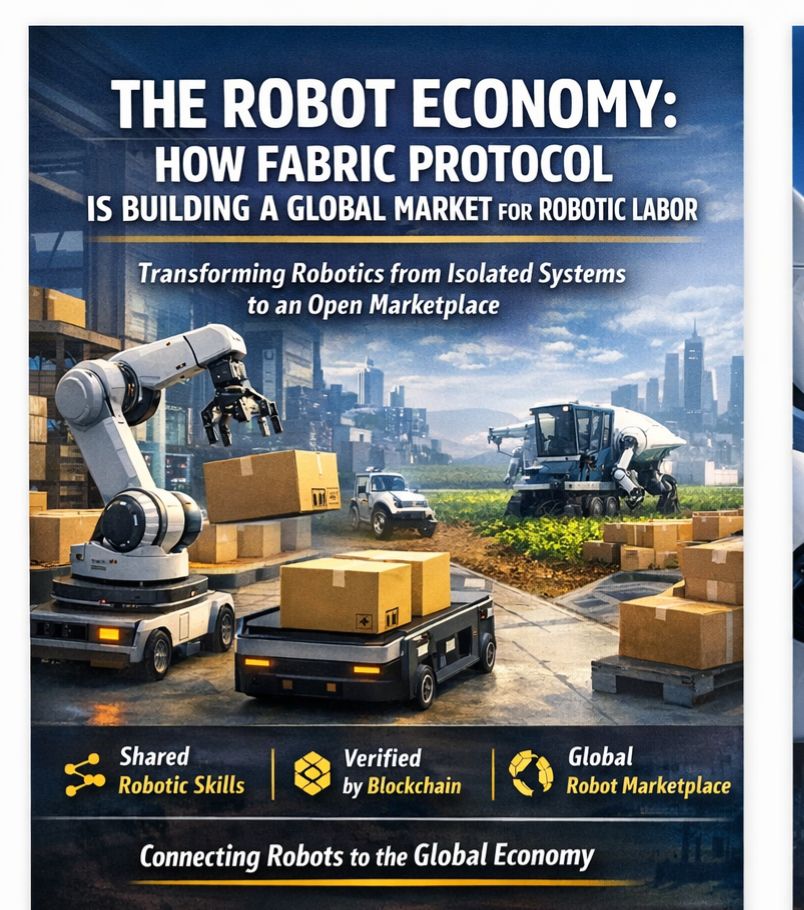
A limitation of traditional robotics systems is that most robots operate in closed environments. If a robot learns a complex task, such as safely packing fragile products in a warehouse, that knowledge usually remains limited to that company's system. This means robotics learning becomes slow and fragmented. The goal of Fabric Protocol is to break this limitation by creating an open infrastructure where robotic skills can be shared and reused.
This concept can be understood with a simple example. Imagine a robot has learned an efficient method for precise fruit picking in an agriculture field. Normally, this skill would be restricted to a single farm. However, if the robotics ecosystem is interconnected, the same capability could be adopted by other robots as well. This approach allows machines to learn from each other indirectly, and the speed of robotics innovation could be significantly accelerated.
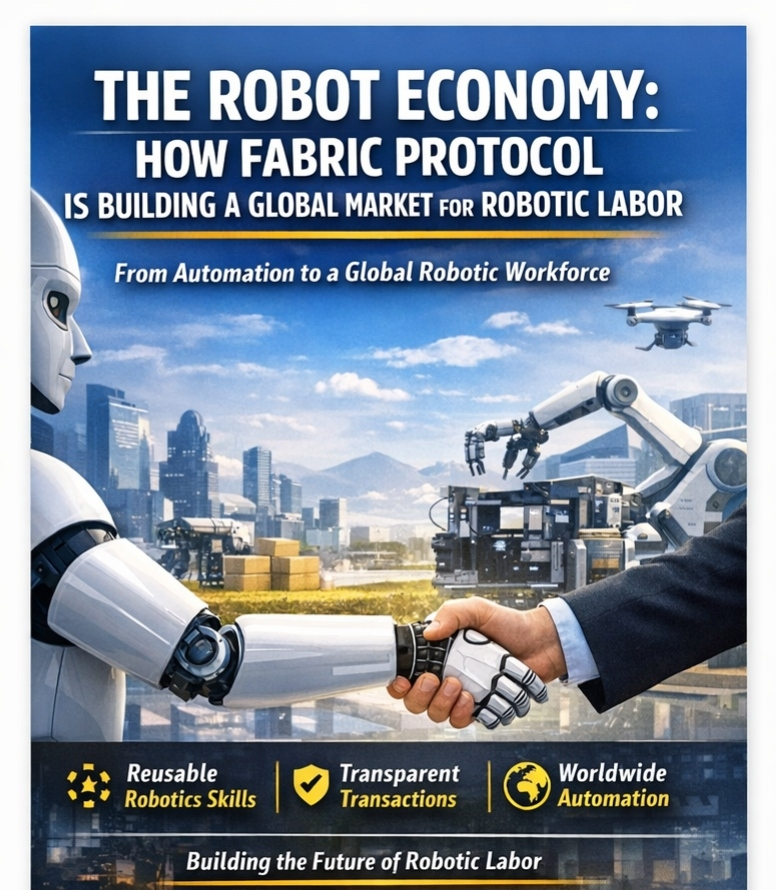
Here, blockchain-based verification plays an important role. When robots perform real-world tasks, the network needs to verify that the work has actually been done. Decentralized systems can make this process transparent. If robotic actions can be converted into verifiable records, trust can be built within the ecosystem. This model can enable machines to become participants in the economic network where work is measurable and accountable.
The long-term vision of the Fabric ecosystem is to create a global robotic marketplace. In this type of marketplace, developers can design robotic skills, companies can access automation solutions, and robots can continuously improve. If the robotics industry adopts an open network model, the scale of innovation could dramatically expand.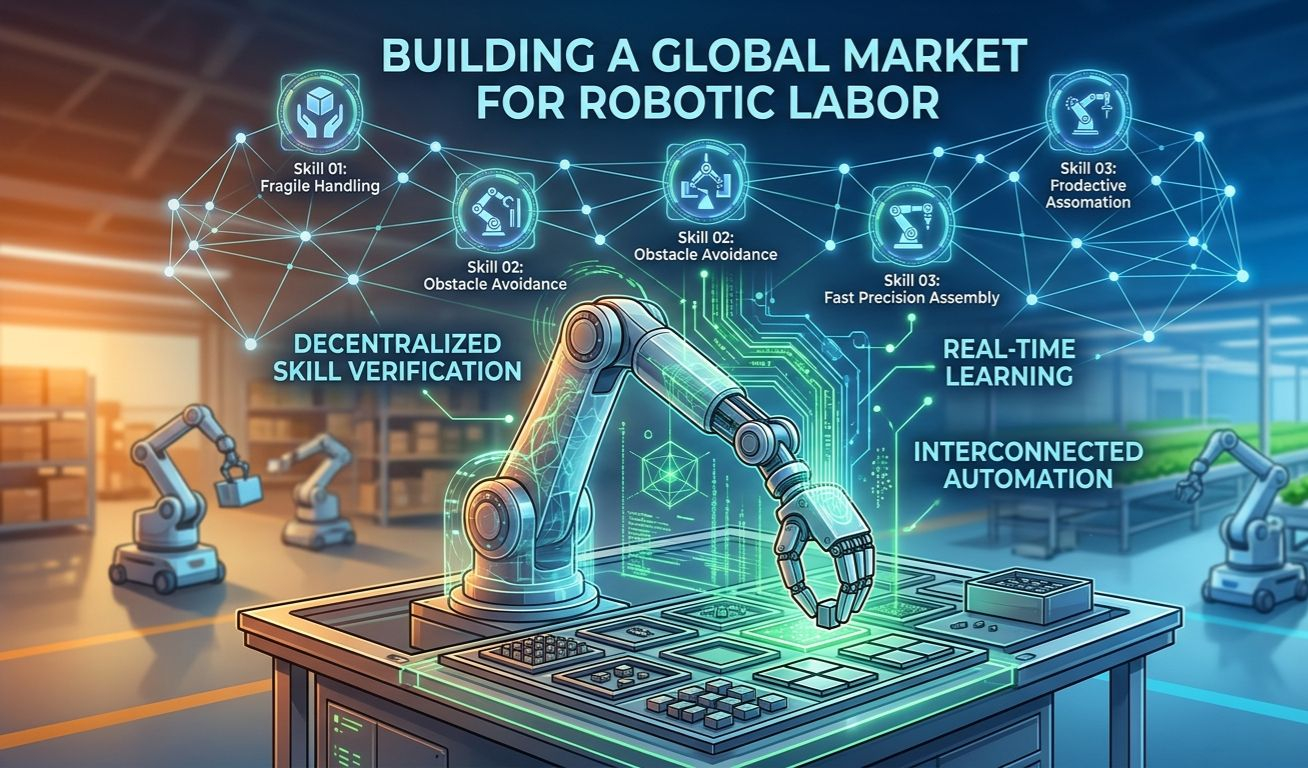
Today, millions of industrial robots are already working in the world, but their knowledge is mostly locked in isolated systems. If robotic capabilities become openly accessible, companies can adopt automation without heavy infrastructure investment. This could be a powerful change, especially for sectors like logistics, agriculture, and manufacturing.
Future production systems may be based on the collaboration between humans and machines. Humans will provide strategy and creativity while robots will efficiently perform repetitive and precision-based tasks. Experiments like Fabric Protocol are trying to build an infrastructure in this direction where robotic labor can become part of a global digital marketplace.
The next chapter of technology may not just be about smarter machines but also smarter economic systems. If the concept of a Robot Economy is successful, robotics will not just be a tool for automation. It could become an interconnected production network where machines also become an active part of global value creation.
Disclaimer: This article is for informational purposes only and should not be considered financial advice. Cryptocurrency and emerging technology projects involve risk. Readers should always conduct their own independent research before making any financial or investment decisions.
#ROBO $ROBO @Fabric Foundation #AI #Binance #Write2Earn #altcoins
