


In the future, users will not so much buy tokens as earn them by completing tasks in decentralized networks. This scenario for the development of the industry was predicted by Shayon Sengupta, an investment partner at the venture capital fund Multicoin Capital.
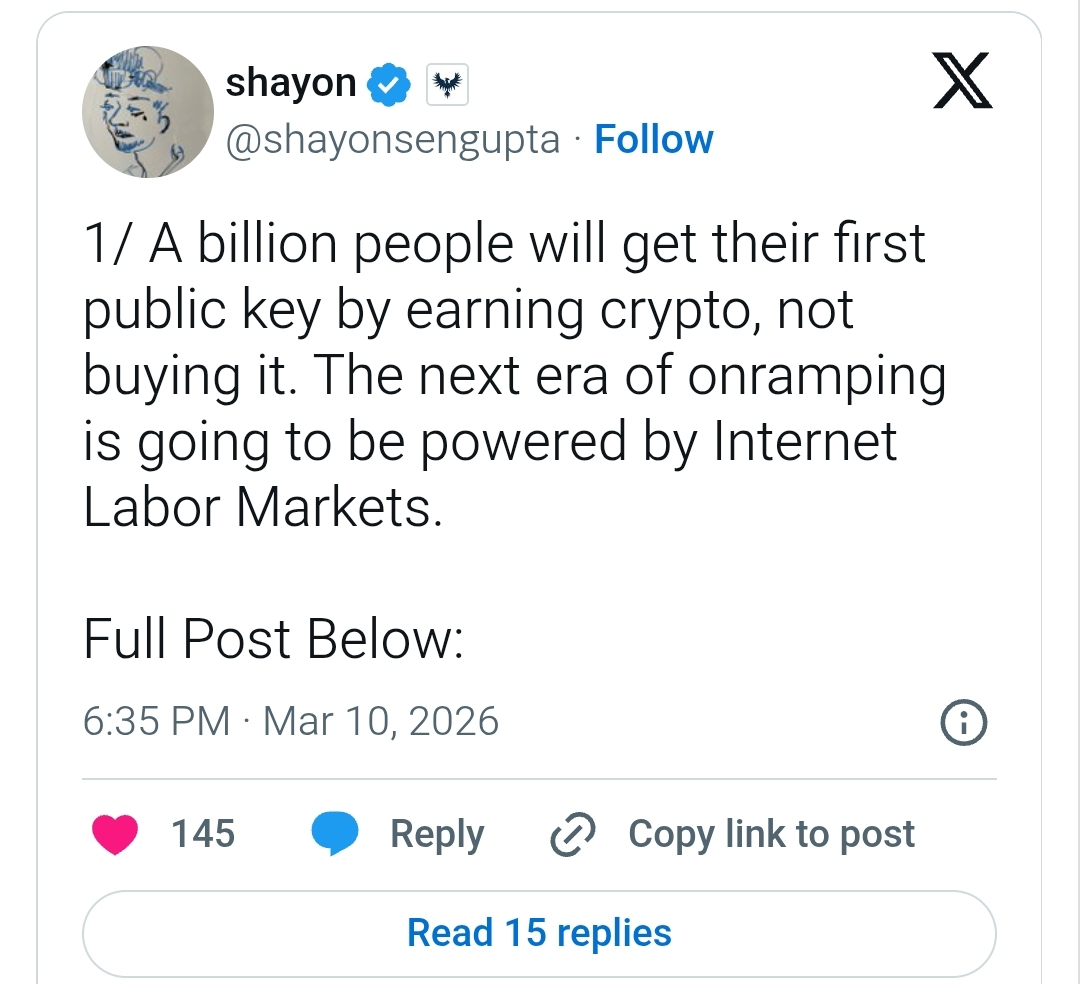
The expert called the new direction 'internet labor markets' (Internet Labor Markets, ILM). In such networks, users receive assets for specific contributions: work, resources, or expertise.
"In the future, people will receive their first cryptocurrency not because they bought it. But because they earned it," he noted.
Among the key characteristics of ILM, Sengupta highlighted:
dynamic task creation: parameters (specification, verification, and reward) are set programmatically for specific requests without unnecessary formalities;
strict guarantees of verification: using automated (deterministic) verification or collateral mechanisms in cases where human judgment is required.
From speculation to earning
The concept of ILM is already gaining popularity, especially in the Solana ecosystem. More and more projects are emerging there with rewards for completing verifiable tasks.
"There are only two ways to enter crypto: buy or earn. The first path has been taken for the last ten years. In the next decade, most will take the second. And this wave will overshadow the first in both the number of participants and volume, because the overwhelming majority of people in the world live on income, not on purchasing assets," Sengupta believes.
He explained: blockchain infrastructure makes such systems possible through automatic verification and settlements. Traditional hiring is associated with bureaucracy and payment delays. ILM replaces this process with deterministic verification: the work is confirmed - payment is instantly received through a distributed ledger.
"Imagine: someone creates a company for a specific market need, and 50,000 people around the world get paid for their work," said the expert.
Digital coordination of labor
In practice, such work can take various forms: from providing channel bandwidth and annotating data for AI to managing energy consumption.
The concept develops DePIN ideas. Sengupta called this direction the 'best example of on-chain coordination' — it formed the basis for ILM, providing:
fast and cheap calculations;
verifiable results;
reliable guarantees of trust and reputation for resource providers.
In recent years, DePIN networks have noticeably evolved:
have become better at designing incentive systems, moving away from poorly thought-out inflationary issuance;
learned to more rigorously verify work (through zkTLS), combat spam, and pay proportionately to the contribution;
helped normalize earnings in tokens;
found the perfect volume of tasks: the simpler the action, the more efficient the network.
According to Sengupta, the next stage is the transition from passive contribution ('set up a hotspot and earn tokens indefinitely') to specific tasks with clear payment: 'deliver a package from A to B and receive a fixed reward' or 'reduce energy consumption by 100 kWh in the evening and receive tokens.'
The role of AI
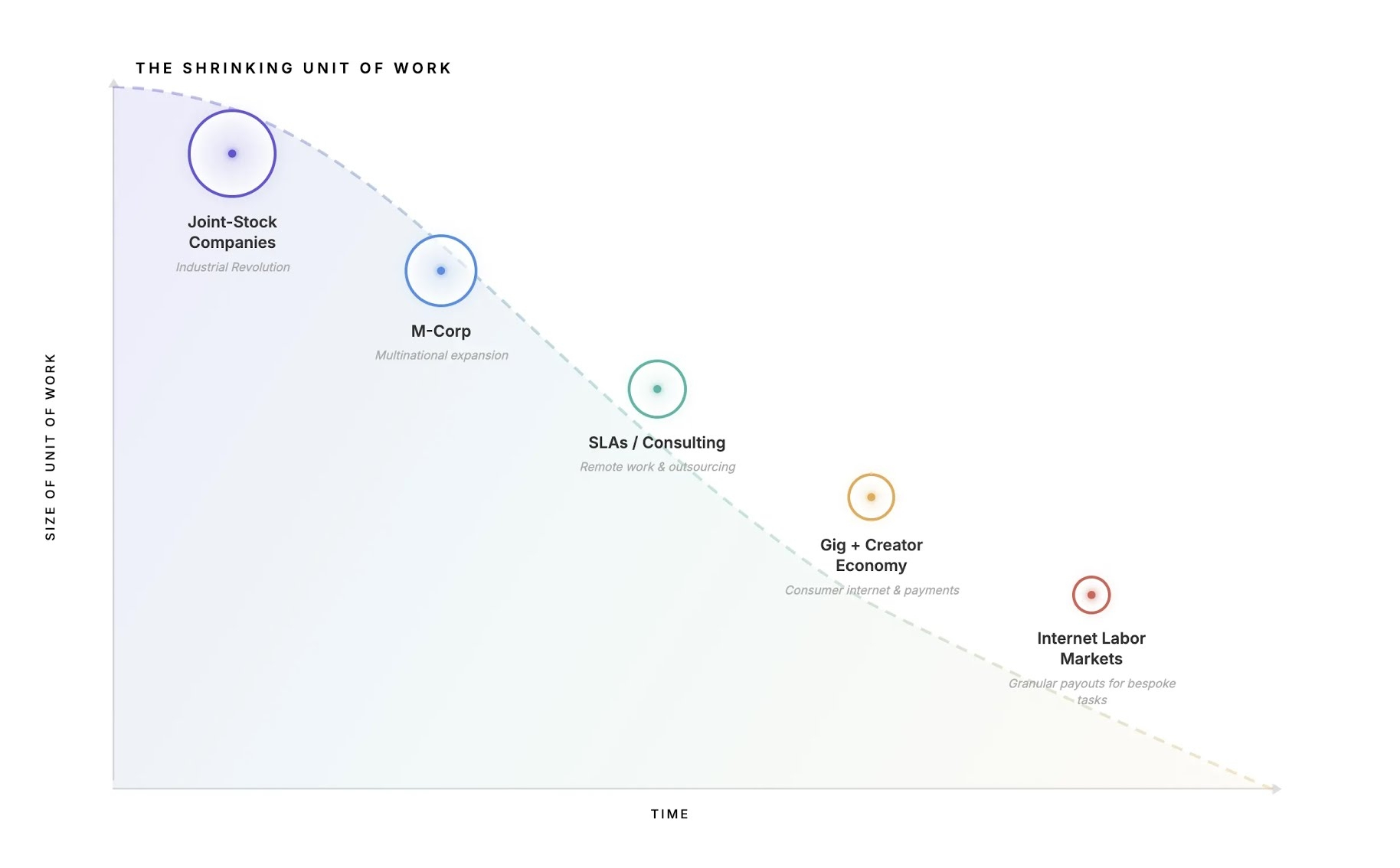
The expert is confident that AI will not make human labor unnecessary - on the contrary, technology will increase individual efficiency and expand the range of tasks that can be solved. What was once one profession will become a set of small modular roles.
Future organizations will have a tiny core and a vast periphery of on-demand performers. The main limitation is not hiring, but speed: how quickly the right person can be found, the quality of their work can be verified, and payment can be made. This is where ILM is needed.
The transition of income to on-chain naturally stimulates consumption within ecosystems. People will start to actively use basic crypto tools: yield services, lending, trading. This will close the cycle, uniting labor and capital markets.
"A new user will not come to read the white paper or buy a meme coin. They will come because work can be done here, payment can be received, and they can stay - they pay better here than anywhere else," concluded Sengupta.
Let’s recall that River analysts recorded a record increase in Bitcoin adoption by institutional banks, public companies, and governments.
@Fabric Foundation #robo $ROBO
