
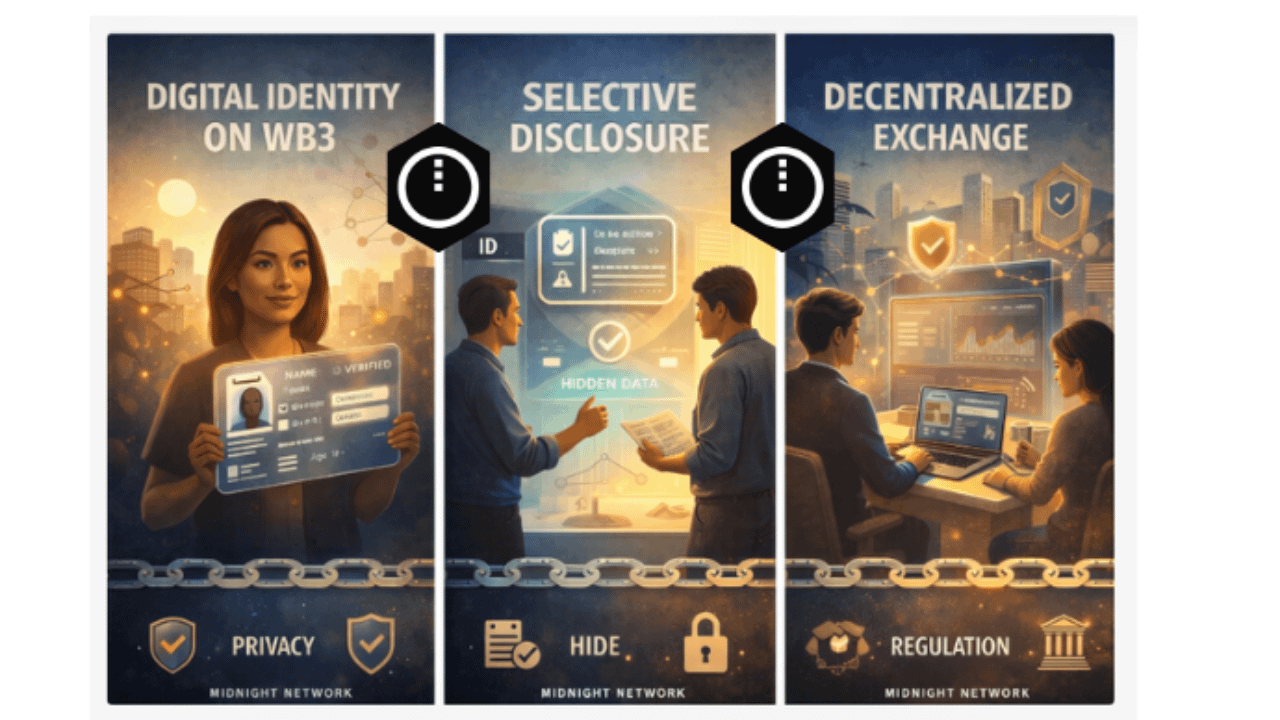
Now I am starting to delve deeper into @MidnightNetwork partly to participate in the CreatorPad of the project, and partly to gain more knowledge about the project as well as to share my personal perspective.
After the recent Privacy update, I am now transitioning to Digital Identity, the digital identity in Web3 is quite similar to the ID card in real life.
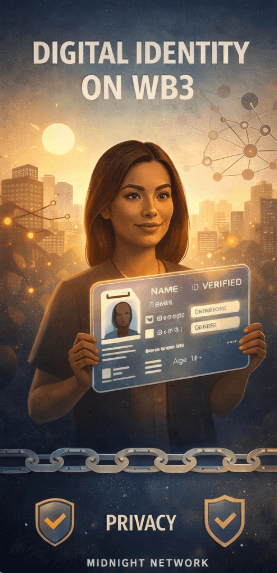
If you look at how online platforms verify identity, one thing is quite easy to notice: most processes require users to provide more information than necessary. The simplest example is age verification. A platform only needs to know whether you are old enough to use the service, but in reality, you have to submit identification documents with a lot of irrelevant information such as full date of birth, home address, or identification number. This inadvertently makes the identity verification process a risk point, especially when data is stored in centralized systems. Right now, I find Midnight's approach very noteworthy. Instead of requiring users to disclose all original data, you only need to prove one specific piece of information. To put it simply, users can prove that something is true without having to disclose all the underlying data.
As I understand it, this mechanism is based on Zero Knowledge Proof.
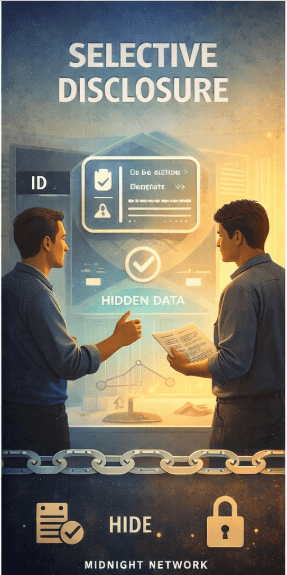
Personally, I find this to be an extremely interesting approach because with it you can prove that information is valid without disclosing any details behind it. In fact, this can completely demonstrate that I am old enough to use a service without needing to reveal my exact birth date, or prove that I own a certain certificate without having to share all of my personal profile information. Looking a bit broader, I think this model could also impact how decentralized financial platforms operate. In my opinion, one of the major issues of DeFi today is still the challenge between privacy and compliance.
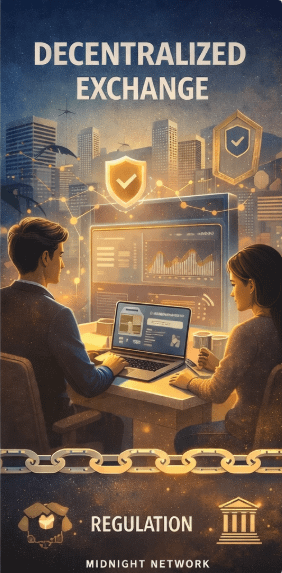
Many platforms need to verify user identities to meet legal requirements, but collecting and storing personal data goes against the original spirit of decentralization of Web3.
In the case where privacy-preserving Digital Identity systems are deployed, platforms can still verify that users have completed the necessary verification process without needing to store the entire personal data. This could open up a new direction for platforms like Decentralized Exchanges, where balancing decentralization and legal requirements is always quite a challenging problem. For me, Digital Identity is an essential part of Web3 today and even more so in the future. Allowing platforms to hold personal data is quite risky; instead, users should control and only share necessary information when interacting with services.
Once Midnight is implemented at a large scale, the handling of identity on the network will change significantly. Instead of having to publicly disclose too much in personal data during verification, now you just need to prove the necessary information. Just saying this, I can already envision a completely different operation for Web3. Are there additional benefits or risks that I am not aware of? Please leave a comment for me.
