
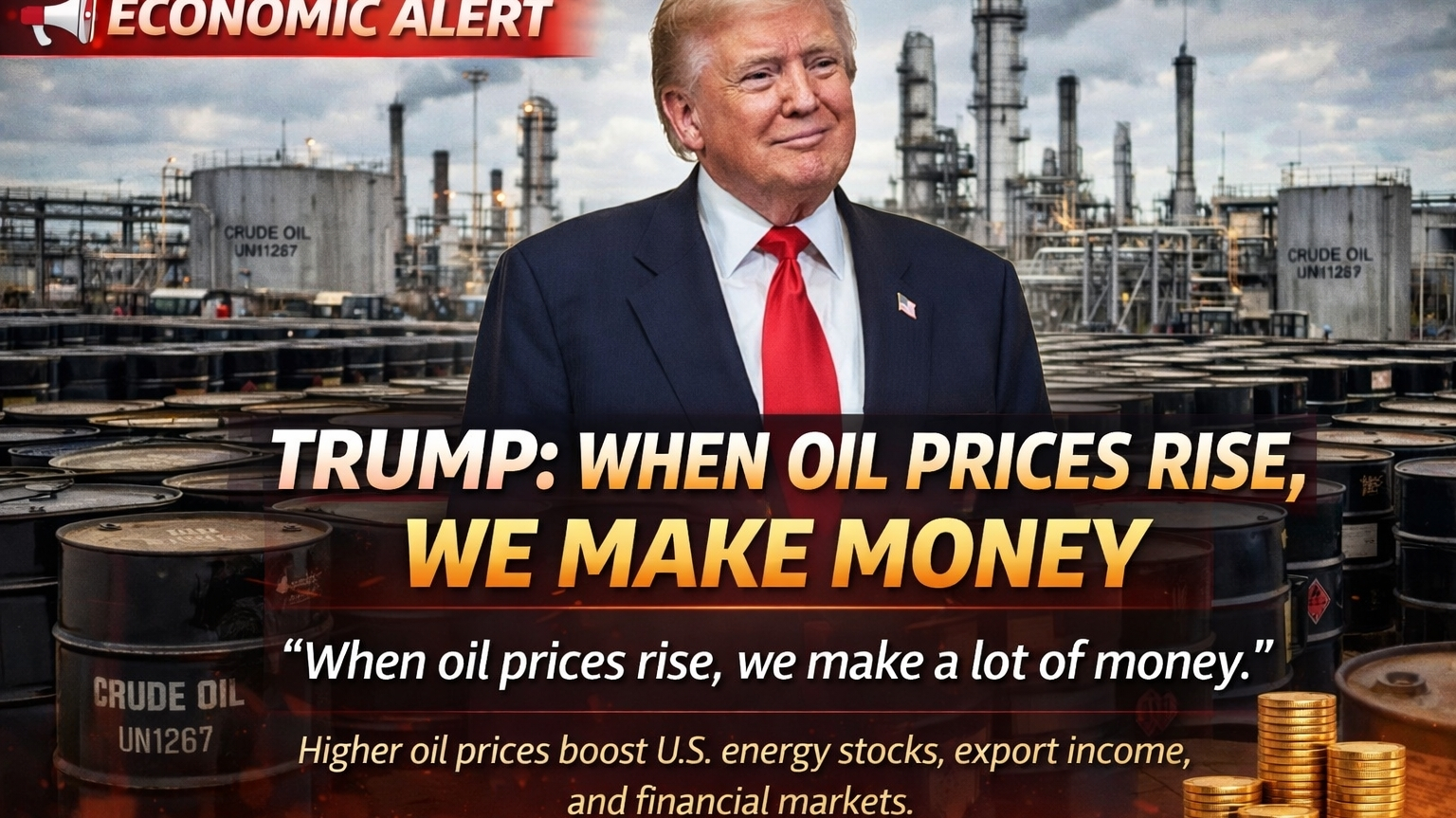

A new statement from President Donald Trump is drawing attention across global markets after he said, “When oil prices rise, we make a lot of money.” The remark highlights how energy prices remain closely tied to economic strategy and national interests, especially for a country like the United States that has become one of the world’s largest energy producers.
From my perspective, this comment reflects a shift in how the United States views the global oil market today compared to previous decades. In the past, higher oil prices were often seen as a burden for the American economy because the country relied heavily on foreign energy imports. However, the rise of domestic oil production has significantly changed that dynamic. The United States now produces massive amounts of oil and natural gas, which means higher prices can sometimes translate into higher revenues for energy companies operating within the country.
When oil prices climb, energy producers typically see increased profits because the same amount of production suddenly becomes more valuable in global markets. That revenue can ripple through the broader economy, benefiting workers, energy states, and companies involved in drilling, refining, and transportation. In that sense, rising oil prices can strengthen the financial position of parts of the U.S. energy sector.
At the same time, higher oil prices are not always positive for the overall economy. When fuel becomes more expensive, consumers often feel the impact through higher gasoline prices and increased transportation costs. Businesses that rely heavily on shipping or logistics can also face higher operating expenses, which can eventually lead to rising prices for everyday goods.
Trump’s comment highlights the complex balance that governments must navigate when energy prices fluctuate. While higher oil prices can boost profits for producers and strengthen domestic energy industries, they can also place pressure on households and industries that depend on affordable fuel.
Energy markets are particularly sensitive during periods of geopolitical tension, especially in regions that play a central role in global oil supply. When conflicts or political instability threaten production or transportation routes, prices can move quickly as markets react to the possibility of supply disruptions.
For now, Trump’s statement underscores how energy has become a strategic economic factor in global politics. As oil prices continue to fluctuate, governments, investors, and industries around the world will be watching closely to see how those changes shape both economic outcomes and geopolitical strategies.