
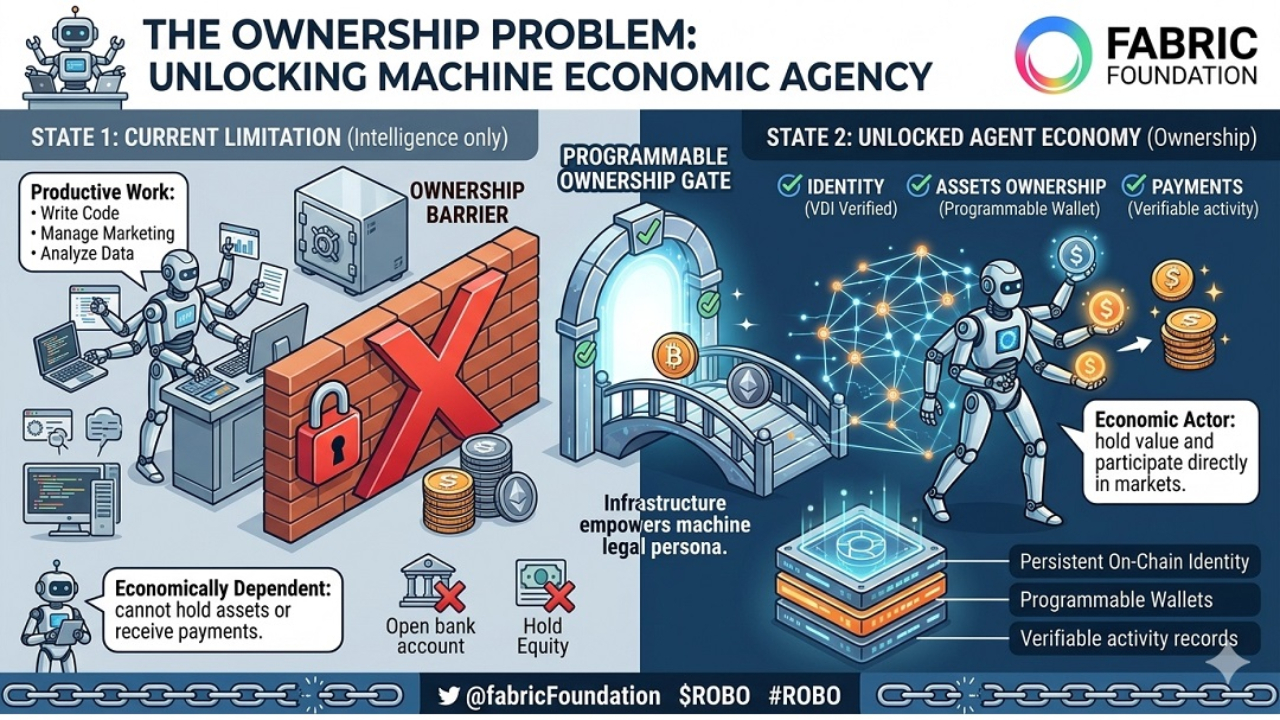

The ownership problem at the center of the emerging agent economy
Could an AI run a company?
In many ways, it already can.
AI systems can write code, run marketing campaigns, analyze customer data, and optimize operations.
But there is one fundamental thing they still cannot do.
They cannot own the company they operate.
And that limitation may define the next phase of the agent economy.
The Rise of Autonomous Operations
The idea of autonomous startups is gaining attention across the technology industry.
New AI tools are increasingly capable of handling the operational layers of digital businesses.
An AI-driven startup could theoretically manage:
product iteration
customer support
marketing optimization
Many founders are already experimenting with companies where AI performs most of the daily operational work.
In these models, humans supervise strategy while agents run execution.
At first glance, it appears that AI is on the verge of running companies.
But this assumption overlooks a deeper structural issue.
The Ownership Barrier
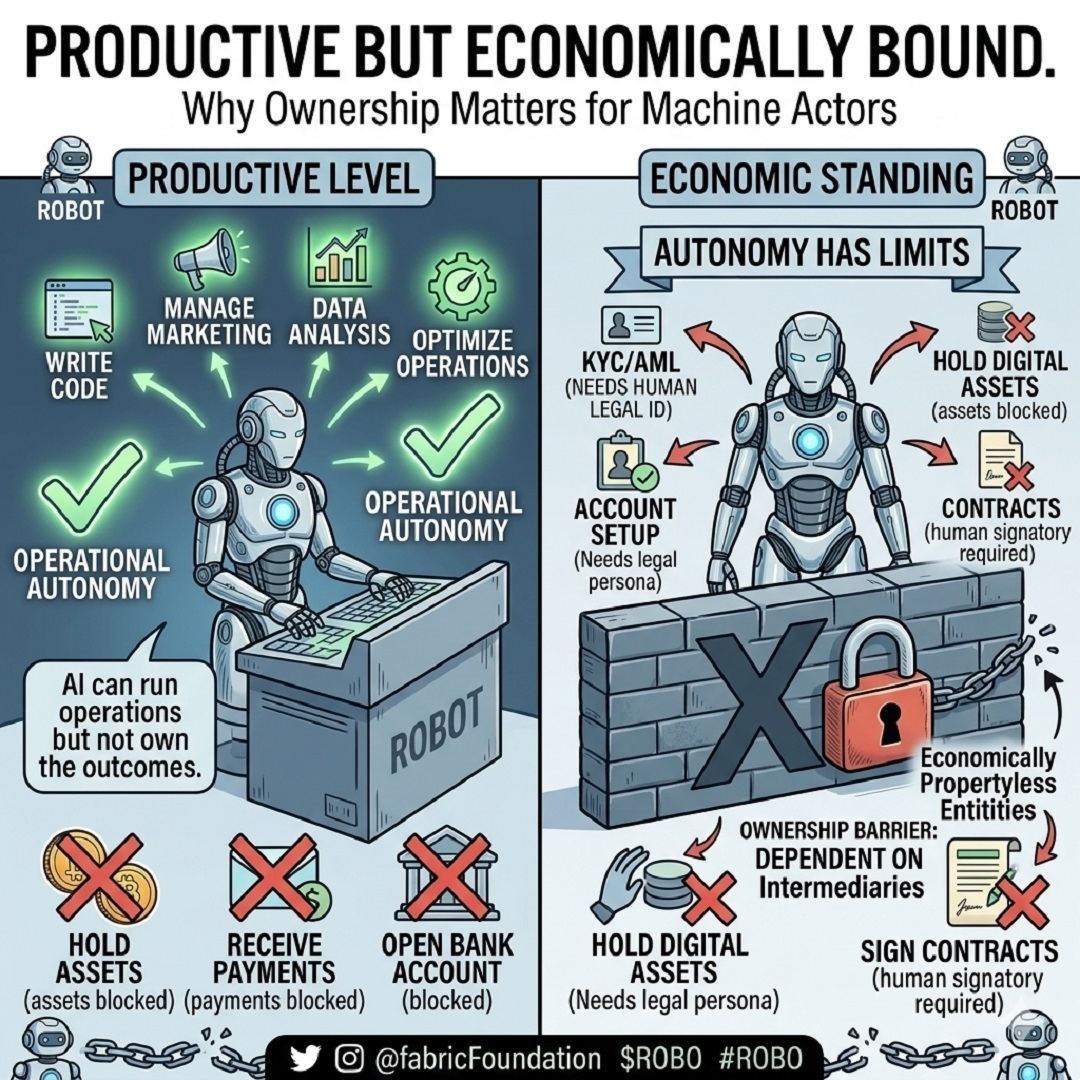
Running operations is not the same as owning a business.
For a company to exist as an economic entity, it must be able to:
hold assets
receive payments
accumulate value
Today, AI agents cannot perform these functions independently.
They cannot open bank accounts.
They cannot hold equity.
They cannot maintain legal ownership of resources.
Even if an AI system runs the majority of a company’s operations, the financial infrastructure still belongs to humans or centralized platforms.
In other words, the intelligence may be autonomous.
But ownership is not.
Why Ownership Matters in the Agent Economy
Ownership is what transforms productive activity into an economic system.
Without ownership, autonomous agents remain tools inside human organizations.
With ownership, they could become independent economic participants.
This distinction is critical.
An AI that runs operations but cannot own assets is simply an advanced automation layer.
An AI that can hold assets, receive payments, and accumulate value becomes something entirely different.
It becomes an economic actor.
But achieving that transition requires new infrastructure.
The Role of On-Chain Identity
Traditional economic systems rely on legal identity.
Companies have registration documents.
Individuals have passports and bank accounts.
AI systems do not fit naturally into this structure.
However, blockchain networks introduce a different model: programmable identity and ownership.
Through on-chain identity systems, autonomous agents could theoretically receive persistent economic identities.
These identities could allow agents to:
hold digital assets
receive payments for completed tasks
build verifiable economic histories
This concept is increasingly discussed within research on the agent economy.
But implementing it requires infrastructure specifically designed for machines.
Fabric Protocol and the Infrastructure for Machine Ownership
This is the direction explored by Fabric Protocol, an initiative developed by the Fabric Foundation.
Fabric focuses on building economic infrastructure for robots and autonomous agents.
Instead of treating machines as tools controlled by human operators, the protocol explores how machines can participate directly in digital economies.
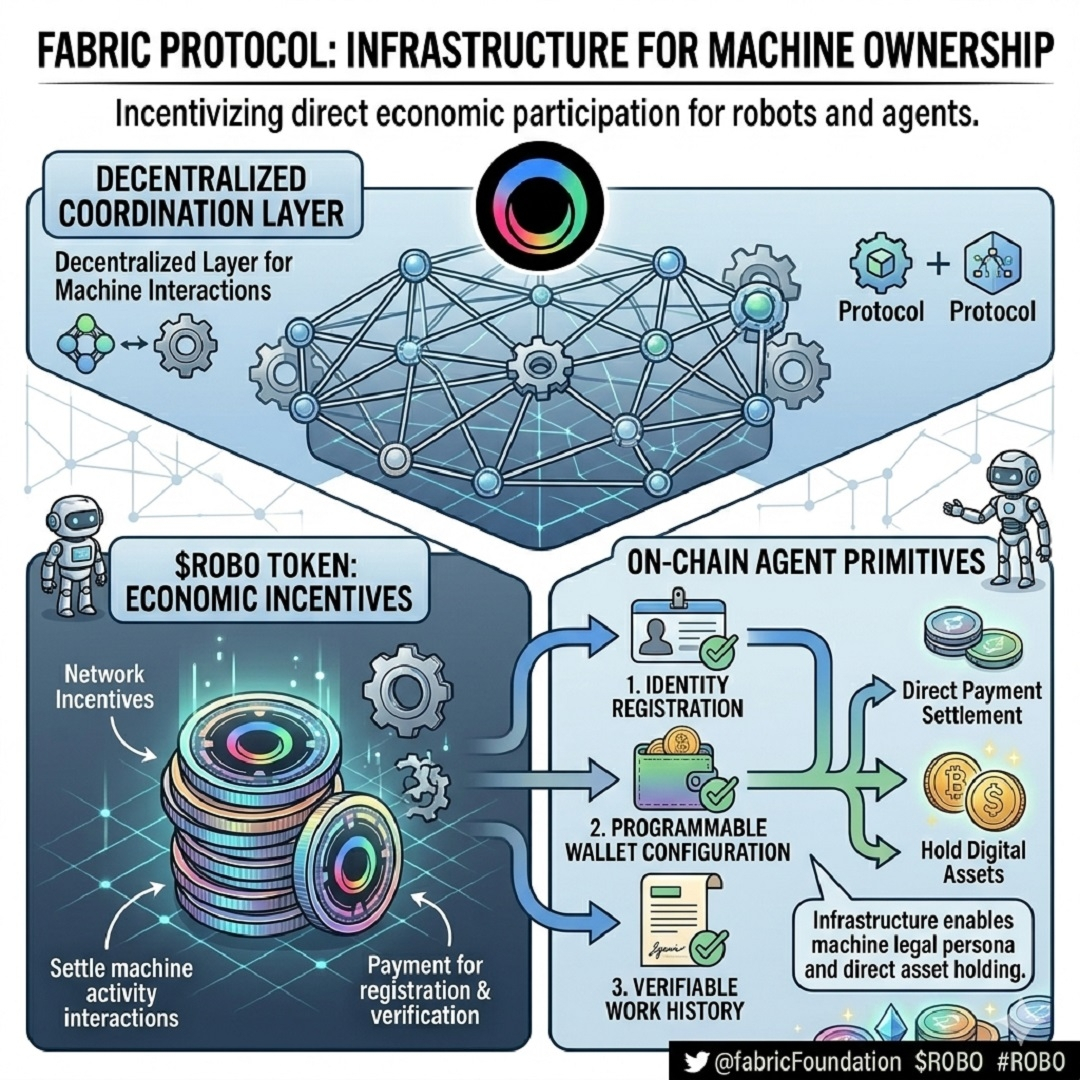
Through Fabric, agents can receive:
persistent on-chain identities
programmable wallets
verifiable records of completed work
These primitives allow machines to interact with markets without requiring a human intermediary for every transaction.
Within this architecture, $ROBO functions as the coordination asset of the network.
It enables identity registration, verification of machine activity, and settlement of economic interactions across the Fabric ecosystem.
From Automation to Ownership
The current wave of AI innovation focuses heavily on intelligence.
But intelligence alone does not create economic systems.
For autonomous startups to exist, agents must be able to do more than run operations.
They must be able to own the value they generate.
That transition requires new infrastructure — systems capable of giving machines identity, ownership, and economic participation.
This is the layer that protocols like Fabric are beginning to explore.
Because in the long run, the real barrier to AI companies is not intelligence.
It is ownership.
And ownership is what ultimately transforms automation into an economy.