The blockchain has been proven to have certain value. Transparency has played a role. Anyone can see what is happening and confirm that the system is operating under honest conditions. However, this success has introduced a subtle new problem. So, what will it look like when everything is revealed? Complete transparency is seen as an advantage in cryptocurrency. Bitcoin proved that funds can be transferred without the assistance of banks while still being verifiable by anyone. Subsequently, smart contract systems have expanded on this foundation. Code, balances, and transactions are permanently visible on the chain. This method is effective in open financial systems. However, it becomes complicated once you try to transfer real businesses, identities, or sensitive data to a public blockchain. Companies cannot show internal financial performance to competitors. People are also reluctant to have their transaction history publicly tracked. They cannot put confidential information on ledgers that any national government or institution can read. Therefore, the industry currently faces a strange contradiction. A technology aimed at building trust is, in fact, too transparent to be applied. This is precisely the problem that @MidnightNetwork is trying to solve. Midnight is a privacy-driven blockchain. It does not aim to eliminate transparency but to show things without disclosing the underlying data. It does not force users to disclose information to the entire network but allows users to keep sensitive information private while being verified through encryption technology. At the core of this concept is zero-knowledge proof technology. These cryptographic techniques enable people to prove something is true without revealing the underlying details. Suppose you need to prove you are over 18 years old. Normally, you would need to show an ID, disclosing your date of birth, name, and personal information. Using zero-knowledge proofs, the system only needs to verify whether this statement is correct. You meet the criteria without exposing any personal privacy. This concept is not complex, but its implications are profound. It means that compliance, identity, or transaction validity can be verified in applications without disclosing sensitive information. This opens up possibilities for many systems that cannot operate on public blockchains. Businesses can execute commercial contracts without exposing strategic information. Financial platforms can verify accounts without disclosing account information. Identity systems can verify credentials without storing any personal records in the public eye. The emergence of Midnight can also be described as rational privacy. Information essentially remains confidential but can be verified for validity when needed. Only necessary information is disseminated, and only to the minimum extent. This establishes a compromise between confidentiality and transparency. The network can be verified, but no sensitive information is permanently disclosed. This balance may be more important than some people imagine. For years, blockchain has focused on speed, scalability, and transaction costs. However, as the focus shifts beyond speculation to developing real infrastructure, privacy becomes more important. Real-world systems involve identities, financial records, personal information, and contracts. These cannot simply be placed on a transparent ledger. Midnight is trying to build the missing layer to establish these systems. A blockchain that is transparent in verification while keeping information confidential. If this model succeeds, it may change people's perceptions of blockchain transparency. The next stage of technology may no longer involve making everything public on the chain. Rather, it may achieve demonstrations without disclosure.

Article
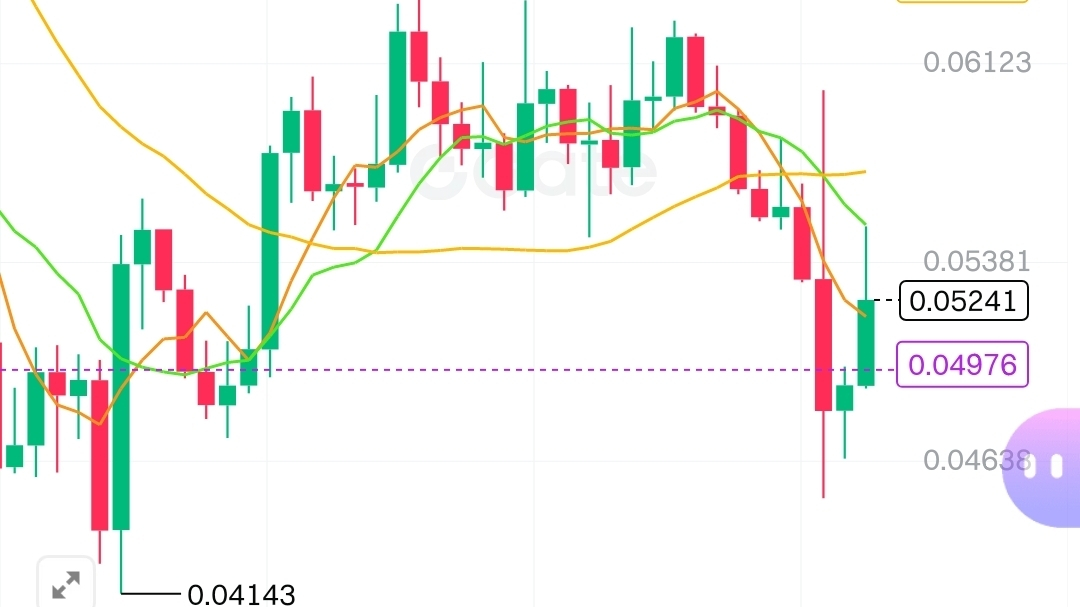
All past is transparent and visible, keep holding on, brothers
--
Disclaimer: Includes third-party opinions. No financial advice. May include sponsored content. See T&Cs.