

On March 11, $NIGHT landed on Binance's spot market. However, I spent the whole night analyzing the on-chain data of Glacier Drop and the latest deployment of Kūkolu, and I feel that this wave of decline has actually cleaned out the floating funds of those who were just trying to make easy gains. Many people ask me, what exactly is Midnight? If your understanding is still stuck on privacy coins or simple sidechains, then you might really miss this round of paradigm shift in the privacy track.
In recent days, retail investors have been fixated on minor fluctuations, while I am focused on several industry-shaking news this week. Google Cloud, MoneyGram, and Pairpoint under Vodafone, these established payment giants and cloud service providers have officially joined as federal node operators for Midnight.
My personal judgment logic is very straightforward: why do these giants want to be the stewards of a privacy chain? Because they hold massive commercial secrets. Companies like Western Union, which are big players in cross-border settlements, fear the most that data will run naked on a transparent public chain, leading competitors to reverse-engineer their business strategies. Their collective entrance indicates that Midnight's set of 'compliance privacy' has passed the strictest enterprise-level internal control audits. This is the biggest transformation in the crypto market of 2026, shifting from geeks avoiding regulation to giants seeking a compliant privacy foundation. When big money starts working, retail investors are often still tangled up in the 5-minute line's yin and yang; this is a cognitive gap.
I have to mention the NIGHT DUST dual-token model, which many people still don't understand. I have thoroughly reviewed the white paper and found that Charles's design is simply a commercial genius. NIGHT is the fuel, the generator; while DUST is the energy, the electricity fee. In my practical tests, I discovered a key point that most people overlook, which is that DUST is non-transferable and will automatically decay over time.
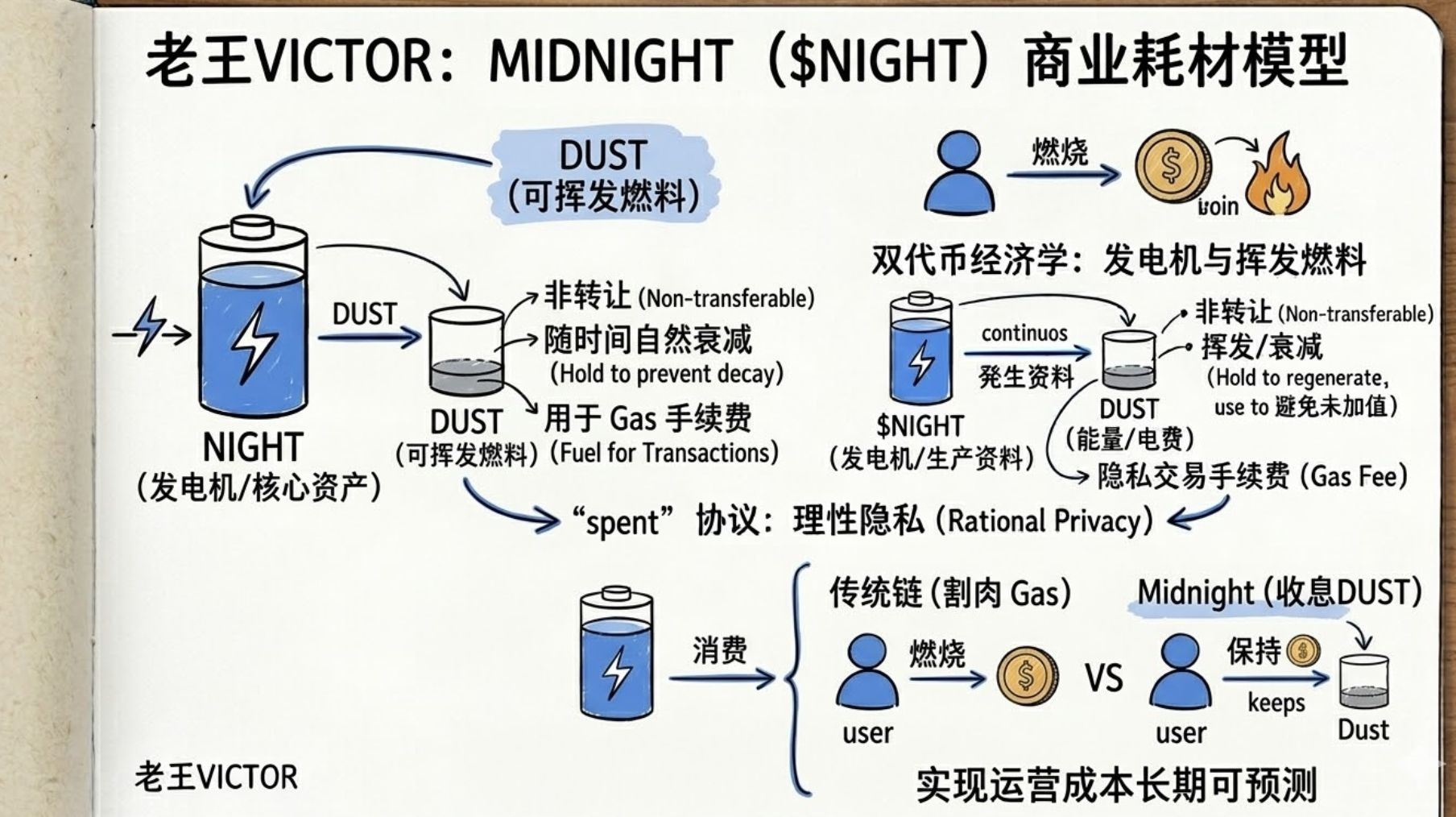
This move is extremely ruthless; it forcibly separates speculative attributes from usage attributes. If you are a clearing institution and hold a large amount of $NIGHT, you can obtain a continuous and cost-stable supply of DUST. This generator model makes the financial expenditure of institutions extremely controllable. The traditional Gas mechanism is akin to slicing meat, while Midnight's design is about collecting interest. For those compliant institutions that need to go on-chain, fluctuating Gas fees are the nightmare of budget officers. @MidnightNetwork Midnight's logic is very domineering: you buy a generator, and from then on, you can enjoy a constant supply of privacy power. This idea of separating asset premiums from operational costs is the core basis for its entry into the top 100 by market value.
In addition to the economic model, the dimensional reduction of development power by the Compact language is also a major highlight. Nowadays, engaging in privacy development without a PhD in cryptography is simply impossible. But Midnight has lowered the threshold to the TypeScript level. I tried running its simulation environment, and an ordinary Web2 programmer can write privacy contracts that meet regulatory audit requirements as long as they know how to mark private (Private) and public (Public) fields.
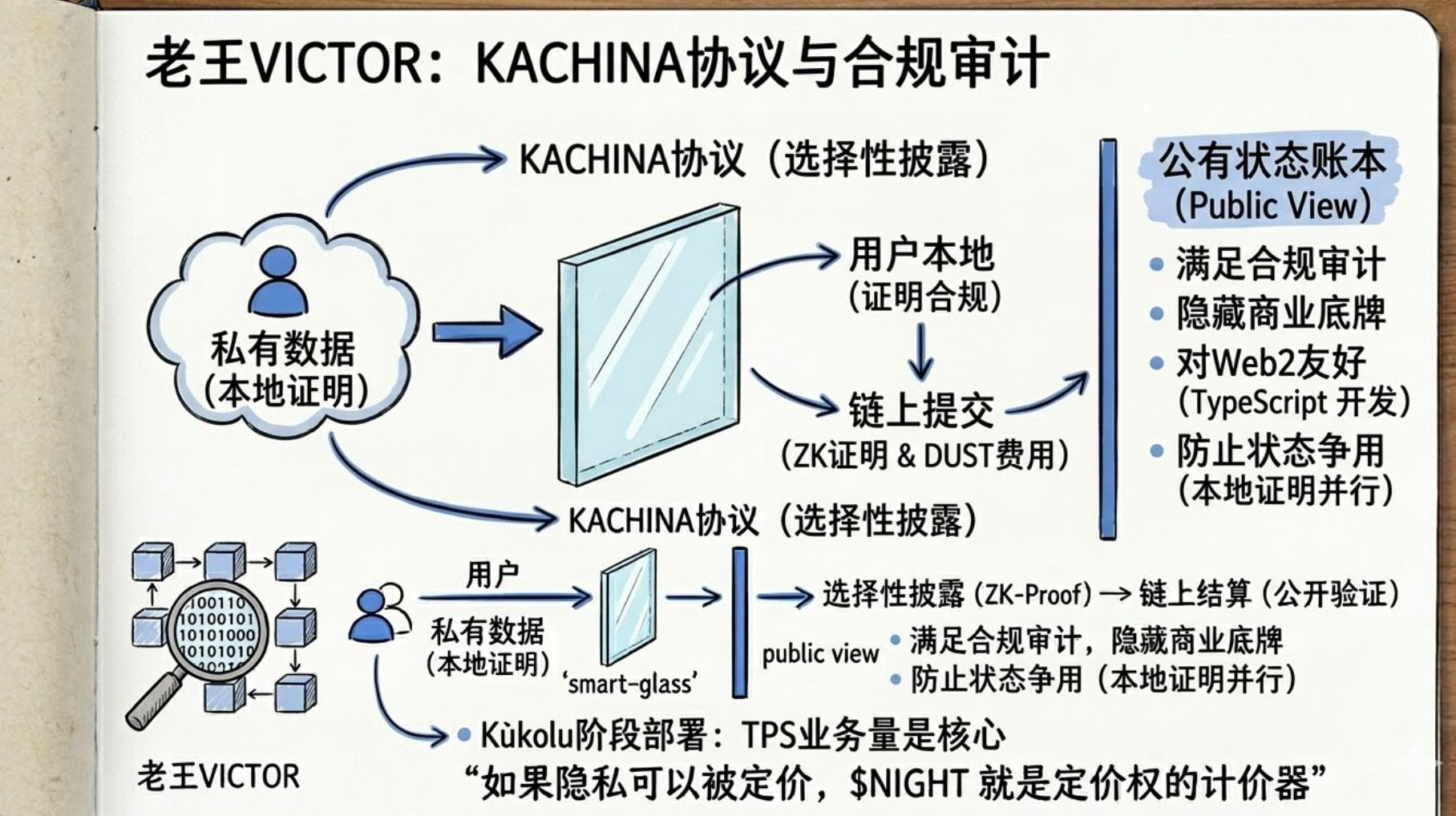
My practical observation is that this is a redistribution of development power. When privacy development is no longer a highbrow math competition but becomes simple engineering modules, we will see a large number of traditional ERP systems moving to Midnight in the second half of 2026. This decentralization of underlying development power will create a terrifying ecological accumulation effect.
However, it is undeniable that Midnight is also walking on a very thin tightrope; it advocates rational privacy. This involves a very sensitive topic, which is selective disclosure. This means that users can show necessary transaction proofs to specific third parties while protecting their privacy. This design is destined to anger privacy fundamentalists; any slight tilt in the balance of power could slide into the abyss of centralized auditing. However, I believe 2026 will be the year of the RWA explosion, where big capital fears not regulation, but competition. Midnight is establishing a set of standards: allowing data to be compliant with audits but not publicly exploited. This is not just a code innovation; it is an important compromise and upgrade for the crypto civilization.
Currently, $NIGHT is oscillating around 0.05; from a technical perspective, the token unlocking pressure and profit-taking are still ongoing in the short term. But I advise everyone to jump out of the noise of intraday fluctuations; what we need to look at is the actual business volume after the official launch of the mainnet at the end of March. If Western Union or Vodafone's business really starts to run on-chain, this little bit of volatility will look like a golden pit in retrospect.
My personal operational judgment is not to view it with the mindset of trading meme coins. This is a long-term game focused on landing cycles; Midnight is not creating anonymous tokens; it is bidding for the privacy standards of the future global clearing network. If privacy can be priced, then $NIGHT is the price-setting device. #night