
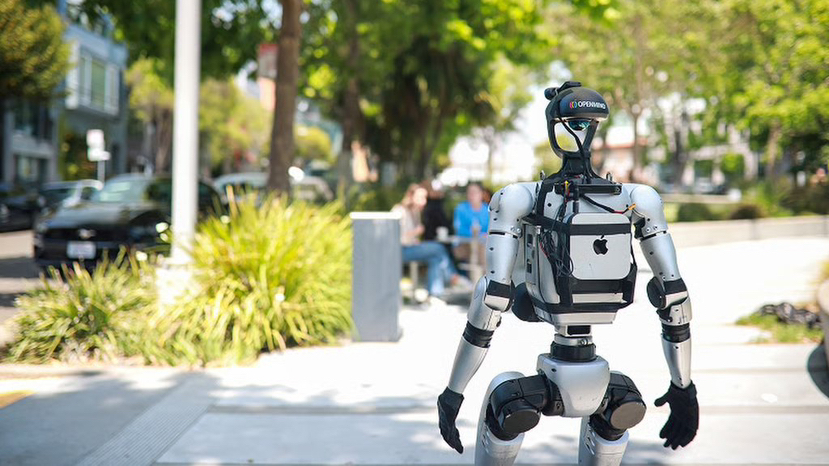
Lately while scrolling, I’ve been seeing @Fabric Foundation constantly posting clips of robots going up to strangers in the real world and greeting them. With their appearance at the upcoming NVIDIA GTC, it honestly gives me a feeling that’s both exciting and slightly… unsettling in a healthy way.
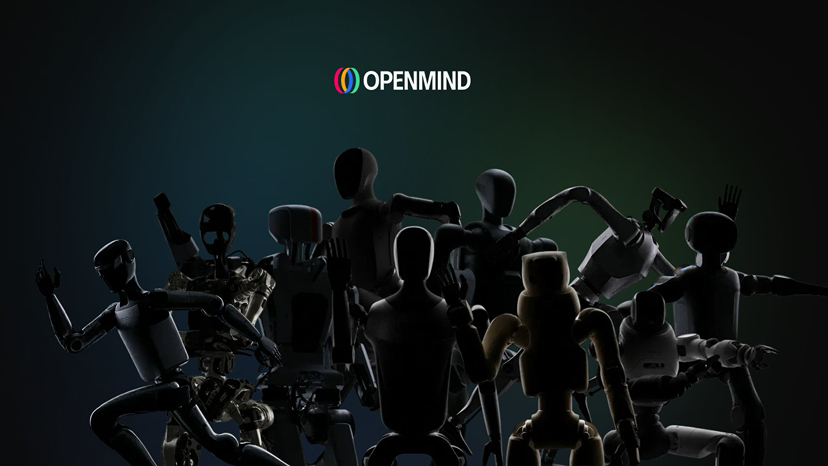
People often talk about AGI in very abstract terms “superintelligence beyond humans,” “changing the world,” and so on. But what OpenMind seems to be doing is the opposite. Instead of sitting in a lab designing mathematical models and showing off benchmarks, they’re pushing AI straight into real hardware. They’re teaching robots how to approach strangers, start conversations naturally, read emotional reactions, and learn from those interactions.
There’s a clip of their greeter robot walking up to pedestrians, and you can literally see people’s reactions that moment of “wait… is that a real robot?” It doesn’t feel staged at all.
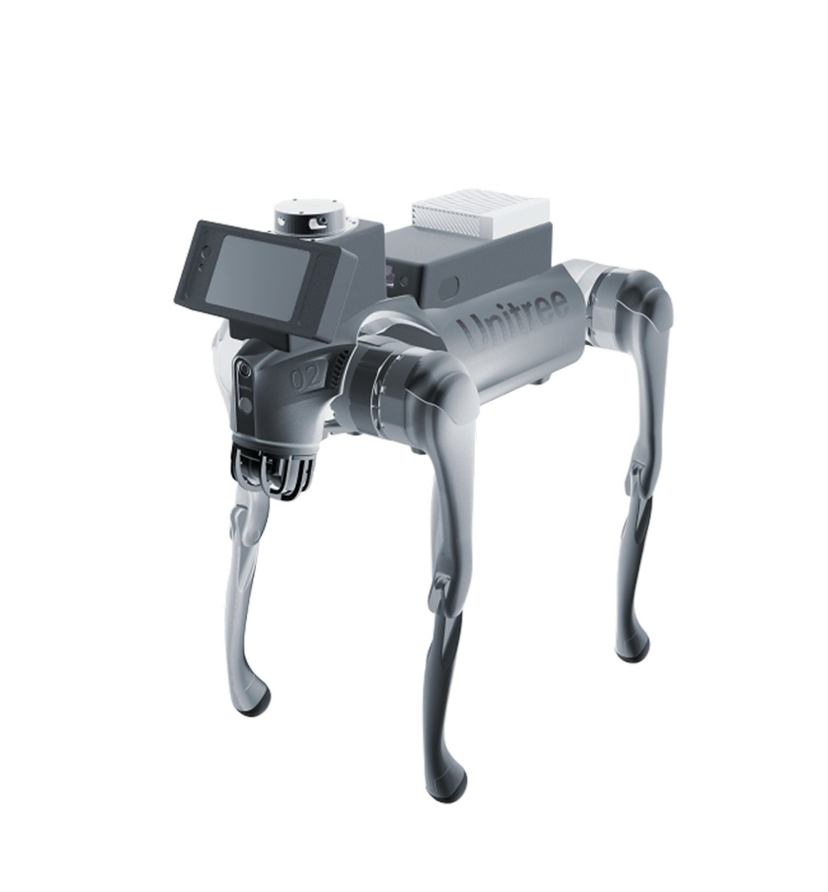
What I find most interesting is that they’re building a shared cognition layer that’s hardware-agnostic. Their system, OM1, can run on different robots: from the Bits robot dog, to the kid sized Booster K1, to the very cool looking Tron 1 quadruped from LimX Dynamics.
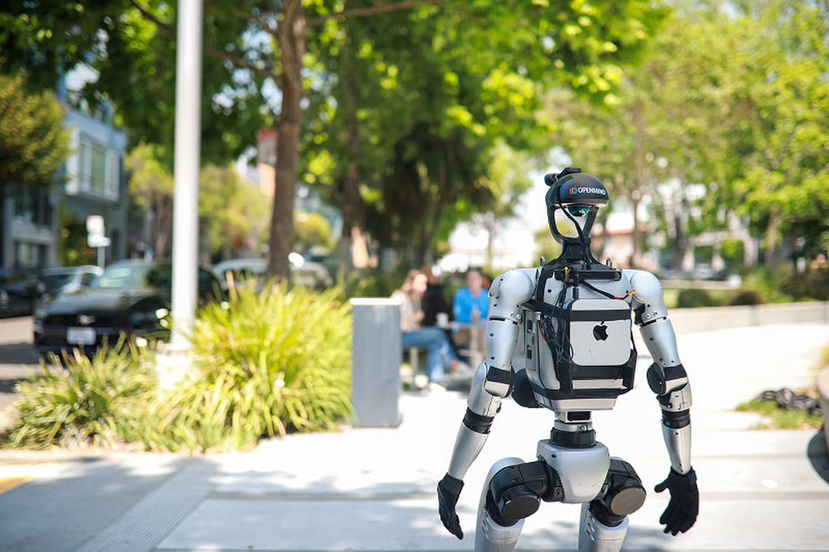
The idea is that developers don’t have to learn each robot separately anymore. You just plug into the system and get a “brain” that already understands things like follow me, waving, social interaction, or even coordinating multiple robots simultaneously through FABRIC. It reminds me a lot of early Android one operating system powering many different phones except now applied to robotics.
Another thing I like is their emphasis on “safe social machines.” The goal isn’t robots running around doing random or dangerous things, but robots that understand human context: respecting personal space, reading when someone feels uncomfortable, or recognizing when someone is curious and open to interaction.
At a time when people worry about robots taking jobs or AGI going out of control, this approach mteaching robots how to behave like polite members of society feels surprisingly human-centered.
Of course, it’s still early. There are plenty of things they’ll need to prove:
• scalability when thousands of robots coordinate together
• the real cost of mass deployment
• and who ultimately owns the training data, especially if they aim for a decentralized or open-source direction.
But judging by the steady updates from the early follow me demos to preparing robots to greet attendees at the entrance of NVIDIA GTC it feels like this team is actually building, not just hyping and disappearing.
If you’re following AI or robotics and haven’t looked into @Fabric Foundation yet, it might be worth checking out. It’s not always drama or token-pumping (even though there are some connections to crypto/blockchain in certain aspects), but every clip they post feels like a small step toward a future where robots are no longer just gadgets they’re real companions.
Personally, I’m cautiously excited. A little nervous, a little hopeful that they might actually pull it off.
What do you think? Do robots greeting strangers like this make the future feel closer or does it still feel a bit creepy? 😅 #robo $ROBO
