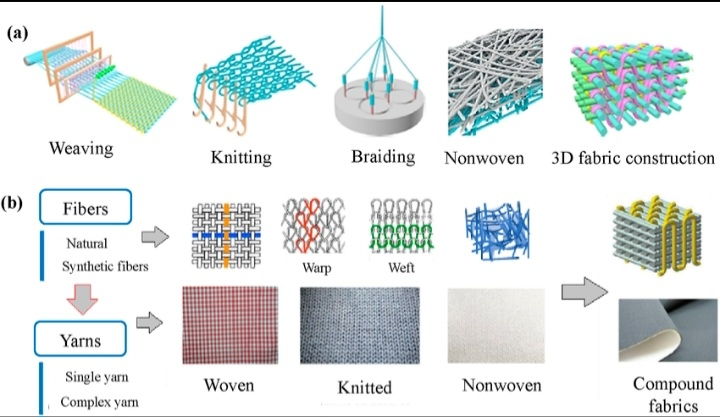
@Fabric Foundation Fabric Foundation (FND) is a very important concept in the textile and garment industry. It refers to the basic structure of fabric, its construction, and the basic elements that define the quality, strength, and appearance of any garment. When we look at any garment — whether it’s a cotton shirt, denim jeans, or a silk dress — its foundation depends on the fabric structure and the way it is made. Fabric is essentially made from fibers. First, the fibers are converted into yarn and then the yarn is transformed into fabric through various techniques. This process is a fundamental part of textile manufacturing and is what is referred to as the basic concept of fabric foundation.
@undefined co understand it is essential to first know what basic structures make up the fabric. In the textile industry, there are generally three main fabric structures: woven fabric, knitted fabric, and non-woven fabric. Woven fabric is made by interlacing two types of yarns — warp (lengthwise threads) and weft (crosswise threads). This type of weaving makes the fabric stronger and more stable. Plain weave, twill weave, and satin weave are popular examples of woven fabrics. These fabrics are mostly used in shirts, trousers, and home textiles like bed sheets, etc.
Textile Study Center +1
Knitted fabric is the second important structure made by interlocking loops of yarn. In this process, the thread connects in the shape of loops, making the fabric flexible and stretchable. Therefore, knitted fabrics are mostly used in T-shirts, sweaters, and sportswear. Knitted fabric is comfortable and easily adjusts with body movement. This is why it is extensively used in modern fashion and active wear.
The third type is non-woven fabric, which is made without traditional weaving or knitting. In this method, fibers are bonded together through heat, pressure, or chemical bonding. These fabrics are often used in medical products, masks, wipes, and industrial applications. Non-woven fabrics are lightweight and their production is also comparatively fast. Therefore, their demand is rapidly increasing in modern industries.
Another important aspect of fabric foundation is the quality of yarn and the type of fiber. Fabrics made from cotton, wool, silk, and synthetic fibers like polyester and nylon directly affect the properties of the fabric. If cotton fiber is used, the fabric is soft and breathable, whereas polyester fabric is durable and wrinkle-resistant. Similarly, the thickness (count), twist, and density of the yarn also determine the strength and texture of the fabric. Textile engineers control all these factors to achieve the desired fabric quality.
Fabric finishing is also an important part of fabric foundation. Finishing processes such as dyeing, printing, coating, and chemical treatments give the fabric its final look and functionality. Some finishing techniques make the fabric water-resistant, wrinkle-free, or stain-resistant. For this reason, a fabric cannot achieve its final commercial value without finishing.
In today's modern textile industry, the concept of fabric foundation has become even more advanced. Innovations such as smart textiles, technical fabrics, and composite materials depend on this fundamental knowledge. Engineers and designers are developing materials by modifying fabric structures that are being used in aerospace, medical, and sports industries. Thus, fabric foundation is no longer limited to making clothes but has also become an important part of technology and innovation.
In summary, Fabric Foundation is the basis of textile science that combines fibers, yarns, fabric structures, and finishing processes to create a complete textile product. For any student or professional aiming to work in the textile and fashion industry, understanding fabric foundation is very important, as this knowledge helps in developing high-quality and innovative fabrics.