
Yesterday My brother told me something that sounded trivial at first. Literally It's also sound weird and you will afraid when you read.
Months ago he received a small freelance payment through a public blockchain wallet. It was a normal transaction — nothing sensitive, nothing unusual.
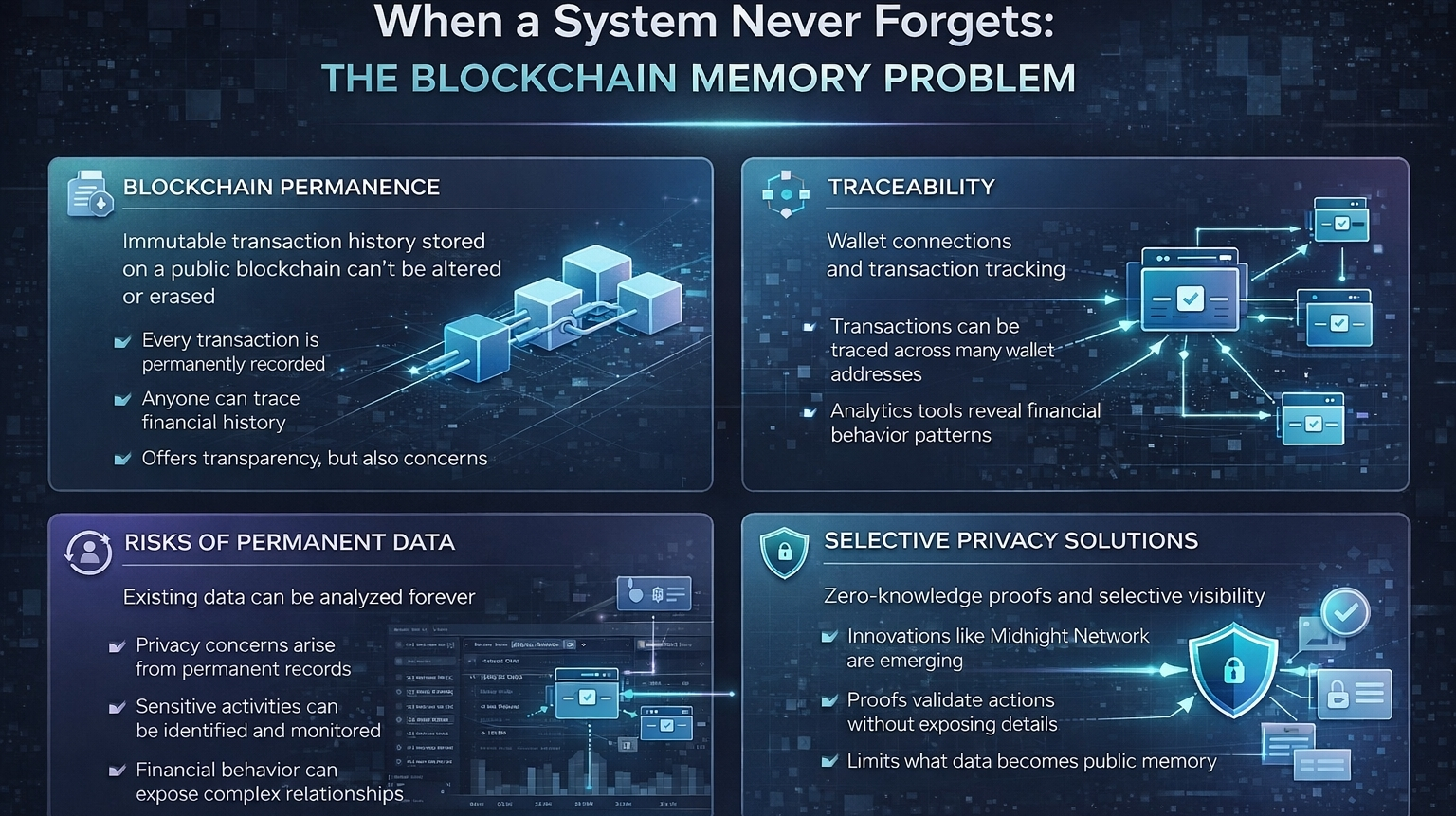
But recently someone analyzing wallet activity managed to trace that payment, follow the connected addresses, and slowly reconstruct parts of his financial behavior.
That’s when something becomes clear.
Blockchains don’t just record activity.
They remember it permanently.
For the first generation of crypto networks, this permanence was considered a breakthrough. An immutable ledger meant that once information was written to the chain, it could not be altered or erased. Anyone could verify the history of transactions without trusting a central authority.
In many ways, that idea is what made decentralized systems possible.
But permanence also creates a different kind of challenge as blockchain technology moves into more complex applications.
In traditional systems, information rarely lives forever in the open. Financial records are archived, access is restricted, and many operational details gradually fade from public visibility. The system retains what it needs while limiting how widely that information circulates.
Blockchains operate with a different philosophy.
Every transaction, every contract interaction, every movement of assets becomes part of a permanent historical record that anyone can analyze years later. Tools designed to study blockchain data have become extremely sophisticated, capable of mapping wallet relationships, behavioral patterns, and financial flows across entire ecosystems.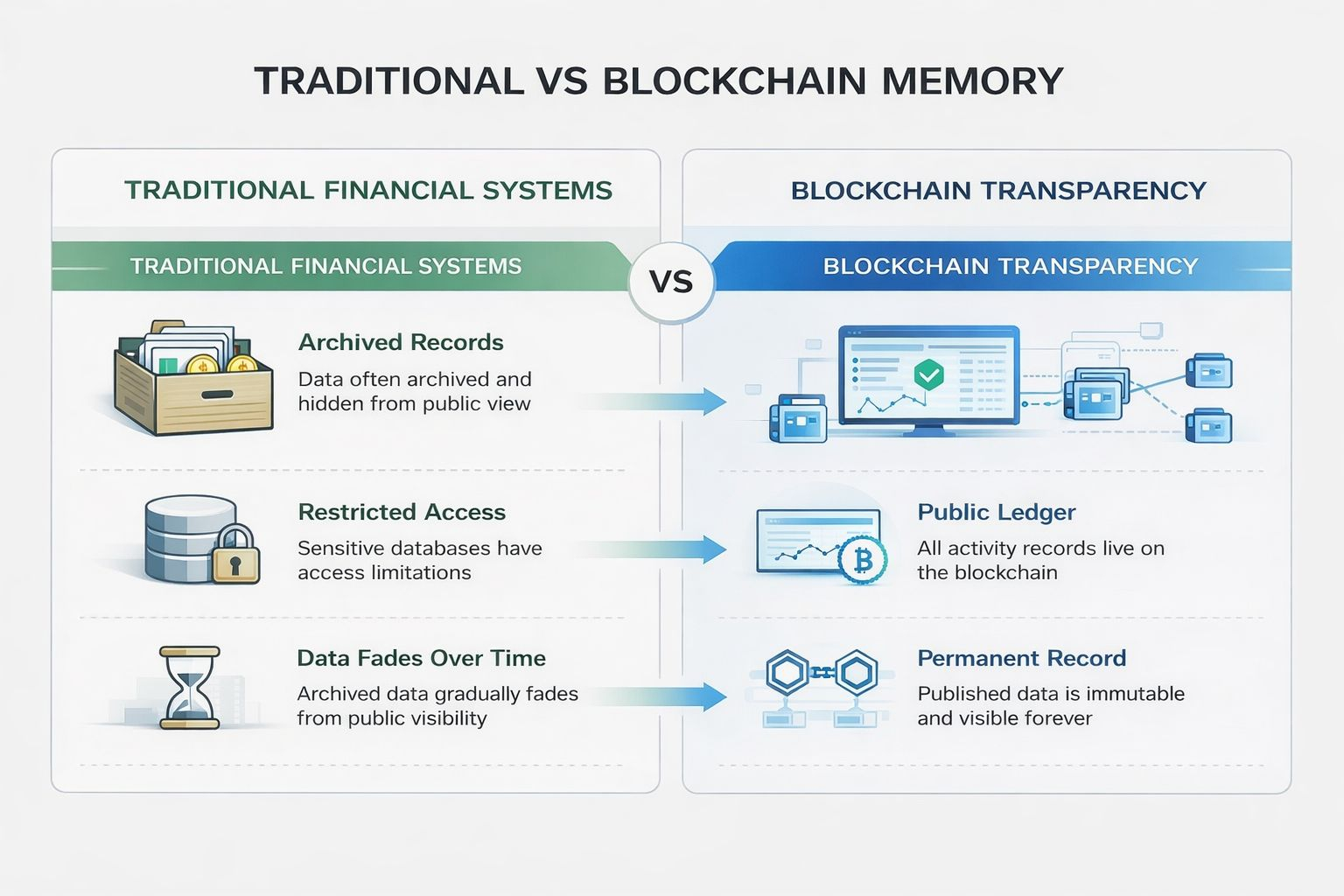
For simple asset transfers, that transparency can be valuable.
But when blockchain systems begin supporting more complex economic activities — contracts, identity verification, enterprise operations, financial services — the idea of permanent public memory starts raising uncomfortable questions.
Should every economic interaction become a permanent public artifact?
Should operational data remain visible indefinitely to anyone capable of analyzing the chain?
These questions are not just philosophical. They shape whether decentralized infrastructure can realistically support real-world systems.
This is where some newer blockchain designs begin exploring alternative architectures.
Projects like @MidnightNetwork are experimenting with ways to separate verification from exposure. Instead of forcing every piece of data onto a fully transparent ledger, the system can verify that certain conditions are satisfied while limiting how much underlying information becomes permanently visible.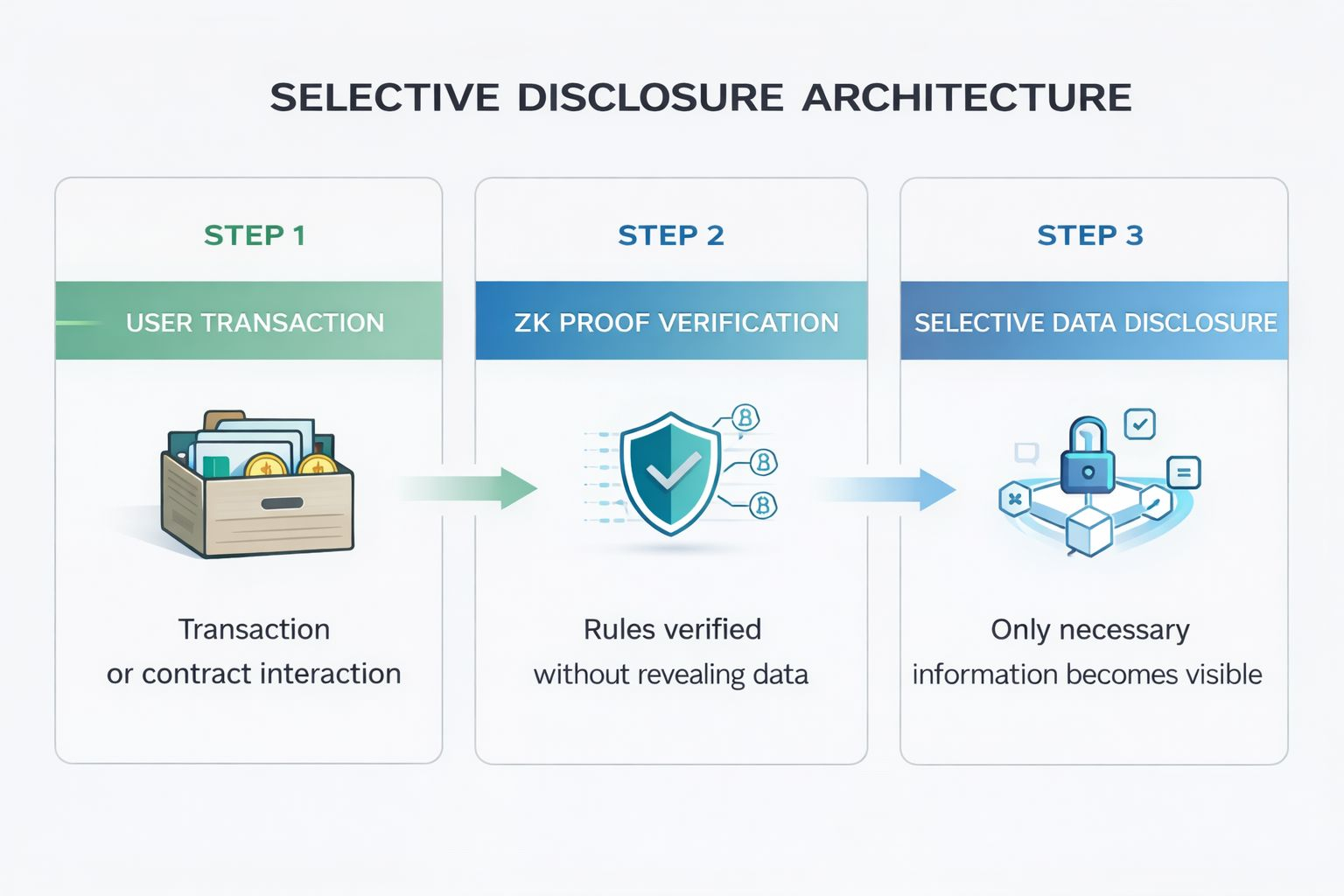
In practical terms, this means a network can confirm that a rule was followed without storing every detail of the interaction as permanent public data.
The blockchain still performs its core role — validating that the system behaves correctly — but the amount of exposed information becomes more selective.
That shift may seem subtle, yet it represents a deeper evolution in how decentralized systems are designed.
Early blockchains proved that transparent networks could coordinate economic activity without centralized control. The next generation of infrastructure may need to prove something slightly different.
That verification does not always require permanent exposure.
Because the real challenge for blockchain technology is no longer proving that decentralized ledgers can exist.
The challenge is determining how these systems should behave when they become part of everyday digital life.
And if blockchains are going to support real economies rather than just experimental markets, one question may become increasingly important: