
I used to have a rather strange feeling each time I looked back at my own on-chain transaction history.
Just a few clicks and almost all financial traces appear: which wallet interacted, the rhythm of asset movement, trading habits, and even if someone is patient enough, they can piece together more than they want.
At first, I thought it was just a 'characteristic of blockchain', just accept it.
But the more I look closely, the more I realize that public-by-default is actually a very high price if Web3 wants to enter more serious environments.
That is also why I begin to look at @MidnightNetwork in a much more serious direction than many other privacy stories.
From my perspective, what Midnight is betting on is not a future where everyone wants absolute anonymity.
They are betting on a very different future: privacy will only truly have value when it becomes a usable tool in the real world, not just a cover to tell stories.
This is the most notable point I see in this project.
The crypto market has often viewed privacy in quite clear extremes.
One is to make almost everything public like most current chains.
The second approach is to strive for maximum anonymity, where the goal is almost to hide as much as possible.
Midnight is trying to fit right into that middle ground.
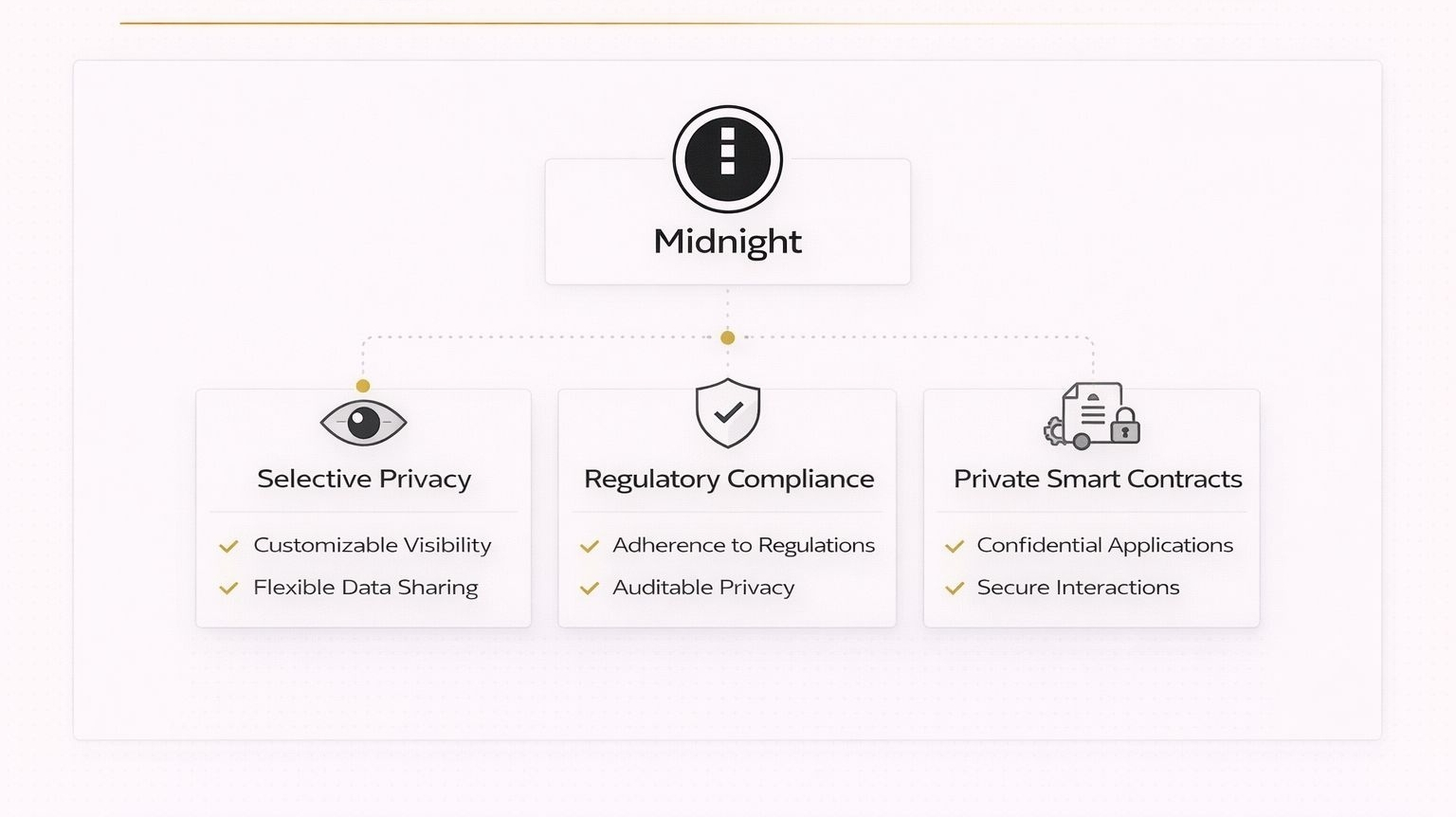
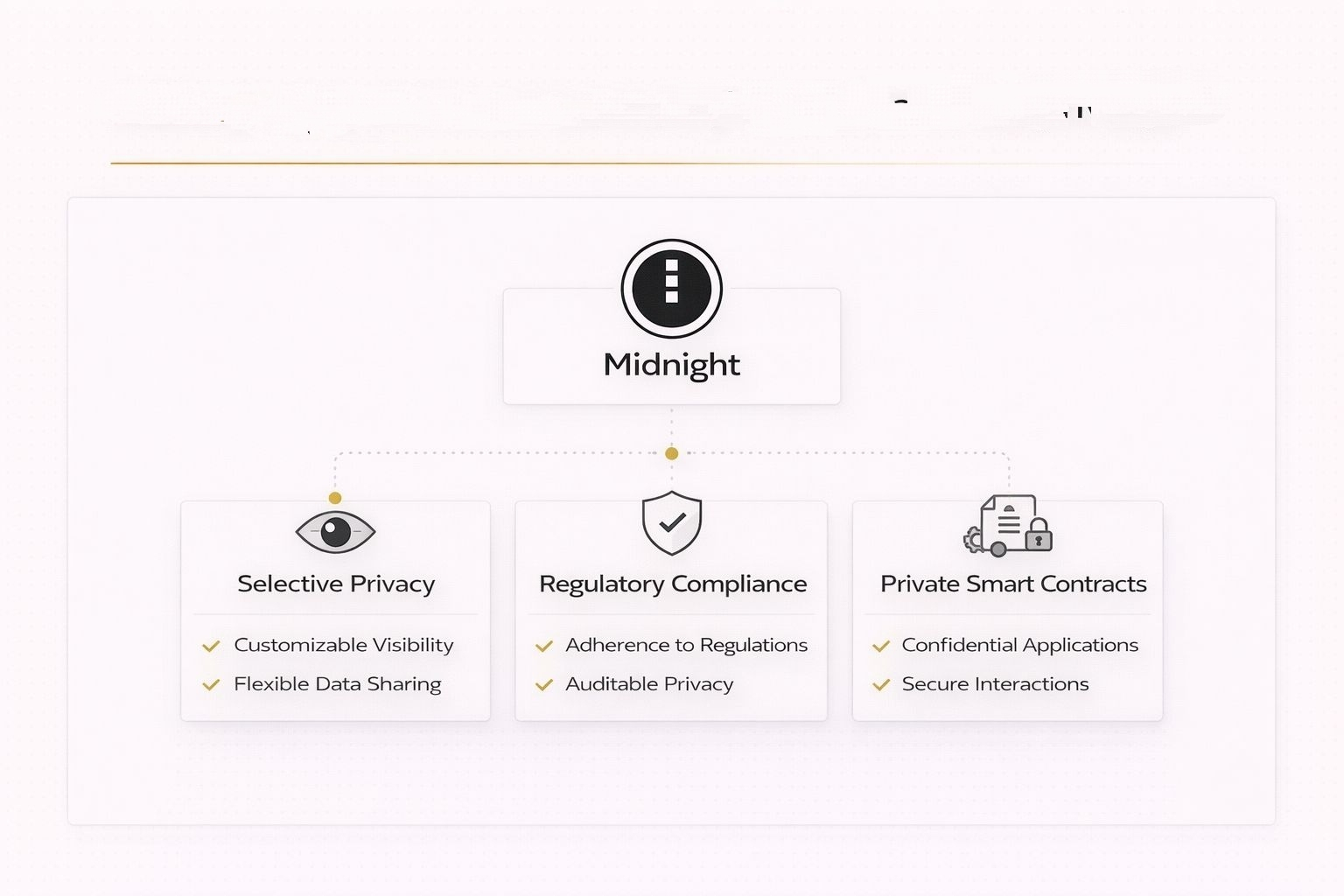
They do not see privacy as a complete opposite of transparency, but as a way to protect data contextually, while the correctness can still be verified when needed.
I think this is the core of what they call rational privacy.
If you look closely, this is quite a significant change in philosophy.
It means that users or organizations are not forced to choose between total transparency or total concealment.
They can decide when to keep things secret, when to prove, and to what extent.
For me, this is where Midnight starts to differ from many traditional privacy coins.
The market used to be accustomed to privacy as a very strong but quite rigid anonymity layer.
Midnight is taking a softer but also more pragmatic approach: only reveal what needs to be revealed, at the right time, to the right people.
And I think this is a direction much more aligned with reality.
Because in real life, very few systems actually require absolute secrecy in every situation.
What businesses, organizations, or even ordinary users often need is not 'don't let anyone see anything at all.'
What they need is 'don't make me public everything just to participate.'
A transaction may need privacy from the public but still must be ready for auditing.
A record may not need to be disclosed on the chain but still must prove that it meets certain conditions.
A system may need compliance, but that does not mean that all data must be made something everyone can see.
In my view, this is why Midnight's second argument is quite worth discussing: privacy and compliance do not necessarily have to confront each other.
This is a place where many privacy projects in crypto either avoid or do not handle well.
Some projects almost see compliance as something that must stand outside.
Midnight, it seems, does not think so.
They are betting that if Web3 truly wants to enter finance, identity, enterprise data, healthcare, or environments with higher legal requirements, then privacy will have to learn to coexist with compliance rather than fight against it.
I see this as a quite pragmatic thesis.
The real world rarely operates in a way that is either completely private or fully compliant.
It often lives in the gray area.
There are things that must be kept secret from the public but still need to be proven to the auditor.
There are data that should not be public but still must be sufficient for partners or authorities to verify when needed.
If Midnight does selective disclosure well, then they not only help keep data hidden but also make data sharing more accurate.
For me, that's when privacy truly begins to have utility.
Another point I find quite strong is that Midnight does not view privacy as a rigid policy imposed on every situation.
They are betting that privacy must be programmable.
It sounds a bit technical, but its meaning is very practical.
A financial application will have different disclosure needs than a healthcare application.
A business in Europe may face different legal pressures than an organization in the U.S.
A KYC workflow will require a different data-sharing logic than a regular consumer app.
If privacy only exists as a general cover for everything, it is very hard to go far.
But if privacy can be adjusted contextually, by industry, by regulation, and by type of data, then it starts to resemble a part of the infrastructure rather than just a feature to showcase.
This is where I see Midnight not only talking about privacy but trying to turn privacy into something usable in real apps.
And for that to have a chance to happen, they are also betting on another thing that I find extremely important: ordinary developers must be able to build on it, not just for specialized ZK teams to use together.
I think this is where many projects have strong technology but get stuck.
They are right technically but wrong in terms of usability.
Technology only truly expands when application builders do not have to become cryptography experts to touch it.
If Compact really helps lower that barrier, then this is a detail much more valuable than many people think.
Because ultimately, whether privacy becomes utility or not will not be decided by the whitepaper, but by the number of real apps built on it.
Moreover, I also see that Midnight does not want to lock itself in a closed system.
They are betting that the privacy of Web3 in the long run will have to be interconnected.
This may sound far-fetched, but I think it is very logical.
A layer of privacy that only thrives in its own system will always have limited value.
If protected data and value cannot pass through other environments, it is still just an island.
Midnight seems to understand that, so they do not tell the story as a completely separate privacy chain, but as a layer that can connect to a broader Web3 world.
Of course, I do not think that just having a correct thesis is enough.
Midnight has a quite bright way of framing issues, but moving from a reasonable path to a truly usable infrastructure is still a long way.
The real test here will always be real apps, real developers, and real usage.
How many teams will actually choose to build on that?
How many applications need this level of privacy to the extent of being willing to integrate?
Is the experience smooth enough so that users do not feel this is just another layer of complexity?
These are indeed the questions worth following. But if only looking at the thesis level, I think Midnight is betting on a quite right direction.
They do not believe that the future of Web3 privacy is absolute anonymity for everything.
They believe in a future where data protection is the default, compliance is still feasible, disclosure can be selective, privacy can be programmed, and ordinary devs can also build apps on it.
From my perspective, this is a much more mature view compared to how the market usually tells stories about privacy.
If Web3 truly wants to enter environments with sensitive data, then privacy can no longer just be something to tell stories about.
It has to become the Midnight infrastructure that is trying to stand right there.
@MidnightNetwork #night $NIGHT
