
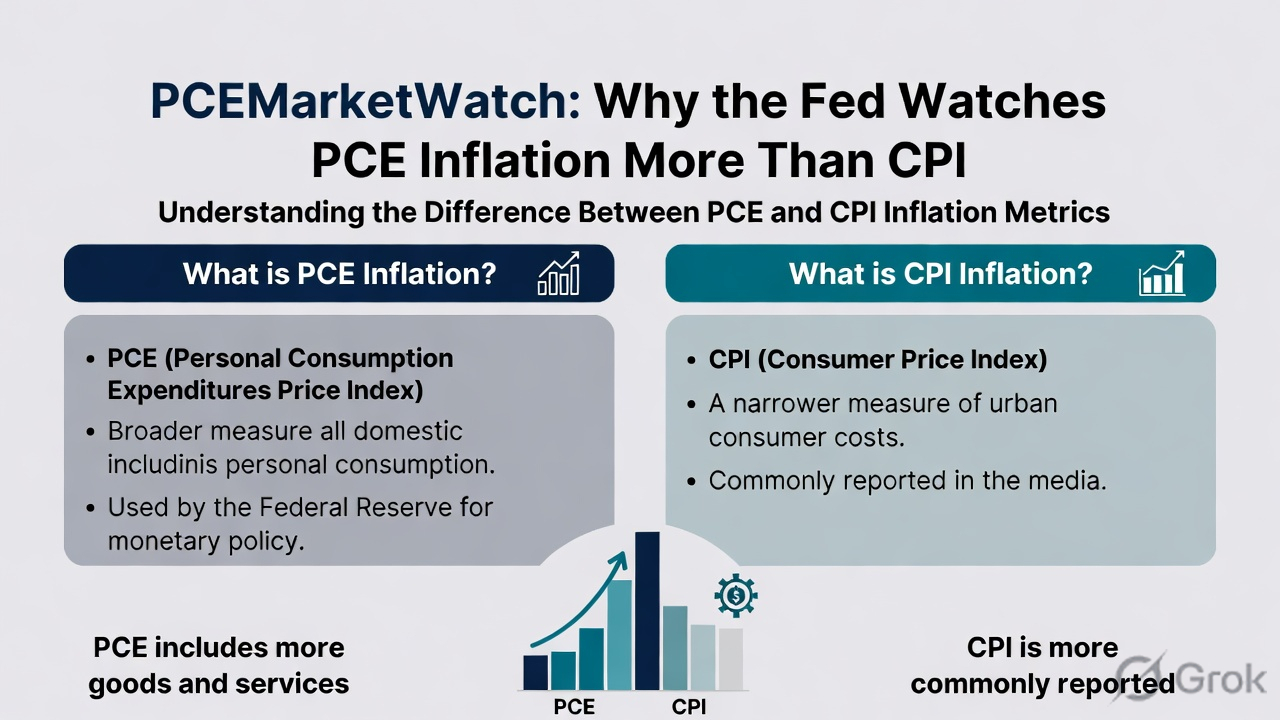

Inflation is one of those words that seems simple at first but quickly becomes complicated once you start looking at how it’s measured. I remember the first time I began paying attention to inflation data while following financial and crypto markets. At that time, I kept hearing two terms again and again: CPI and PCE. Most headlines talked about CPI but whenever the conversation turned to the Federal Reserve, analysts kept mentioning PCE inflation. That made me curious why does the Fed care more about PCE than CPI?
To understand that, we first need to know what these two indicators actually measure.
The Consumer Price Index (CPI) is probably the most widely known measure of inflation. It tracks the average change in prices that consumers pay for everyday goods and services things like food, rent, gas, healthcare and transportation. Governments release CPI data every month, and it often makes big headlines because it gives a quick snapshot of how expensive life is becoming for households.
But the Federal Reserve, the central bank of the United States tends to focus more on another measure: Personal Consumption Expenditures (PCE) inflation.
At first glance, PCE and CPI sound very similar. Both try to measure how prices change over time. But the way they calculate inflation is different, and those differences matter.
One key difference is how spending is measured. CPI looks at a fixed basket of goods and services that households typically buy. That means the basket stays relatively stable over time. PCE, on the other hand, adjusts more dynamically because it tracks actual consumer spending across the economy. If people change their buying habits like switching from expensive products to cheaper alternatives PCE captures that behavior more effectively.
This flexibility is one reason the Fed prefers PCE. Economists believe it provides a more realistic picture of how consumers respond to rising prices.
Another difference is how broad the data is. CPI focuses on out-of-pocket spending by consumers. PCE includes a wider range of expenditures, including things paid for on behalf of consumers, such as healthcare expenses covered by employers or government programs. Because of this broader coverage PCE often gives a more comprehensive view of the economy’s price trends.
I remember reading a market report where analysts described PCE as a “smoother” inflation measure compared to CPI. That description stuck with me. CPI can sometimes be more volatile because certain categories especially energy or food can swing sharply in the short term. PCE tends to smooth out some of those fluctuations, which can make it more useful for long-term policy decisions.
And that’s exactly what the Federal Reserve is focused on: long-term inflation stability.
The Fed has an official inflation target of 2%, and that target is based specifically on PCE inflation, not CPI. When policymakers meet to decide whether to raise or lower interest rates, they closely watch the latest PCE data to understand whether inflation is cooling or still running too hot.
If PCE inflation remains above the 2% target, the Fed may keep interest rates higher to slow down the economy and reduce price pressures. If inflation falls closer to or below that target, the Fed might consider easing monetary policy.
For people who follow financial markets—including crypto traders and investors PCE releases can be extremely important. When the PCE report comes out, markets often react quickly because it gives clues about the Fed’s next move. A higher than expected reading might trigger fears of prolonged high interest rates, while a lower reading could fuel optimism about potential rate cuts.
From my perspective, watching PCE data has become almost like reading the economy’s pulse. It may not get the same public attention as CPI, but it plays a crucial role behind the scenes.
In the end, the reason the Fed watches PCE more closely than CPI comes down to accuracy, flexibility, and broader economic coverage. By capturing real spending patterns and offering a wider view of price changes PCE helps policymakers make more informed decisions about inflation and monetary policy.
And in a world where interest rates can influence everything from stock markets to crypto prices that makes the PCE report one of the most important economic signals to watch. #PCEMarketWatch