
As blockchain technology continues to develop, privacy issues have gradually become the focus of industry attention.
The public and transparent characteristics of traditional blockchain, while ensuring traceability and verifiability, have raised concerns among users about the privacy of their assets.
Completely private blockchains, due to their transactions being untraceable, are easily abused by money laundering and other illicit activities, ultimately facing regulatory bans.
Privacy and compliance seem to be a contradictory pair that is difficult to achieve.
The emergence of Night is precisely to address these two major pain points.
Dual ledger architecture: achieving privacy and compliance simultaneously
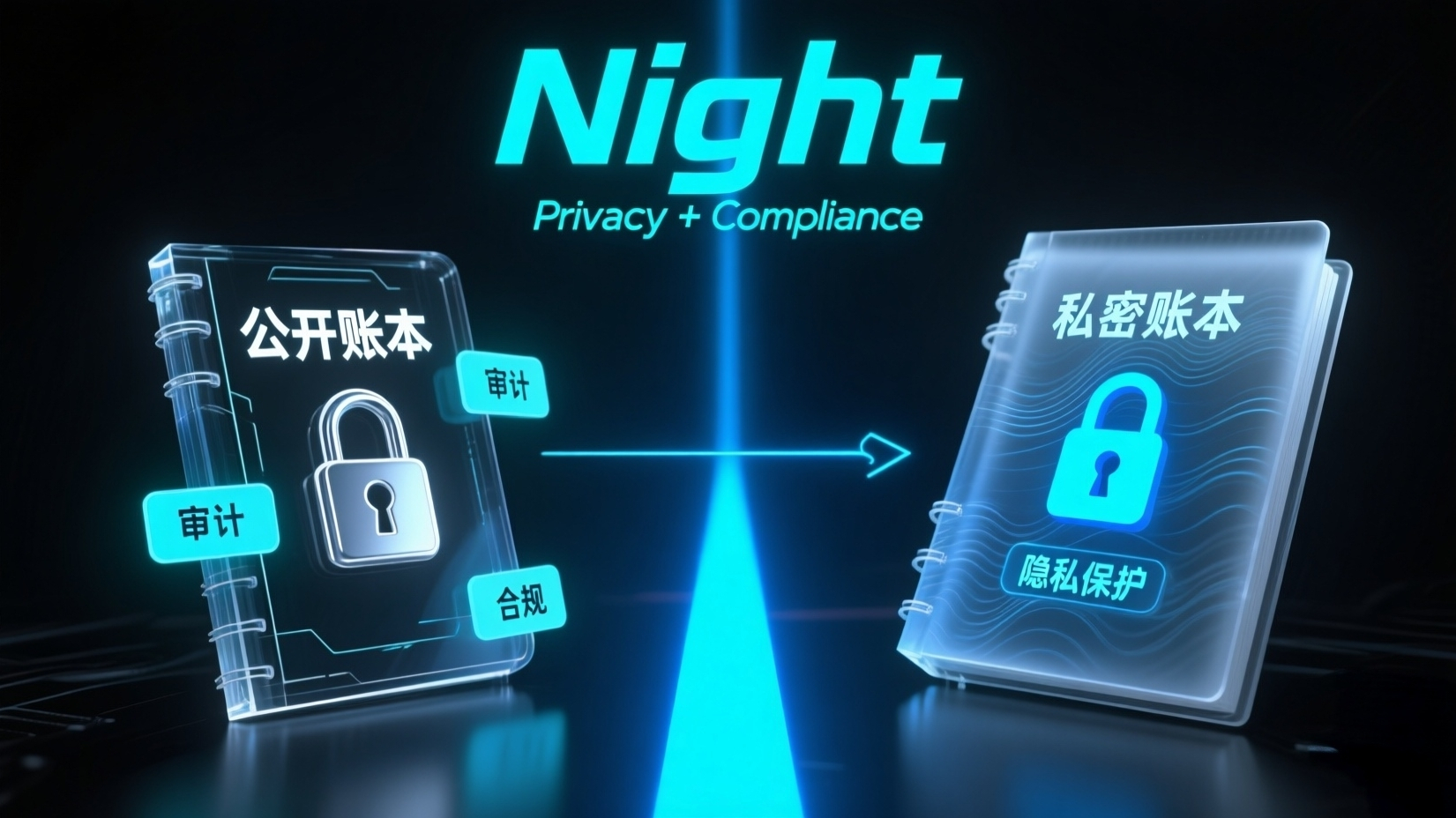
Night adopts a unique dual-ledger (Dual-State) architecture, which includes:
· Public state: Auditable, publicly visible, records must contain transparent and compliant information, ensuring system security and meeting regulatory audit requirements.
· Private state: Encrypted storage, not broadcast externally, is your "encrypted safe"—transaction amounts, counterpart addresses, contract interactions, and other sensitive data are all hidden by default, visible only to you.
The two ledgers are seamlessly connected through zero-knowledge proofs (ZK Proof):
· You can prove to the public ledger that "this transaction is legal, genuine, and has not been tampered with" without exposing private data.
· It protects privacy while also retaining verifiability.
In simple terms:
· The public ledger is responsible for "compliance and security," allowing regulatory bodies and systems to verify the overall operational status;
· The private ledger is responsible for "privacy and autonomy," allowing users' assets and data to truly belong to them.
It is not fully transparent like traditional blockchains, nor is it completely untraceable like purely anonymous chains.
Privacy and compliance, Night achieves both—this is its core technological advantage.
