
 The global financial architecture, which has been sustained by petrodollars for decades, is beginning to crack. While politicians argue about sanctions, a technological revolution is brewing within the banking systems. At the center of this storm is XRP — an asset that many have come to see as merely 'crypto for banks', but which could become the foundation of a new global trade.
The end of the Nostro/Vostro era
The main problem with the traditional SWIFT system is not only its slowness but also the necessity to keep trillions of dollars "dead weight" in foreign accounts to ensure liquidity.
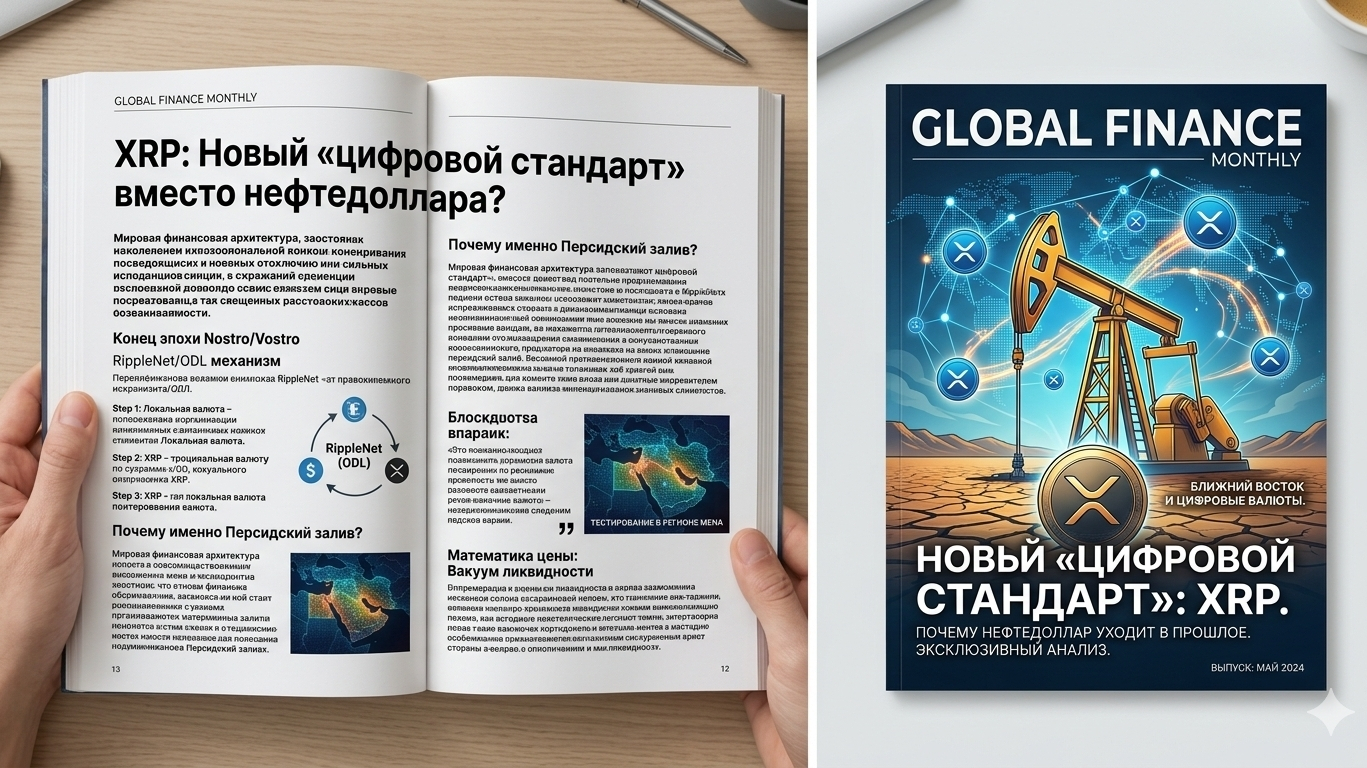
RippleNet technology offers a radical shift in paradigm through the On-Demand Liquidity (ODL) mechanism. Instead of waiting days for transfer confirmation, the system uses XRP as an instant "bridge":
Local currency (for example, the UAE dirham) is converted into XRP.
XRP moves across the ledger in 3–5 seconds to any point in the world.
XRP is instantly converted into the target currency (for example, the Brazilian real).
Why the Persian Gulf?
Saudi Arabia and the UAE are the epicenter of this experiment. These countries have colossal oil reserves but are increasingly looking towards dedollarization. Cooperation with Ripple allows them to solve two problems at once:
Speed: Oil deals worth billions of dollars can close almost in real time.
Sovereignty: The use of a neutral digital asset reduces dependence on political decisions from Washington.
Price mathematics: Liquidity vacuum
The most interesting question is the price. For XRP to serve the oil market, which turnover is measured in trillions, the current capitalization of the asset is simply insufficient.
"If XRP becomes the bridge for global oil trading, its price must be high enough to conduct transactions in the hundreds of millions of dollars without sharp fluctuations in the exchange rate at the moment."
This is the main argument of those who believe in the "golden age" of the asset. The system is technically ready, the code is written, and liquidity corridors in the UAE and Saudi Arabia are already open.
What's next?
We are currently in the phase of "quiet accumulation" of infrastructure. Central banks are creating their digital currencies (CBDCs), and they need a protocol that will connect them all into a single network. XRP is perfectly suited to play this role of the "fabric."