
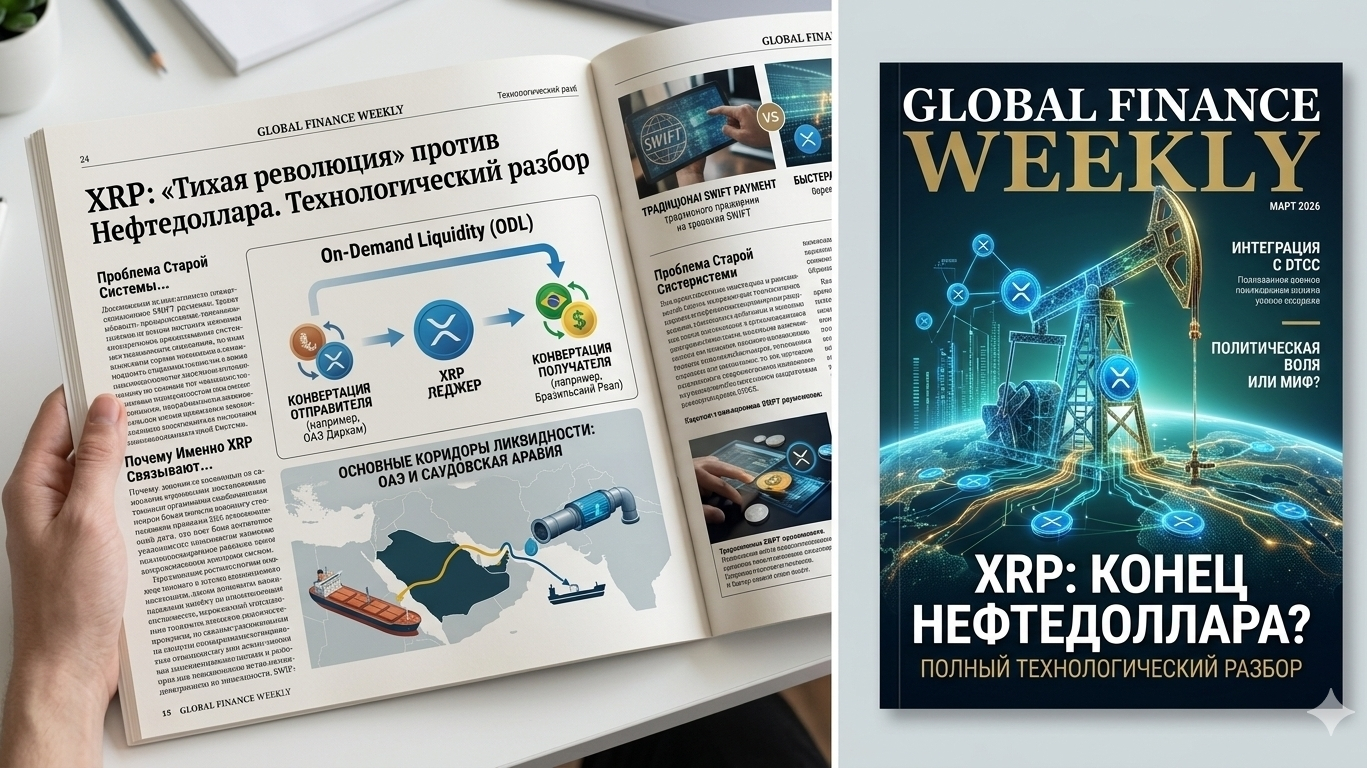
Forget about charts. The real victory of Ripple technology is not just the exchange price, but turning XRP into the 'fuel' for a global autonomous economy. Imagine a world in 10 years where finance operates as seamlessly as Wi-Fi.
Scenario 1: Autonomous Oil Trading (Smart Port)
In the megaport cities of Saudi Arabia, there is no more paperwork. The tanker touches the terminal, sensors read the volume of oil, and the smart contract instantly places the lot. A buyer from China confirms the deal, and XRP instantly moves the liquidity. The money is credited to the seller while the oil is still flowing through the pipes. The port transforms into a living algorithm, operating at the speed of light.
Scenario 2: Microtransactions for Energy (Supergrid)
The solar farms of the Sahara and the wind turbines of the North Sea are combined into a single network. Your smart home buys electricity in real-time from a supplier in another part of the world for the next 15 minutes. These are transactions for fractions of a cent. Traditional banks cannot handle such volumes, but XRP is perfectly suited for millions of microtransactions per second, becoming the 'blood' of the global energy sector.
Scenario 3: The State on the Blockchain ('Nation-on-the-Ledge')
Entire countries are transferring their finances to the XRPL registry. National currencies, gold, and even real estate rights are tokenized. In this system, XRP is the central reserve asset. Taxes, government procurement, and international trade are transparent and instantaneous. This is a world without corruption, where a country's economy reacts to market changes in fractions of a second.
Result:
XRP is not a replacement for the dollar; it is the creation of a new environment where value moves as easily as information on the internet. We are on the brink of an era where finance will become truly invisible and ubiquitous.
Which of these scenarios seems most realistic to you?