

I was born in 1989, and I have been struggling in the cryptocurrency field for over ten years, making a living from it now. As a child from a rural family, I ventured into society alone after graduating from university, and I have now accumulated assets in the tens of millions. The pace of life is leisurely — I take my family on trips several times a month, and I help friends and relatives in difficulty whenever I can, after all, I have been through rain and know the hardships involved. This kind of life, free from scheming and intrigue, is the pure life I desire.
Every morning, I first send my child to school, and after returning home, I personally prepare breakfast. Around nine o'clock, I open my computer, and my primary task is to review the previous day's trading — the cryptocurrency market has low liquidity in the morning, so my work focus is often at midnight, while the morning is mainly spent organizing trading records. Whenever I input each operation into my self-built system, I firmly believe: reviewing is the sharpest weapon for traders.
In the evening around 4 or 5 o'clock, I will jog in the park or woods, then pick up the kids. For dinner, either cook myself or order takeout. Once the trivial matters are dealt with, it is often already 7 or 8 o'clock - at this time, the US stock market opens, and the cryptocurrency market follows suit. You just need to accurately capture two or three opportunities, and the daily target can be easily achieved. If the market is quiet or there is a one-sided decline, I will participate in industry salons or dine with friends; this kind of socializing is both a balance of work and life and can also expand connections and gain insights into industry trends.
In the dead of night, I become a 'data detective', tracking the market pulse through K-line charts, order flows, and other tools. Every price fluctuation hides clues, and my task is to piece these fragments together into a complete trading blueprint. This lifestyle of freely controlling the rhythm may be the most charming trait of the cryptocurrency industry.
Are you also repeatedly falling into the same dilemma in trading?
Having tried technical analysis, fundamentals, trading volume, price action, using various methods in rotation, the account has not improved; blown several accounts without finding a way to make stable money.
It’s hard to find a profitable strategy; all profits are given back; looking everywhere for 'magic indicators' and 'ultimate strategies' only leads to more confusion.
If you have any of the above experiences, don’t lose heart; today, in this article, I will explain the underlying logic of stable profits using the trading triangle system.
As long as you truly understand this structure, your trading path will become clear in an instant.
The core of stable profit: trading triangle.
Many losing traders jump straight into studying indicators, learning strategies, and finding entry points.
It's like building a house by directly putting on the roof, completely putting the cart before the horse.
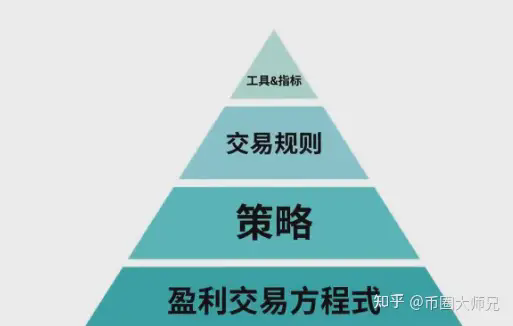
Those who can truly achieve stable profits build systems from the ground up:
Profit formula (advantage + risk control + discipline).
Trading strategy.
Trading rules.
Tools and indicators.
Not a single step can be wrong; we will break it down layer by layer.
First layer:
Profit formula - the foundation of all stable profits.
The profit formula consists of only three words:
Advantage + risk management + discipline.
None can be missing; without one, you cannot make money in the long term.
1. Advantage: Your strategy must be able to make money in the long term.
So-called advantage means that repeatedly executing a strategy will inevitably yield positive returns over the long term.
I’ll give you the simplest calculation formula:
Expected profit per trade = (win rate × average profit) − (loss rate × average loss).
For example:
Win rate 60%, earn 100 per trade, lose 50 per trade (reward-to-risk ratio 2:1).
Expected profit per trade = 0.6×100−0.4×50=40 yuan.
With 100 orders down, you expect to earn 4000 yuan.
This is called having an advantage.
Without an advantage, no matter how hard you try or how disciplined you are, it’s useless, because you are doing something that will surely result in long-term losses.
2. Risk management: Survive to wait for the advantage to explode.
The meaning of risk control is only one:
Even if you face continuous losses, you won’t be liquidated and can continue executing the strategy.
Let me give you the most heart-wrenching comparison:
Xiao Ming and Xiao Hua, with the same 10,000 capital and the same strategy:
Win rate 50%.
Reward-to-risk ratio 3:1.
Xiao Ming: Losing 5000 per trade.
Two trades can wipe you out, and you won’t even get a profitable trade.
Xiao Hua: Losing only 100 per trade.
Losing 500 on the first 5 trades, earning 1500 on the next 5, ultimately net profit 1000, return rate 10%.
Exactly the same strategy, but due to different risk controls, the results can be worlds apart.
Remember:
Without risk control, no matter how good the strategy, it will eventually lead to liquidation.
3. Discipline: Consistency is the true essence of stable profit.
With both advantage and risk control, what remains is discipline.
Do not hold on when it’s time to cut losses.
Do not impulsively enter when it’s time to wait.
Do not overload when it’s time to control your position.
Strictly execute all the rules you set.
Only consistent actions will bring consistent returns.
Let me summarize it for you again:
Having an advantage + risk control + lacking discipline = instability, earning and losing.
Having risk control + discipline + lacking advantage = long-term loss.
Having an advantage + discipline + lacking risk control = sooner or later, liquidation.
Stable profit = advantage + risk control + discipline.
This is the most core profit formula.
Second layer:
Trading strategy - choose the one that suits you.
There are thousands of strategies in the market; you don’t need to learn them all.
You only need to grasp the two major categories that are the most stable and commonly used:
1. Trend-following strategy.
Follow the major direction, do not go against the trend.
Determine the trend → wait for a pullback → enter at the key level.
Features: high reward-to-risk ratio, suitable for most people.
2. Breakout strategy
Prices fluctuate in a sideways range for a long time.
Once it breaks out, the explosive power is extremely strong.
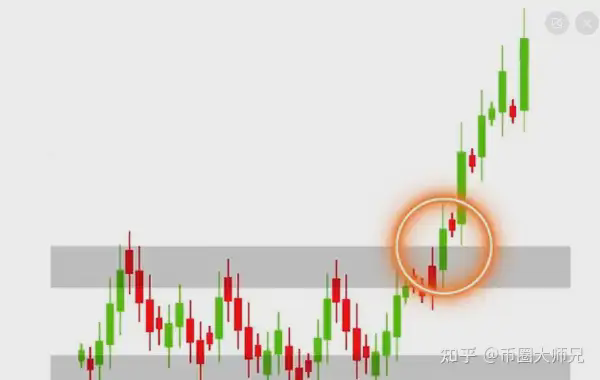
The longer the sideways movement, the stronger the breakout.
You only need to choose a strategy that suits your personality, time, and variety.
Deeply understand, it’s 100 times better than learning 10 half-baked strategies.
Third layer:
Trading rules - make your strategy actionable.
With a strategy, it must become clear rules.
Otherwise, you will always be trading by feeling.
Establish rules, just need to answer these 7 questions:
What market are you in? (stocks/forex/cryptocurrency)
What time frame to use? (daily/4-hour/1-hour)
How to determine risk control? (How much to lose per trade? 1%?)
What are the entry conditions?
What to look for in entry signals?
Where to place the stop loss?
How to set take profit?
Write down these 7 points, and you will have a true trading system.
Fourth layer:
Tools and indicators - help you execute rules.
Having more tools is not necessarily better; just enough is fine.
Look at the trend: trend structure, moving averages.
Find locations: support and resistance, Fibonacci.
Look for signals: K-line patterns, candlestick charts.
I’ll walk you through the practical process directly:
Step 1: Determine the trend.
The price breaks out at the highest high and the lowest low → uptrend, only go long.
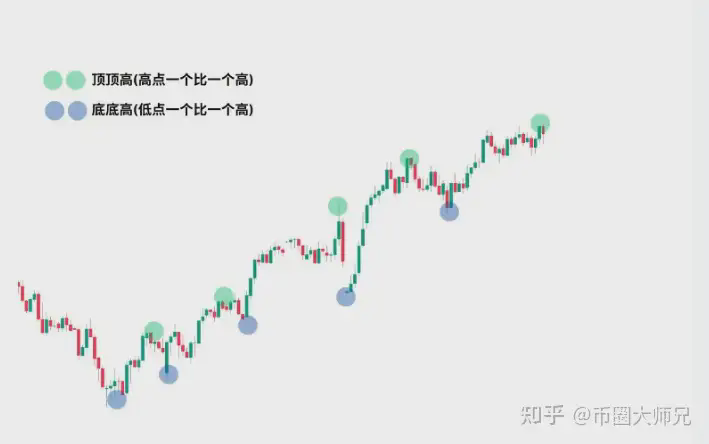
Step 2: Wait for a pullback to the key level.
Pull back to the resistance turned support level.
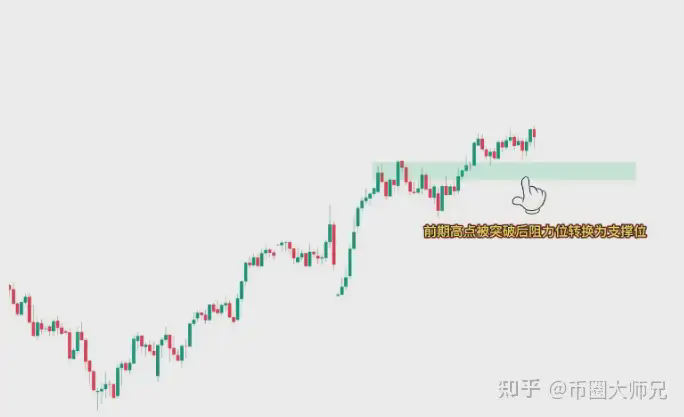
Step 3: Confirm with overlapping golden price levels.
Just falls at the Fibonacci retracement level, providing double protection.
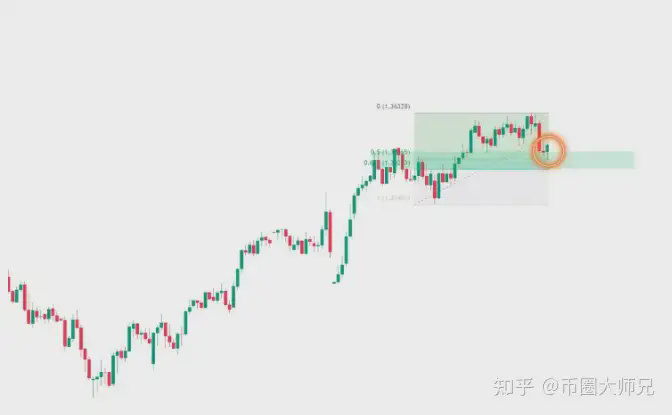
Step 4: Wait for K-line signals to enter.
A bullish engulfing pattern appears, with the bullish candle fully engulfing the previous K-line.
It indicates a surge in buying power.
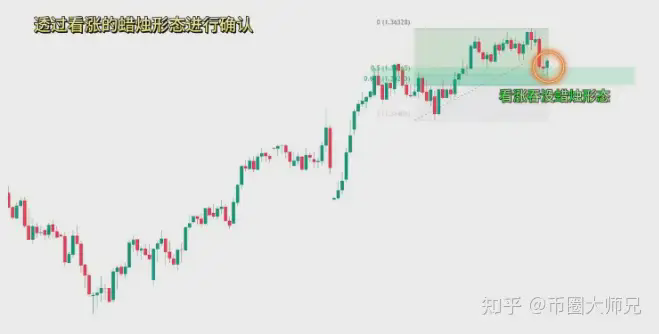
Enter after the K-line closes.
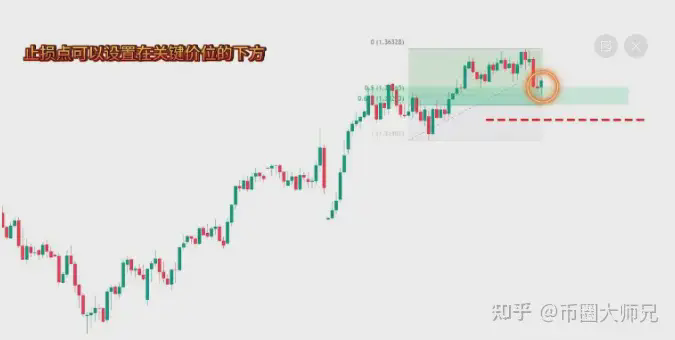
Step 5: Set stop losses.
Place it below the key support level.
Breaking below indicates logic failure, exit decisively.
Step 6: Set take profit.
Set fixed take profit at a 2:1 reward-to-risk ratio.
The entire set of actions:
Follow the trend + key levels + signal confirmation + risk control.
This is a complete trading process that can achieve stable profits.
Lastly, here’s a saying for you.
Trading is never about predicting, relying on feelings, or luck.
But rely on a complete system:
First have an advantage, then manage risk, and maintain discipline.
Then set the strategy, establish rules, and use tools.
Truly grasp what we discussed today about the trading triangle.
You will understand:
Stable profit is not a talent, but the right method + long-term execution.
If you are willing to follow step by step,
You can also become that stable profit trader.
If you are also a tech enthusiast, studying technical operations in the cryptocurrency space, consider following @慢慢赢_实盘带单 slowly winning, you will gain more!