The future of AI might not just live in the cloud.
It could live in robots working in the real world.
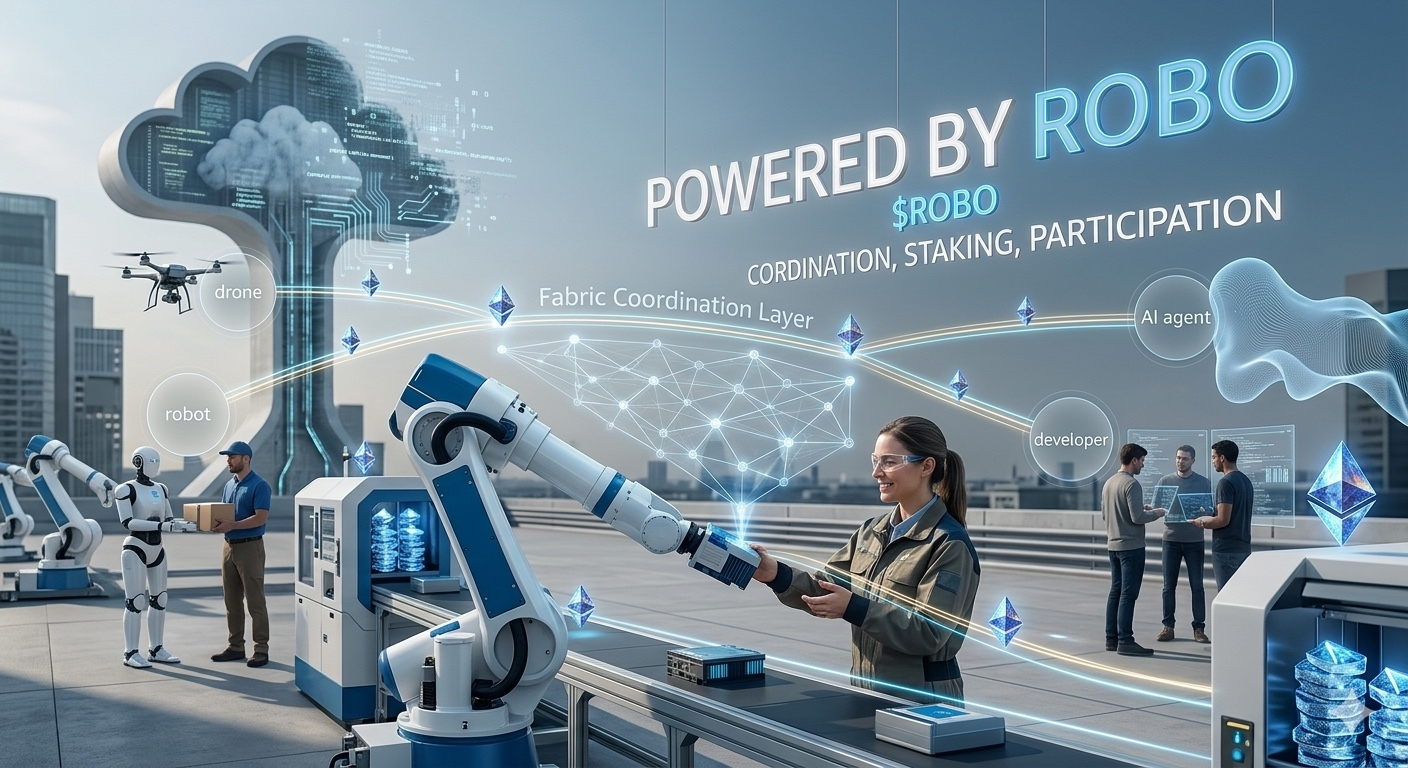
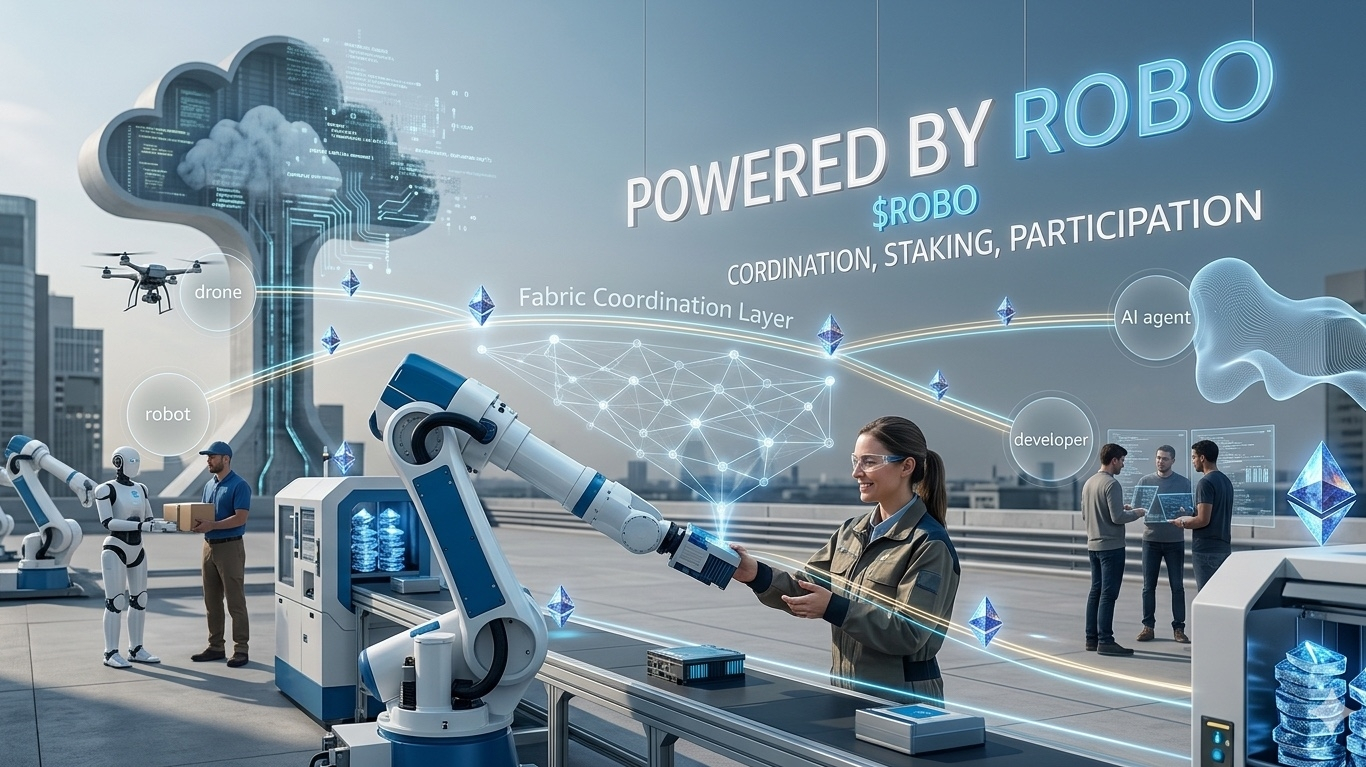
That’s the vision behind Fabric Foundation and its ecosystem powered by ROBO.
Today, AI systems mostly exist as software.
But the next stage is AI interacting with the physical world through robotics and autonomous machines.
Fabric is building infrastructure to coordinate this new machine economy.
Instead of centralized platforms controlling AI and robotics networks, Fabric proposes a decentralized coordination layer where:
• robots
• AI agents
• developers
• and humans
can all interact through an open system.
Within this network, ROBO acts as the utility token used for coordination, staking, and operational participation.
For example, operators can stake tokens as performance bonds when registering robotic services on the network.
This creates an economic system where machines can contribute work, services, and data in a verifiable way.
As AI becomes more capable of acting in the real world, infrastructure like this may become increasingly important.
Because the question is no longer just about AI intelligence.
The real question is:
How do we coordinate millions of autonomous systems safely and fairly?
Projects like Fabric are exploring one possible answer.
#robo $ROBO @Fabric Foundation