

Ray Dalio believes that Bitcoin cannot replace gold as a store of value, due to factors such as central bank demand, market maturity, and Bitcoin's characteristics as a risky asset.
Key Summary
Ray Dalio believes that Bitcoin cannot replace gold as the world's primary store of value because gold has thousands of years of monetary history and is deeply rooted in the global financial system.
Gold's position in central bank reserves gives it institutional legitimacy, which Bitcoin currently lacks, making governments more inclined to rely on gold during times of economic uncertainty.
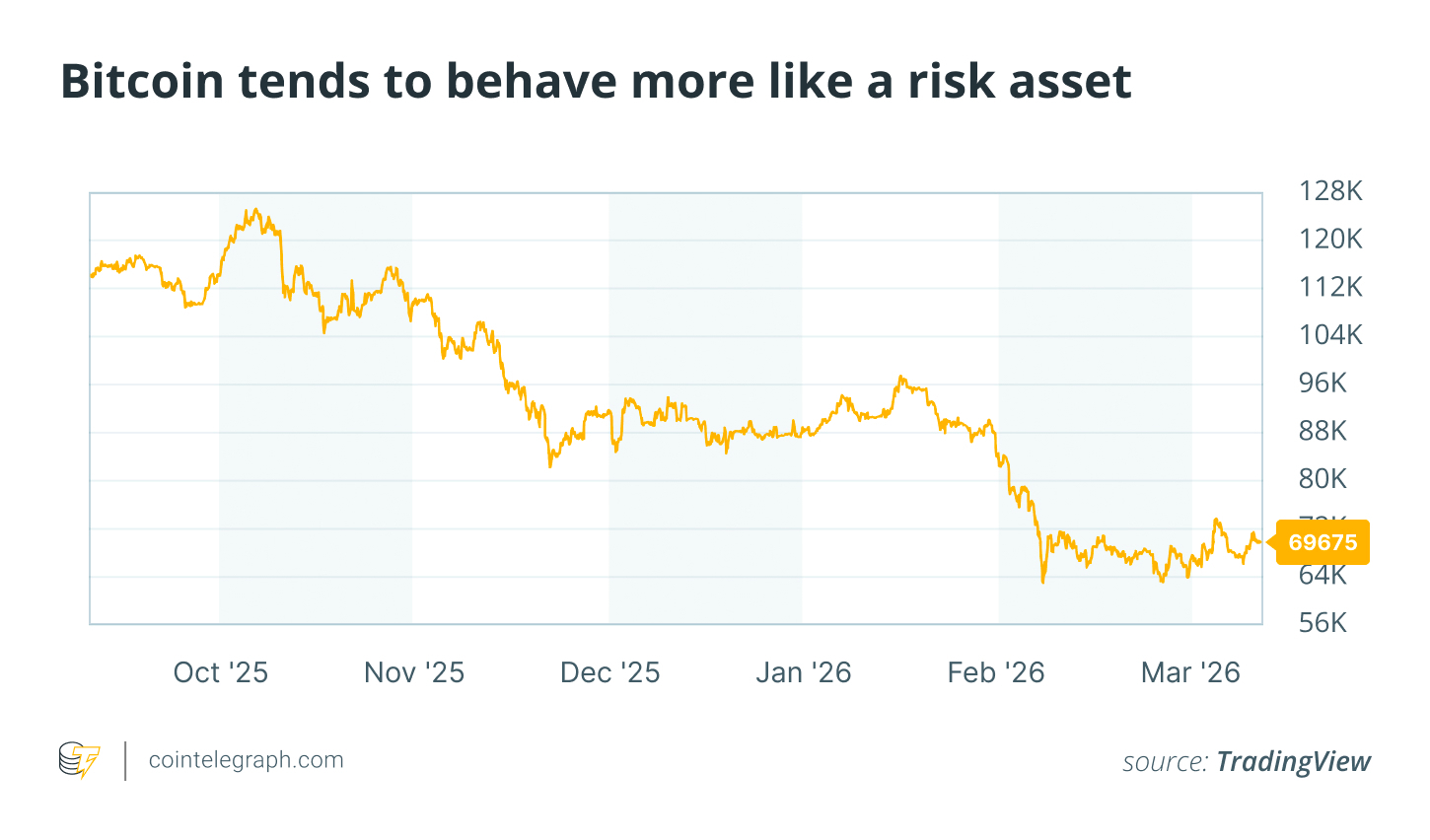
Dalio believes Bitcoin is more like a risk asset, with its price movements often aligning with those of tech stocks and other speculative investments, rather than displaying safe-haven characteristics during market turmoil like traditional safe-haven assets.
The scale and maturity of the gold market far exceed that of Bitcoin; gold benefits from support from central banks, sovereign funds, industrial demand, and a continuously developing investment market over centuries.
For years, investors and analysts have been discussing whether Bitcoin can one day replace gold as the primary global store of value.
Supporters of Bitcoin often refer to it as 'digital gold,' believing that its fixed supply and decentralized design make it a modern inflation hedge.
However, billionaire investor Ray Dalio has consistently opposed this view. While Dalio acknowledges Bitcoin's unique properties and its impact on financial markets, he believes that Bitcoin cannot replace gold. His perspective is based on gold's long historical role, its status in global markets, central bank behaviors, and its role in the world monetary system over the centuries.
Dalio's perspective provides a useful framework for investors to consider the ongoing debate between traditional safe-haven assets like gold and digital alternatives like Bitcoin.
This article will analyze why Ray Dalio believes Bitcoin cannot replace gold as the primary global store of value. It will highlight concerns regarding central bank adoption, market performance, privacy, and technological risks, while explaining why he still views Bitcoin as a complementary asset in a diversified investment portfolio.
Who is Ray Dalio, and why are his views important?
Ray Dalio is the founder of Bridgewater Associates, one of the world's top hedge funds. Over the years, he has become one of the most influential thinkers due to his profound insights in macroeconomics and finance.
Dalio is known for his in-depth research on long-term debt cycles, monetary policy, and the global transfer of economic power. His analysis of the rise and fall of currencies over centuries has influenced the investment decisions of institutions, governments, and major asset managers.
With his expertise, Dalio's views on stores of value, especially during times of economic uncertainty, are highly regarded.

Dalio's core view: 'There is only one gold'
In expressing his views on Bitcoin's potential role in the global financial system, Dalio has always been clear about gold's unique status as a monetary asset.
He believes that gold and Bitcoin should not be treated as interchangeable (as if one can replace the other). In his view, gold is not just another commodity or speculative asset.
Dalio describes gold as 'the most recognized form of currency in human history.' For thousands of years, gold has served as a reliable store of value amidst different civilizations, financial systems, and political changes.
Because of its long historical role, Dalio believes that no new asset—whether digital or not—can replace gold.
Did you know? Gold has been used as money for over 4000 years. Early civilizations, such as ancient Egypt and Mesopotamia, regarded gold as one of the earliest recognized means of wealth storage due to its rarity, durability, and divisibility.
How central bank demand makes gold special
Dalio points out that the central banks' demand for gold makes it a unique asset. Central banks around the world hold large amounts of gold as foreign exchange reserves to diversify assets and maintain stability during financial stress.
Gold's widespread use at institutional levels has granted it a legitimate status at the national level, which Bitcoin has yet to achieve.
Dalio is skeptical about central banks massively accumulating Bitcoin as a reserve asset in the short term. Governments typically prefer assets with a long history, ample liquidity, and mature market systems.
Bitcoin, as a newer asset, is still evolving both technologically and regulatorily. Dalio believes that without adoption by central banks, Bitcoin will struggle to achieve the same monetary status as gold.
Bitcoin is more like a risk asset
Dalio also pointed out the differences in Bitcoin's performance across various market cycles.
Gold is often seen as a safe-haven asset. During market volatility, currency devaluation, or geopolitical tensions, investors tend to use gold as a hedging tool.
But Bitcoin has shown different patterns.
Dalio observed that Bitcoin prices often move in sync with those of risky assets like tech stocks. During market stress or periods of tightening liquidity, investors tend to sell Bitcoin and stocks rather than hold them like safe-haven assets.
In Dalio's view, this model suggests that Bitcoin currently resembles a speculative growth asset rather than a traditional store of value.
The scale and maturity of the gold market
The scale and history of the gold market far exceed that of Bitcoin.
The global gold market has been evolving for thousands of years, attracting a large number of institutional participants, including central banks, sovereign wealth funds, jewelry demand, industrial users, and various investment funds.
This depth brings strong liquidity and higher price stability.
In contrast, while Bitcoin holds an important position in the cryptocurrency space, its market size is much smaller and more susceptible to fluctuations in investor sentiment. Bitcoin continues to face severe price volatility, leveraged trading, and speculative cycles, all of which can greatly affect its value.
Dalio believes that this gap in market maturity is another important reason why gold has long played the role of a value reserve.
Did you know? The total supply of Bitcoin is permanently capped at 21 million coins, a design feature that mimics the scarcity of precious metals. For this reason, supporters often compare Bitcoin to gold.
Bitcoin's privacy issues
Dalio has also pointed out concerns regarding Bitcoin's transparency.
Because Bitcoin is based on a public blockchain, every transaction is permanently recorded and can be tracked using on-chain analysis tools. Although users are identified only by wallet addresses, transaction patterns can often still be associated and monitored.
Dalio believes that this visibility may make Bitcoin less attractive to some institutions or governments as a long-term reserve asset.
Gold, as a physical asset, does not rely on any publicly visible transaction ledger.
Potential threats from quantum computing
Ray Dalio also emphasized the risks that quantum computing poses to Bitcoin.
The security of Bitcoin relies on cryptographic algorithms to protect private keys and verify transactions. Breakthroughs in quantum computing could theoretically undermine existing cryptographic systems.
Although quantum computing currently remains a theoretical risk, Dalio believes that when assessing Bitcoin's long-term role as a store of value, these technological threats cannot be ignored.
Gold, as a physical asset, does not involve software or cryptography, and is therefore not affected by such technological vulnerabilities.
Did you know? Central banks hold gold in their reserves. Countries establish these reserves to combat currency instability, geopolitical risks, and financial crises.
Dalio's macroeconomic perspective
Dalio's preference for gold over Bitcoin is closely related to his macro view of the global economy.
He warns that the world may be entering a time of severe economic and geopolitical turmoil, including increased debt burdens, currency instability, and changes in the global balance of power.
In this context, Dalio believes that investors should prioritize value reserve assets with proven track records during times of financial system pressure.
For centuries, gold has played this role amidst inflation, currency devaluation, and geopolitical uncertainty.
This long history is a significant reason why Dalio favors gold as a store of wealth.
The position of Bitcoin in asset allocation
Although Dalio is skeptical about Bitcoin surpassing gold, he still believes that Bitcoin can serve as a viable allocation in an investment portfolio. He acknowledges that Bitcoin has some advantages similar to gold, such as a fixed total supply and decentralization.
Dalio's recommendation is not to choose one over the other, but to have both:
Asset allocation weight: Dalio suggests that investors could allocate about 15% of their assets to a combination of gold and Bitcoin.
Hedging strategy: This allocation can serve as insurance against loss of purchasing power and overall economic instability.
Complementary assets: In his view, Bitcoin is not a substitute for gold, but rather, the two can play complementary roles in diversification.
The ongoing debate between Bitcoin and gold
The positioning of Bitcoin versus gold highlights significant divides in the financial community. Bitcoin emphasizes digital circulation, new forms of scarcity, and technological innovation, while gold represents a cross-generational historical accumulation, physical characteristics, and institutional trust.
Ultimately, this debate concerns how society defines and trusts currency. New technologies can create efficient financial instruments, but the deep trust required for a global currency standard is often built over centuries rather than achieved overnight.