A couple of days ago, I went for a health check, and the front desk asked me to fill out a form. The process is actually quite simple; they just need to confirm a few things: that the identity is real, the information is correct, and the health check items have been paid for. The remaining detailed information, such as previous check records and some personal information, will not be seen by everyone; doctors will only retrieve it when necessary.
At that moment, I suddenly realized one thing: many systems in the real world actually operate this way. Things need to be verified, but that doesn't mean all details have to be public.
The logic of blockchain is often quite the opposite. The default rule for most public chains is 'complete transparency': addresses are public, transactions are public, and funding paths are also public. For many crypto players, this is not a problem; they even feel that this kind of transparency is very safe. However, if this model is applied to enterprises or commercial scenarios, it can become a bit awkward. Supply chain data, business cooperation, and financial transactions, if laid out entirely on the chain, essentially expose one's business situation directly to everyone.
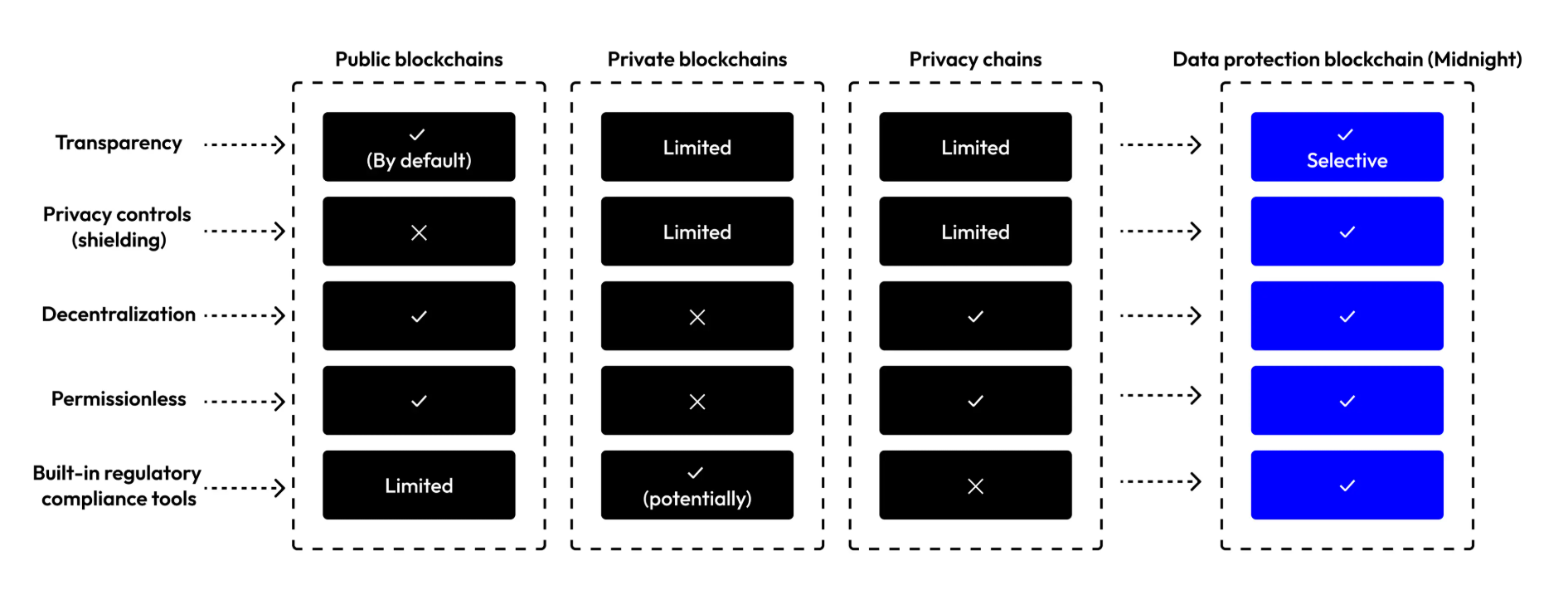
This is also why I have recently started to seriously look at @MidnightNetwork materials. Many people, when they hear about privacy chains, immediately think of anonymity or hidden transactions, but what Midnight wants to do is not that kind of 'completely invisible' network, but a more realistic approach: things can be verified, but data does not have to be fully public.
They have been talking about a concept called selective disclosure. Simply put, it means that on-chain, you only need to prove that something is correct, such as a transaction being compliant or an identity meeting the criteria, but the specific data can remain local instead of being fully written to a public ledger.
Another design I find quite interesting is its dual-token model. $NIGHT is the core asset in the network, while the resources actually used for executing transactions and running contracts are called DUST. At first, I found this design a bit strange, but then I thought about it, and it resembles a resource system in reality: holding a certain asset allows you to gradually gain 'energy' to use the network, rather than having to buy gas for every operation.
Of course, it's still too early to say that Midnight will definitely succeed. I myself only see it as a direction worth continuing to observe. But one thing I'm increasingly sure of is that if more real-world businesses want to go on-chain in the future, then the model of 'complete transparency of all data' is probably hard to be the only answer.
So now I view $NIGHT not just as a new token, but more like an attempt to address a question:
When blockchain truly enters the real world, how much transparency do we really need, and how much privacy do we need to retain?
$NIGHT #night @MidnightNetwork