
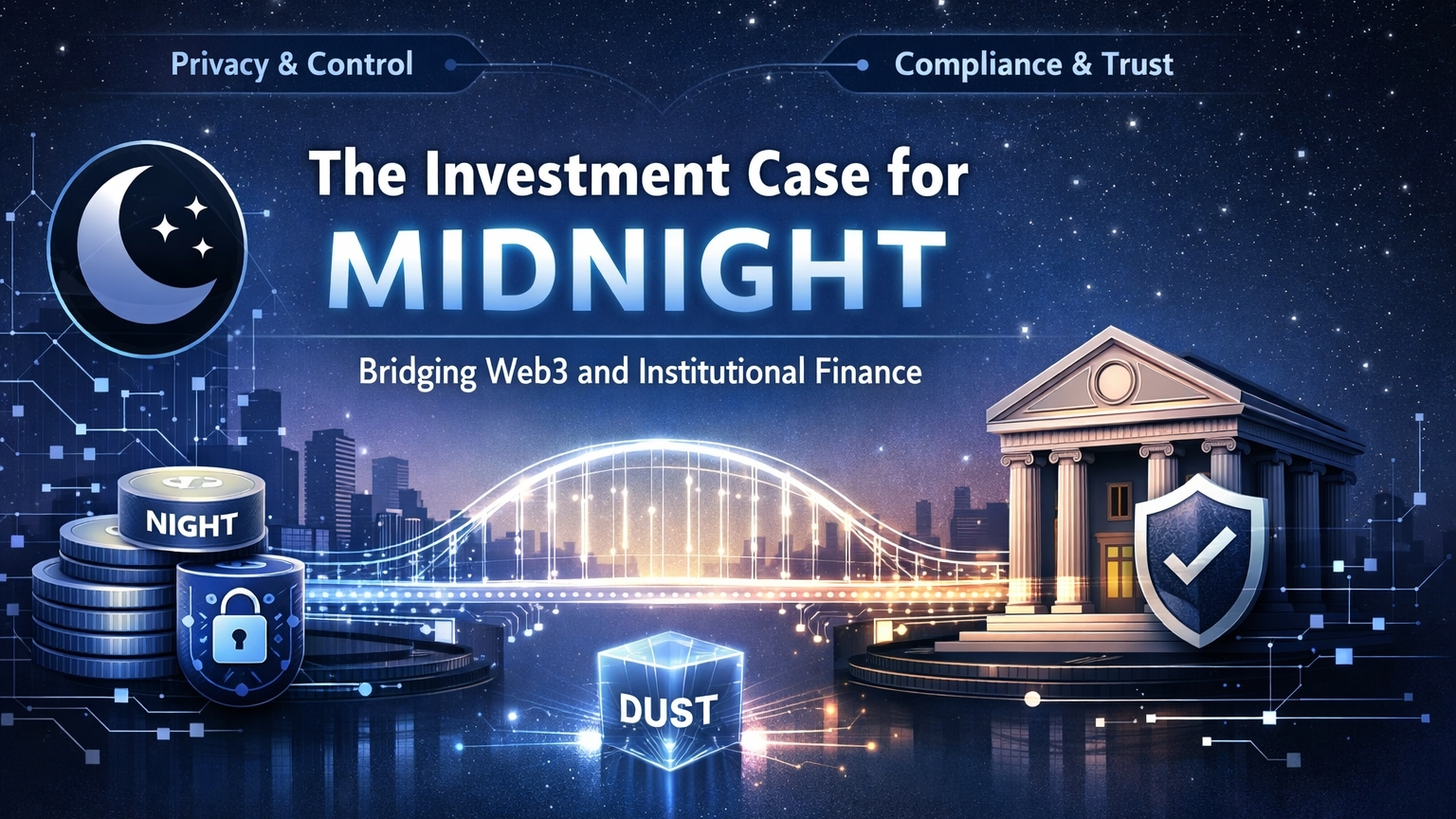
Years ago, I learned a hard lesson from a shiny privacy token that looked clever on paper and empty in use. The chart looked fine - smooth even. The story was better than the business. When the first real unlock hit, buyers found out they had bought a promise wearing a price tag. That memory came back when I dug into Midnight. I do not dislike the idea. In fact, Midnight is one of the few privacy projects that seems to understand the problem banks and large firms actually have: they need privacy for data, but they also need a trail for rules, audits, and control. Midnight tries to split those two jobs apart. NIGHT stays public and acts like the capital layer, while DUST is the shielded fuel for use on the network. That is not a small twist. It is the whole case. Right now, the valuation asks for faith before it asks for proof. NIGHT has a max supply of 24 billion tokens, and recent market pricing around five cents puts fully diluted value near $1.2 billion. Circulating value is lower because not all supply trades freely yet, but the headline number still matters because it tells you what the market may be paying for the full pie, not just today’s slice. The trouble is revenue. Midnight’s own papers describe fees in DUST, future treasury fee capture, and possible cross-chain marketplace revenue streams - but those are framed as future mechanics, while mainnet was only scheduled for late March 2026. So the clean FDV/revenue ratio is not “high.” It is basically not grounded yet, because realized revenue is still near zero or undisclosed. To me, that means the present valuation is still mostly thesis value. Fine - early networks live on thesis. But when FDV stands tall before cash flow exists, price is leaning on hope, partner logos, and future usage, not operating proof. What makes Midnight worth watching is that its moat aims at a different customer than Zcash. Zcash is battle-tested privacy money. It already has a long record, selective disclosure via zk proofs, and even an institutional wrapper through the Grayscale Zcash Trust. That is real market plumbing. Midnight, though, is trying to be the private room inside a public office building. The lobby stays visible. The files stay hidden. That may fit banks, funds, and firms better than a classic privacy coin model, because Midnight makes the asset public, the resource non-transferable, and the app logic selectively private. Add BitGo custody support, Google Cloud infrastructure, Blockdaemon, Vodafone’s Pairpoint, and other federated node partners, and you can see the outline of an institutional go-to-market path. Still, I would not say the moat is stronger than Zcash today. Zcash has history and live monetary use. Midnight has a cleaner story for regulated institutions - but story is not moat until clients stay, build, and pay. Then the supply question starts tapping on the window. Midnight’s token structure is not reckless, but it is not light either. More than 4.5 billion community tokens were set to enter circulation through a 360-day thaw, in four 25% installments, with the first unlock randomly spread over days 1 to 90 and the next three every 90 days. That design helps. It breaks up the first wave so the market does not get hit like a truck at one traffic light. Okay, good. But the pressure does not vanish. It becomes rhythmic. Every quarter, more paper turns liquid. On top of that, tokens for the Midnight Foundation and Midnight TGE become immediately transferable at redemption start, while the Reserve stays locked for block rewards and the Treasury stays locked until governance is live. Lost-and-Found tokens later come without thawing. So the real overhead is not one cliff. It is a set of timed doors opening in sequence. That can create capital rotation risk, especially if early claimants treat NIGHT like a harvest, not a long stay. By the way, the part I find most honest in Midnight is also the part the market may ignore. DUST is built like a battery, not a coin. You hold NIGHT, and the battery refills. That can make costs easier to plan for apps and firms, which matters far more to a bank than token slogans do. Yet this also means value capture is less simple than “more activity, more fee burn, line goes up.” Midnight is trying to sell stable usage conditions, not just token scarcity. I respect that. I also know markets often price the brochure before they test the machine. Midnight does seem to solve a real problem: how to give Web3 privacy without asking institutions to step into a black box. That is more serious than most privacy-token pitches. Still, at roughly $1.2 billion FDV with little proven revenue, the valuation remains more speculative than earned today. The moat against Zcash is not “better privacy.” It is a more institution-shaped wrapper around privacy. Wait, let’s see if that wrapper turns into use, treasury inflow, and sticky builders. Until then, I would treat NIGHT less like a finished bank bridge and more like a bridge under load test - strong design, real promise, but not yet cleared for full traffic.
@MidnightNetwork #night $NIGHT
